About this artwork
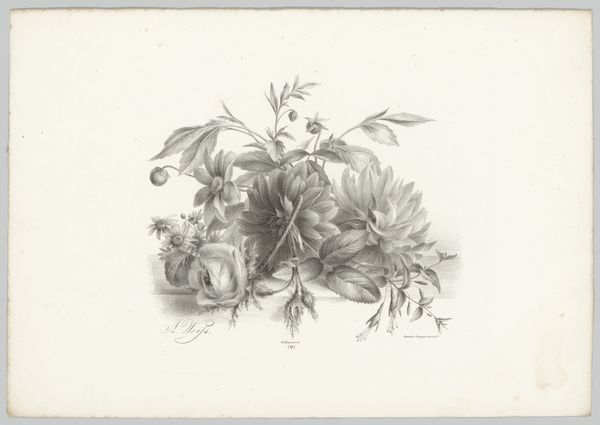
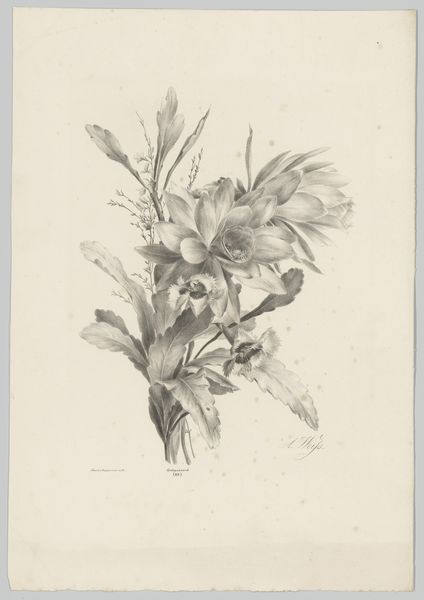
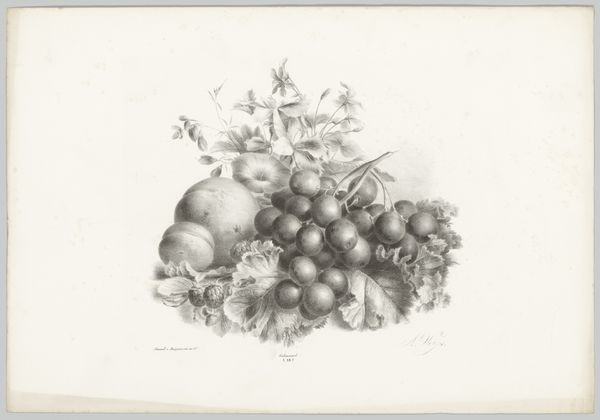
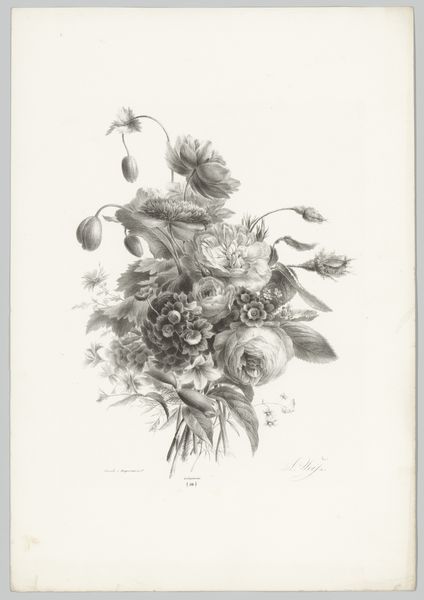
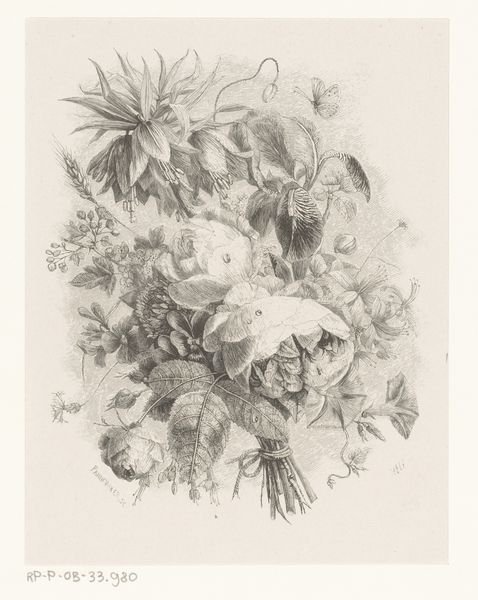
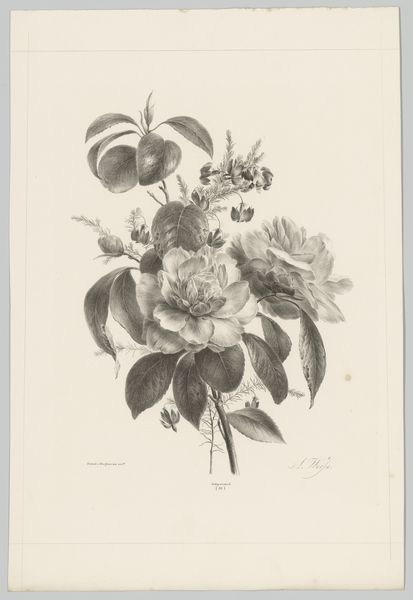
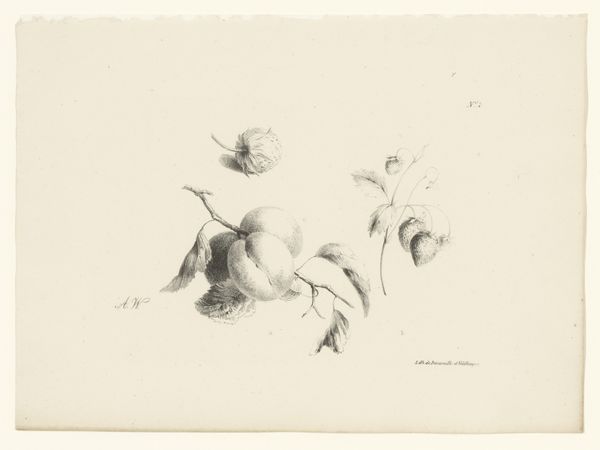
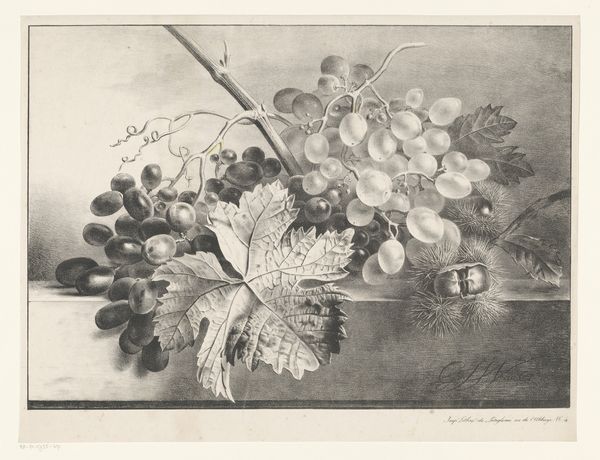
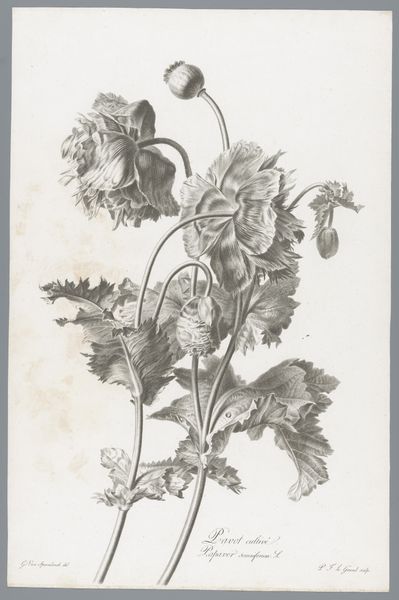
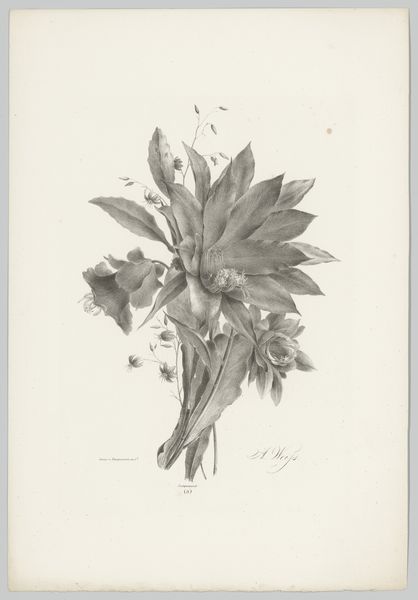
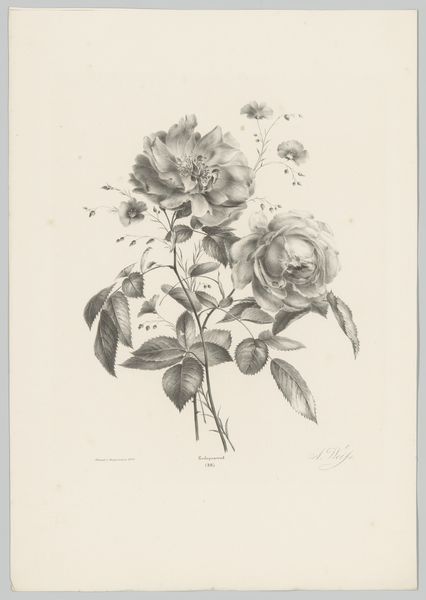
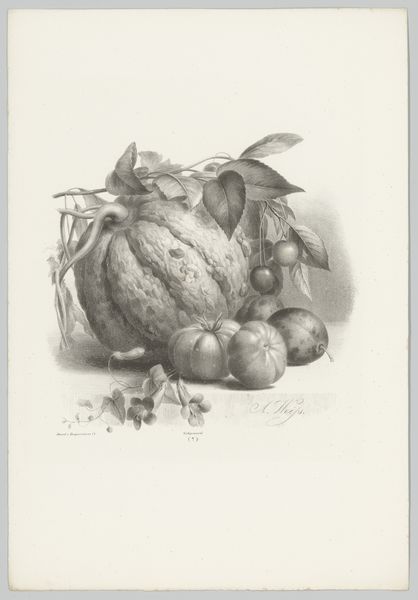
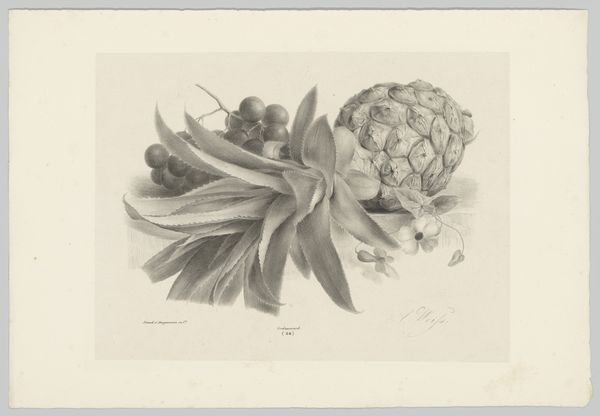
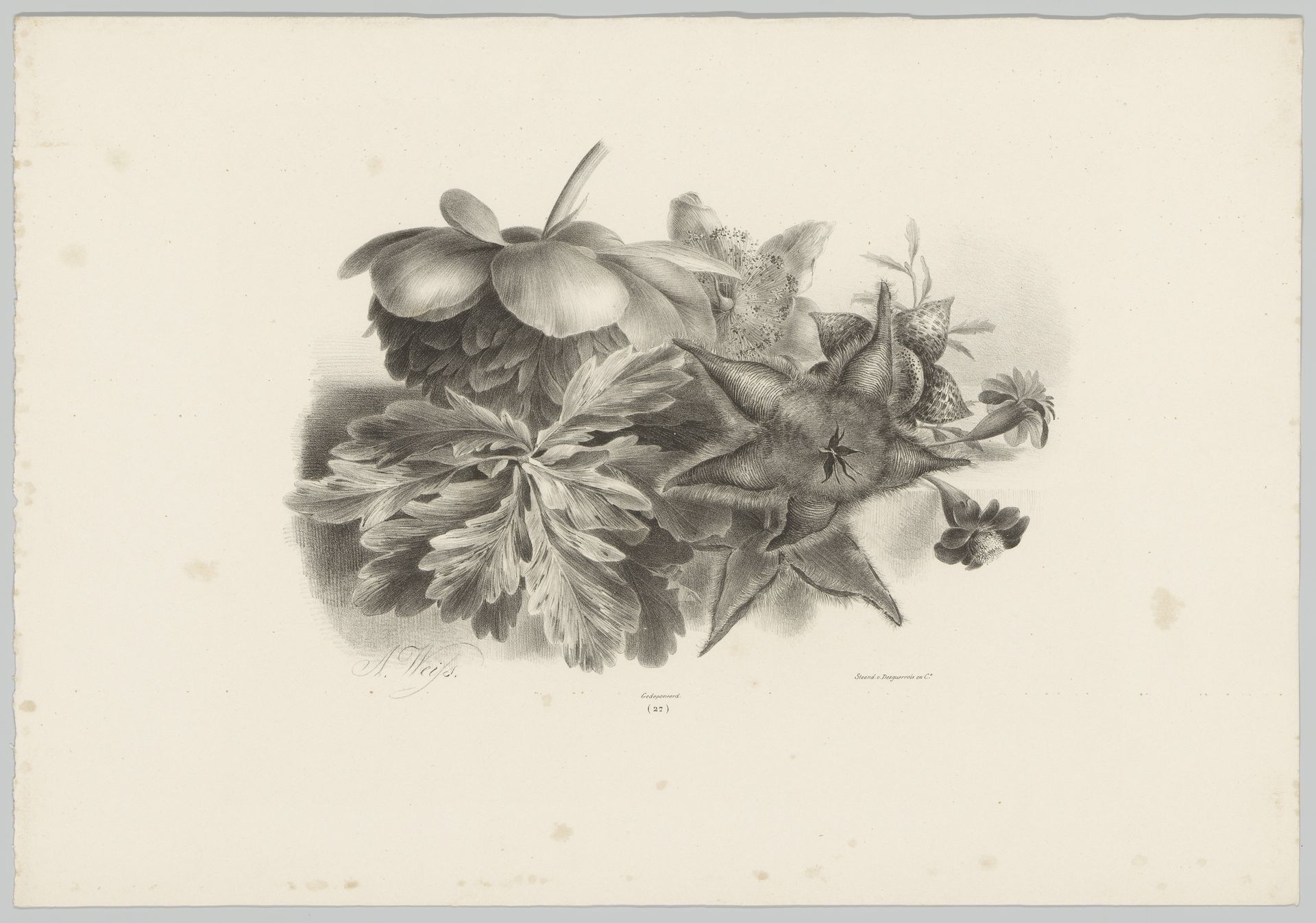
Anton Weiss created this print of passion flowers and leaves at an unknown date. This lithograph gives us an opportunity to consider the social and cultural importance of botanical illustration in the 19th century. In the Netherlands, as elsewhere in Europe at the time, there was a growing public interest in natural history. This interest was fueled by scientific expeditions and the expansion of colonial empires, which brought new and exotic plants and animals to Europe. Botanical gardens and museums became important centers for scientific research and public education, and detailed botanical illustrations such as this one played a crucial role in disseminating knowledge about the natural world. How did institutions such as the Royal Botanical Society shape artistic production? To learn more, research into the archives of scientific societies and horticultural publications of the period is invaluable.

Artwork details
- Medium
- drawing, dry-media, pencil
- Dimensions
- height 299 mm, width 433 mm
- Location
- Rijksmuseum
- Copyright
- Rijks Museum: Open Domain
Tags
drawing
light pencil work
pencil sketch
dry-media
romanticism
pencil
botanical drawing
Comments
Be the first to share your thoughts about this work.
About this artwork
Anton Weiss created this print of passion flowers and leaves at an unknown date. This lithograph gives us an opportunity to consider the social and cultural importance of botanical illustration in the 19th century. In the Netherlands, as elsewhere in Europe at the time, there was a growing public interest in natural history. This interest was fueled by scientific expeditions and the expansion of colonial empires, which brought new and exotic plants and animals to Europe. Botanical gardens and museums became important centers for scientific research and public education, and detailed botanical illustrations such as this one played a crucial role in disseminating knowledge about the natural world. How did institutions such as the Royal Botanical Society shape artistic production? To learn more, research into the archives of scientific societies and horticultural publications of the period is invaluable.
Comments
Be the first to share your thoughts about this work.