About this artwork
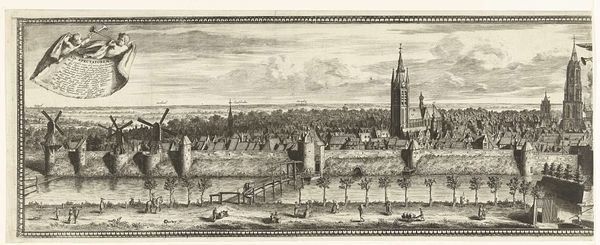
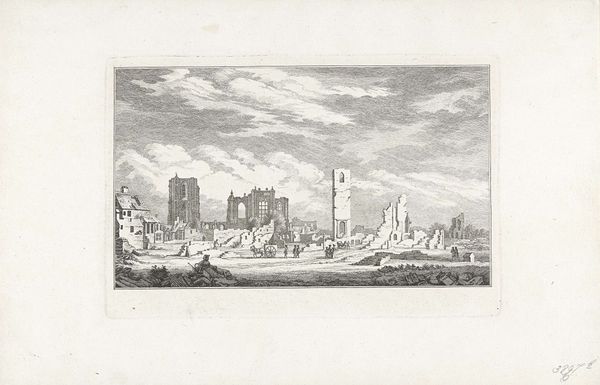
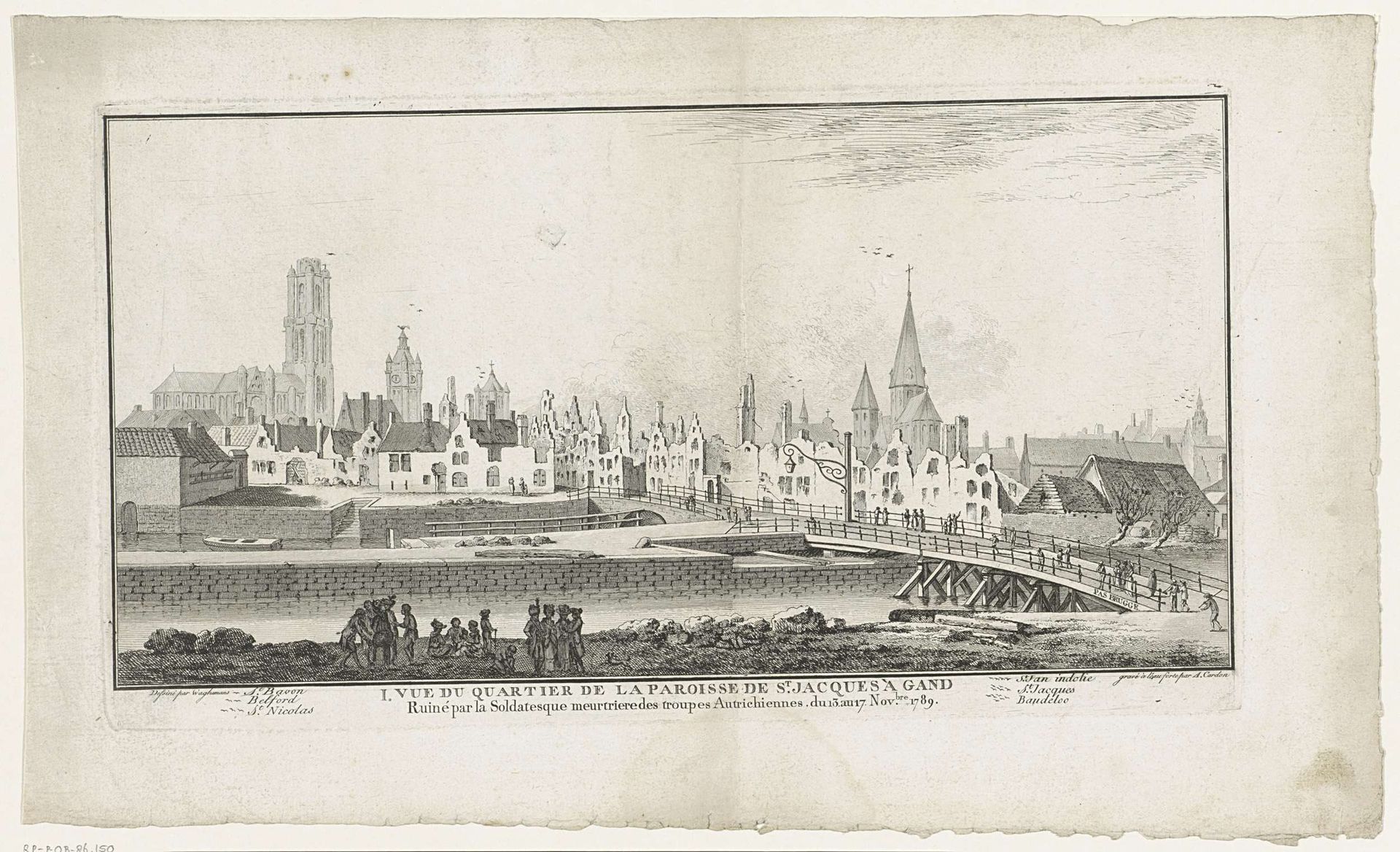
This print by Antoine Alexandre Joseph Cardon captures the ruins in Ghent following the mutiny of Austrian troops in November 1789. Cardon, working in a period defined by revolution and shifting power dynamics, reflects the tumult of his era through this detailed cityscape. The focus on the destruction wrought by the Austrian troops raises questions about identity and allegiance: Who is considered a citizen, and who is seen as an invader? How does the experience of violence shape the collective memory and cultural identity of a place? The image invites us to consider the impact of military actions on civilian life and the physical environment, highlighting the vulnerability of communities in the face of political unrest. This scene is not just about the destruction of buildings, it's about the shattering of a community's sense of security. By documenting this event, Cardon prompts a reflection on the human cost of conflict. It serves as a stark reminder of how power and identity are negotiated, often at the expense of ordinary lives.
Ruïnes te Gent na de muiterij van Oostenrijkse troepen, 1789
1789 - 1790

Antoine Alexandre Joseph Cardon
1739 - 1822Location
RijksmuseumArtwork details
- Medium
- engraving
- Dimensions
- height 221 mm, width 405 mm
- Location
- Rijksmuseum
- Copyright
- Rijks Museum: Open Domain
Tags
Comments
Share your thoughts
About this artwork
This print by Antoine Alexandre Joseph Cardon captures the ruins in Ghent following the mutiny of Austrian troops in November 1789. Cardon, working in a period defined by revolution and shifting power dynamics, reflects the tumult of his era through this detailed cityscape. The focus on the destruction wrought by the Austrian troops raises questions about identity and allegiance: Who is considered a citizen, and who is seen as an invader? How does the experience of violence shape the collective memory and cultural identity of a place? The image invites us to consider the impact of military actions on civilian life and the physical environment, highlighting the vulnerability of communities in the face of political unrest. This scene is not just about the destruction of buildings, it's about the shattering of a community's sense of security. By documenting this event, Cardon prompts a reflection on the human cost of conflict. It serves as a stark reminder of how power and identity are negotiated, often at the expense of ordinary lives.
Comments
Share your thoughts