About this artwork
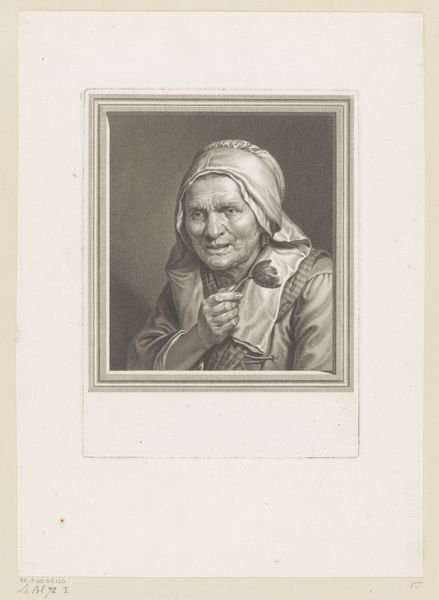
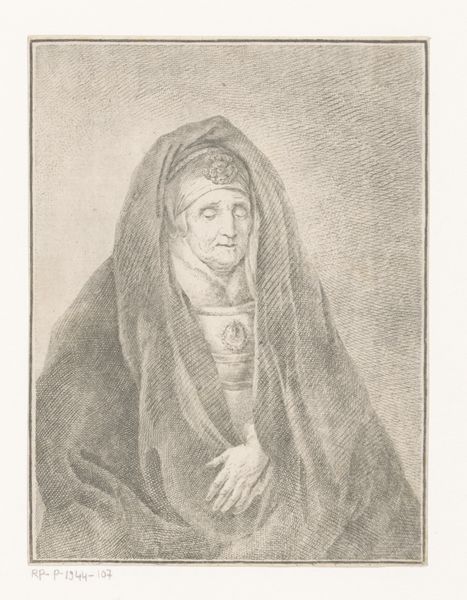
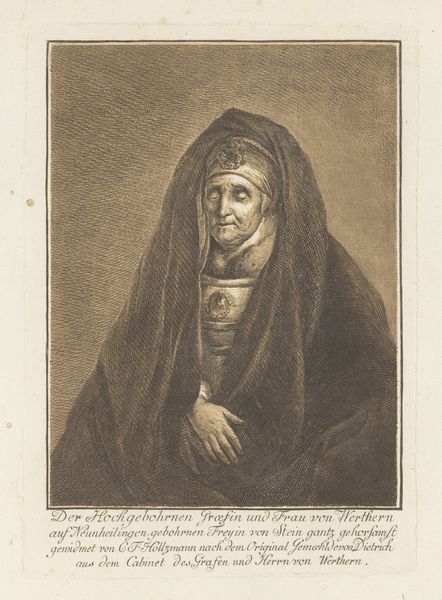
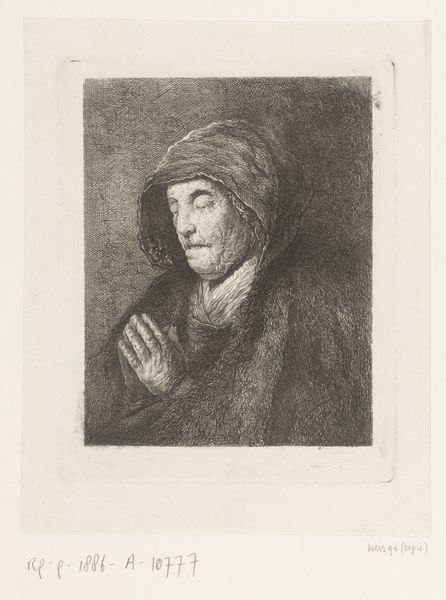
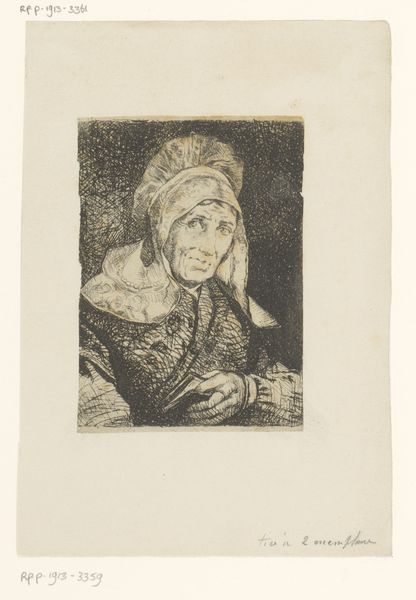
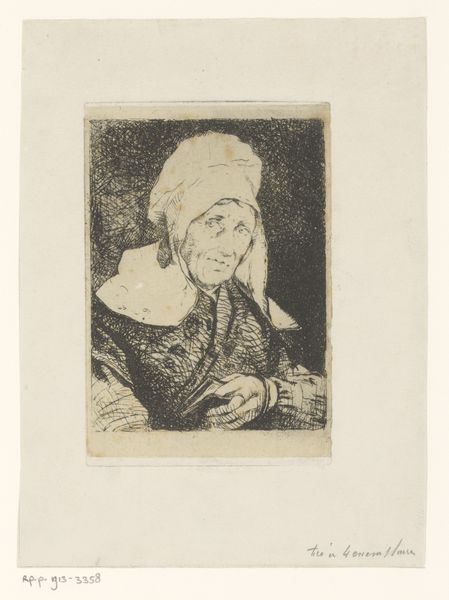
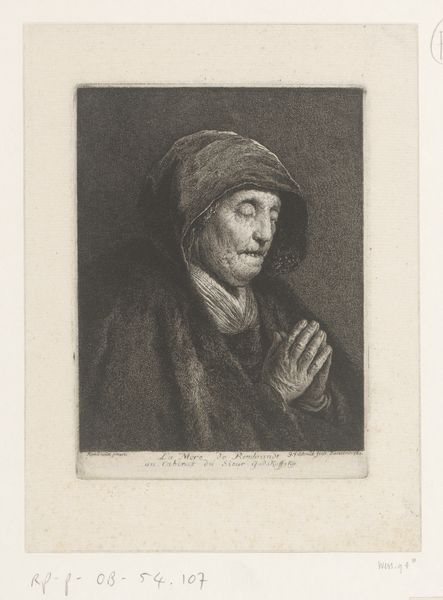
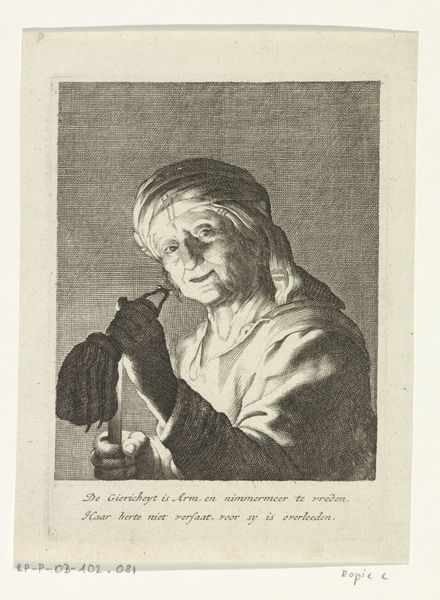
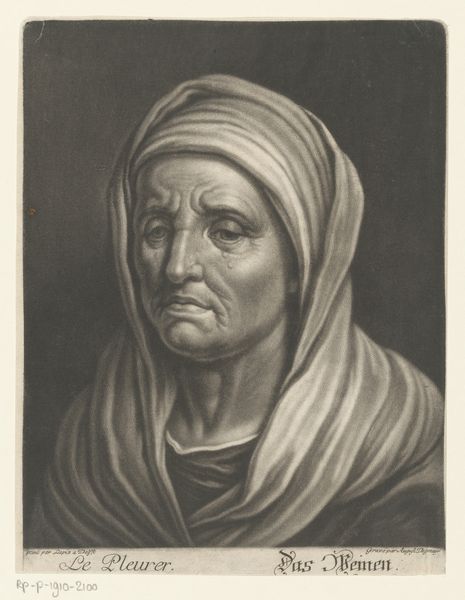
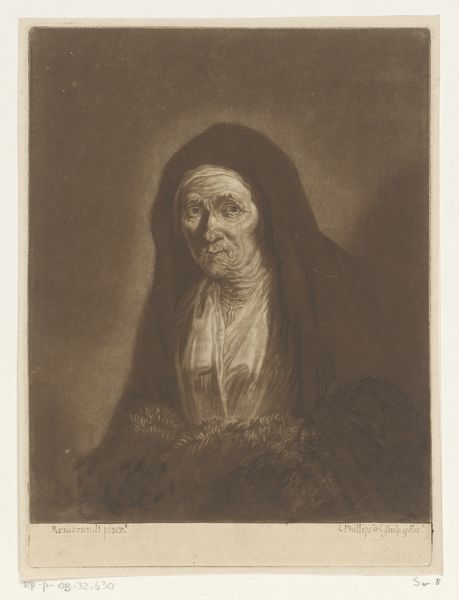
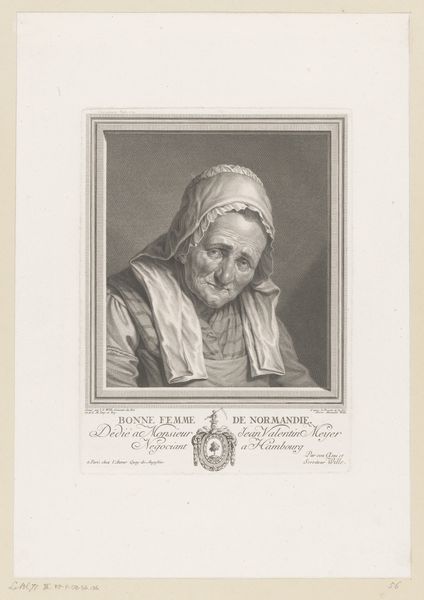
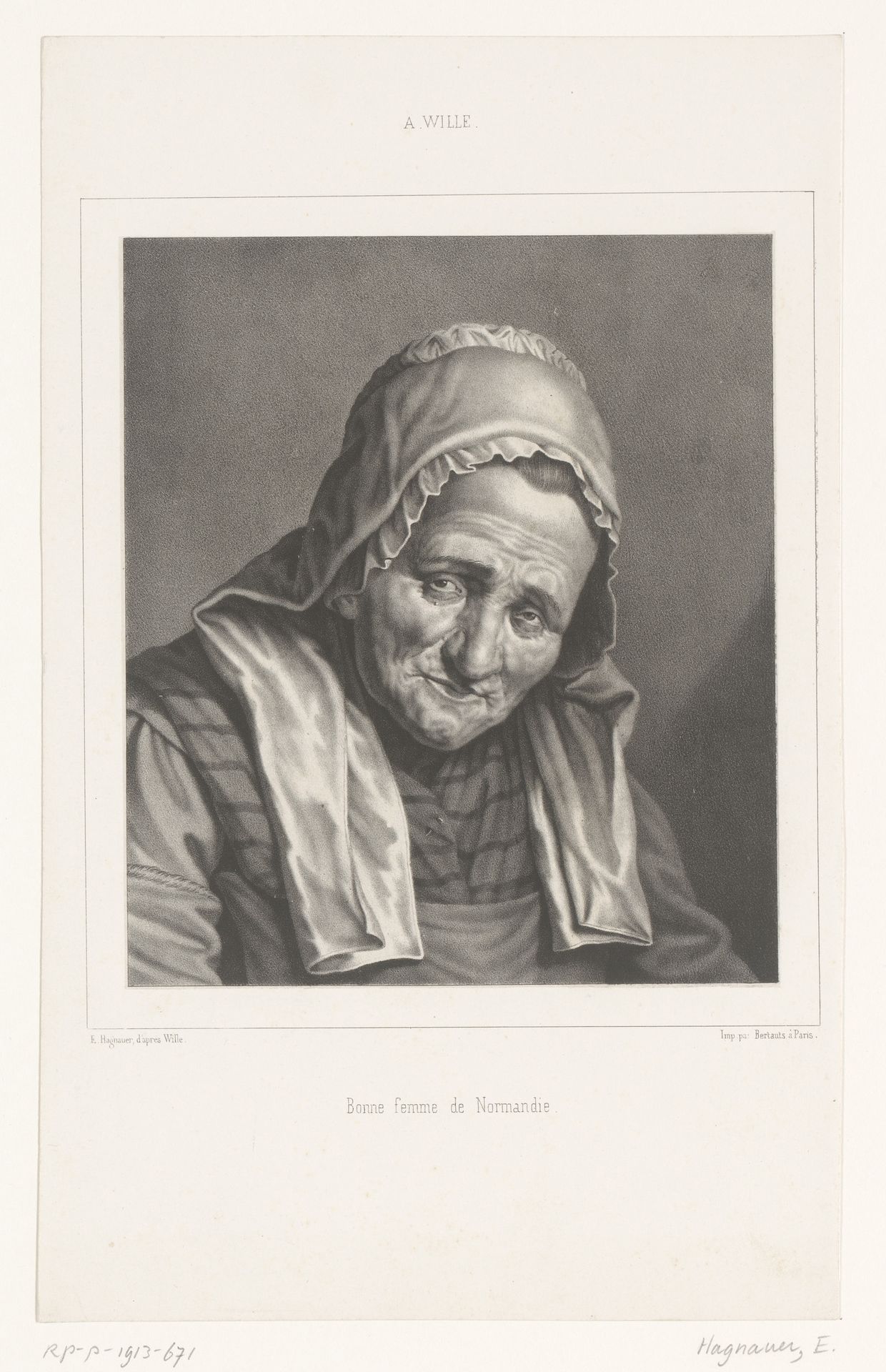
This is a portrait of an old Norman woman, made using a printing process. It is from an age before photography, when capturing a likeness required a completely different skill set. The print is made from a matrix, likely a metal plate, into which fine lines were cut. The ink sits in these tiny rivulets, and is transferred to the paper under great pressure. The quality of the image depends on the fineness of the lines, and the control exerted by the artist. Think of it as a kind of drawing, but one that could be reproduced many times over, like industrial production. And in a way, it was industrial production. Printmaking emerged in Europe alongside other forms of mass manufacture. So, while this image portrays a simple peasant woman, her image was made available thanks to cutting-edge technology. This points to the complex relationship between the individual and society during this period. It reminds us that even the most intimate likeness is touched by larger forces.

Artwork details
- Medium
- drawing, pencil
- Dimensions
- height 298 mm, width 185 mm
- Copyright
- Rijks Museum: Open Domain
Tags
Comments
Share your thoughts
About this artwork
This is a portrait of an old Norman woman, made using a printing process. It is from an age before photography, when capturing a likeness required a completely different skill set. The print is made from a matrix, likely a metal plate, into which fine lines were cut. The ink sits in these tiny rivulets, and is transferred to the paper under great pressure. The quality of the image depends on the fineness of the lines, and the control exerted by the artist. Think of it as a kind of drawing, but one that could be reproduced many times over, like industrial production. And in a way, it was industrial production. Printmaking emerged in Europe alongside other forms of mass manufacture. So, while this image portrays a simple peasant woman, her image was made available thanks to cutting-edge technology. This points to the complex relationship between the individual and society during this period. It reminds us that even the most intimate likeness is touched by larger forces.
Comments
Share your thoughts