before 1873
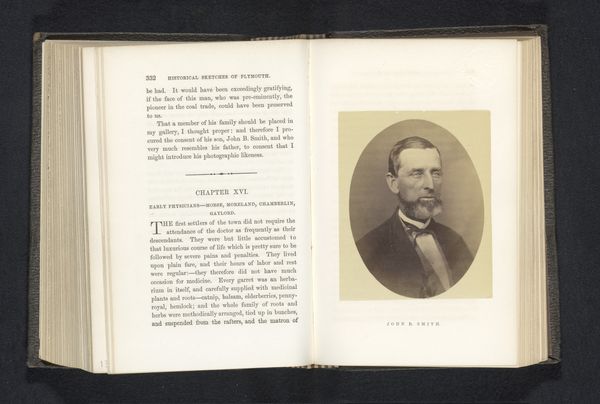
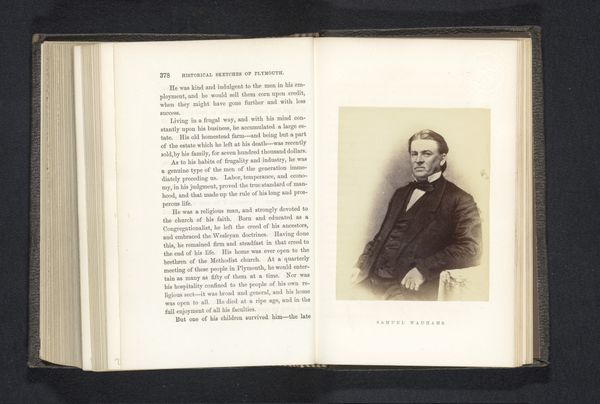
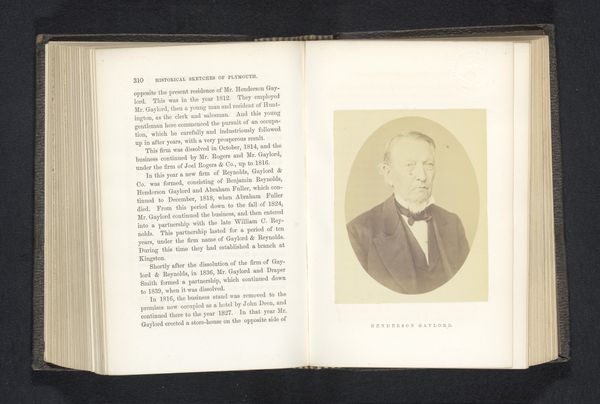
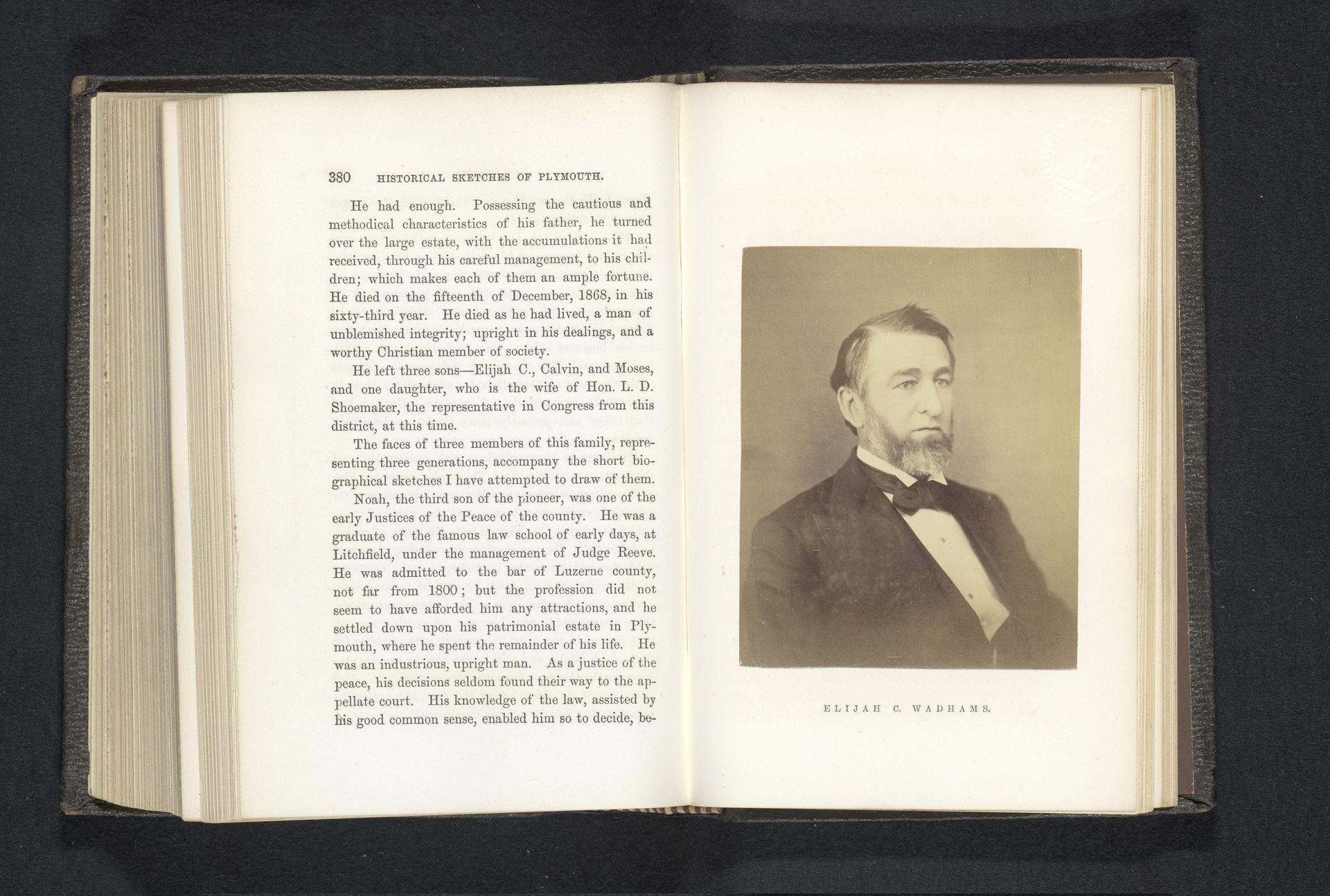
Portret van Elijah C. Wadhams

Listen to curator's interpretation
Curatorial notes
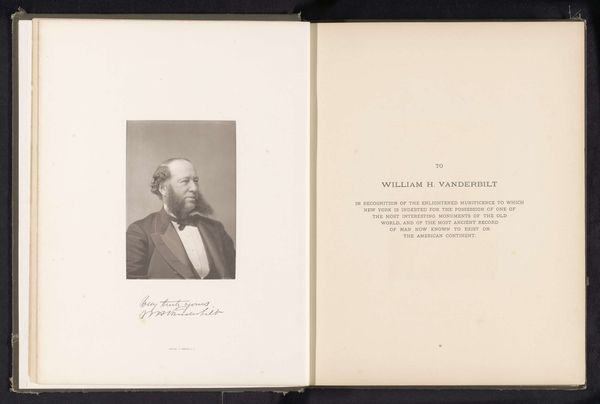
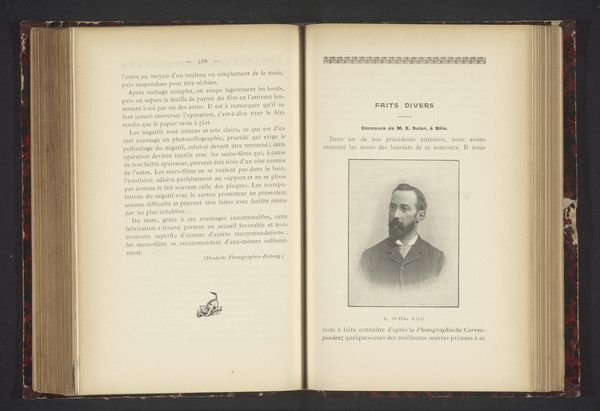
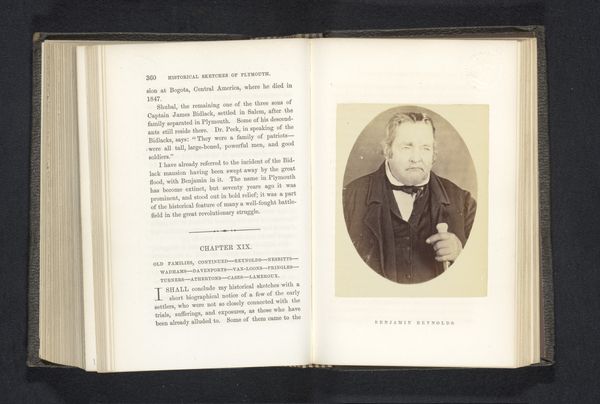
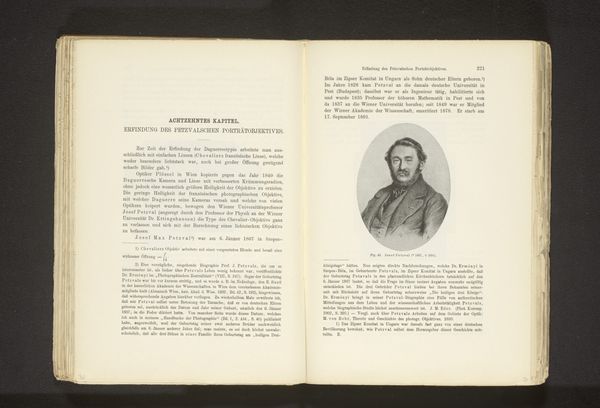
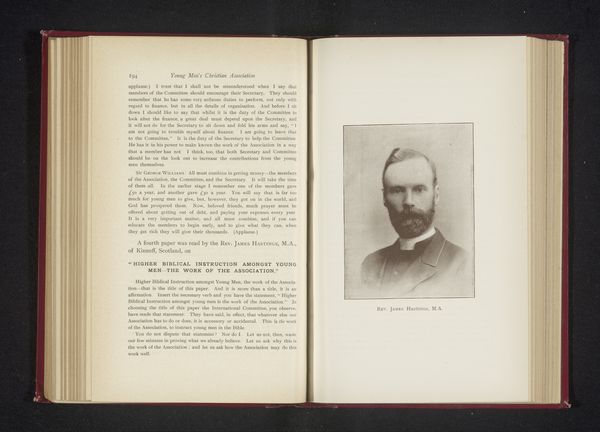
Curator: So, this spread from a book, circa before 1873, presents on one side some text titled 'Historical Sketches of Plymouth', and facing it, the 'Portret van Elijah C. Wadhams', likely a photo mechanically reproduced. Editor: It feels intensely intimate, doesn't it? Like stumbling upon a secret family history tucked away in someone's attic. There’s something so appealing about the sepia tones and the handwritten inscription… like finding a visual poem. Curator: The pairing of textual biography and image was typical. It places Wadhams within a lineage, a community. These books were often commissioned to celebrate local elites. Think of it as curated ancestor worship within the frame of American progress. Editor: Progress… Right, the Industrial Revolution backdrop makes the man’s somberness pop! I love the stiff formality—that neatly trimmed beard, the severe suit and tie... It screams ambition and responsibility, but maybe also hints at inner anxieties about keeping up appearances. Curator: I see him more as representing stability in a changing world. His portrait offers the reader assurance in the face of rapid transformations: railroads, urbanization, shifting social hierarchies. A reminder of solid, established values, perhaps. Editor: Or perhaps a carefully constructed façade designed to project power? The way his eyes seem to avoid direct contact, for instance. Does that whisper a touch of unease? Curator: That's a 21st century read I am unsure if a contemporary would have had. Instead it re-enforces our shared understandings through likeness, of someone of that time. Editor: Maybe. Though, even then, surely someone must have sensed the contradictions inherent in such displays. I am sure those who knew him well had diverse opinions! Curator: What this presentation is for certain, is a material culture representation about the public memory making of one family's achievements and ambitions. Editor: Ultimately, it’s that very human desire to be remembered and honored. What form would we chose to have this for ourselves? Food for thought.