About this artwork
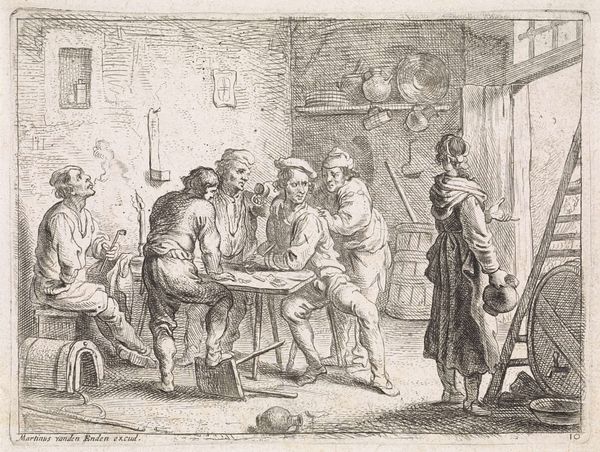
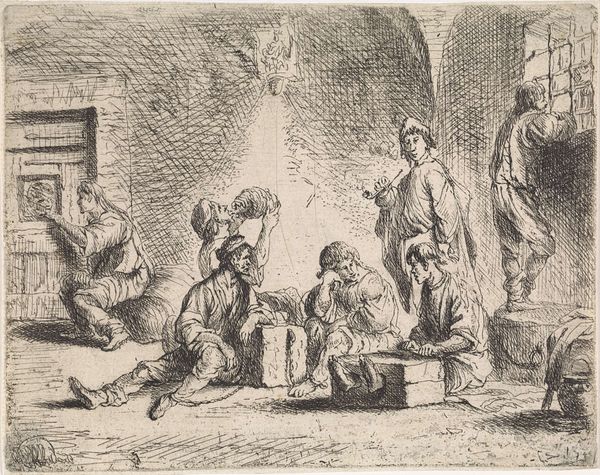
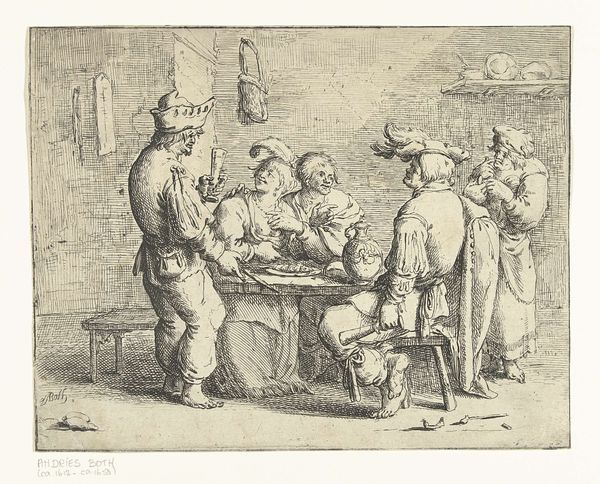
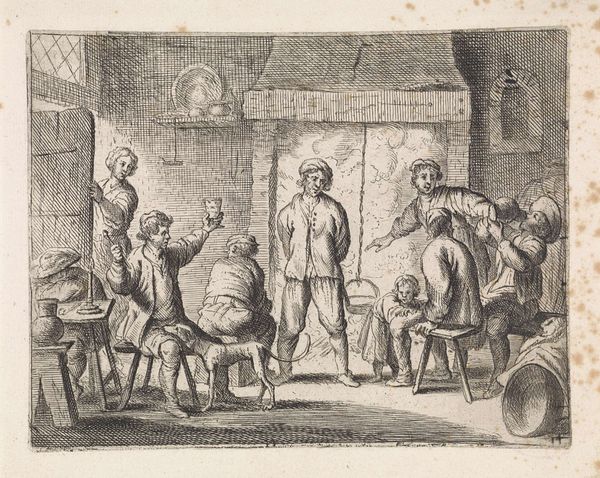
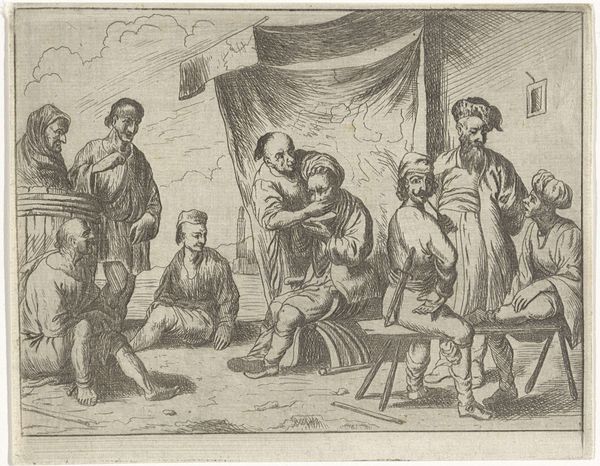
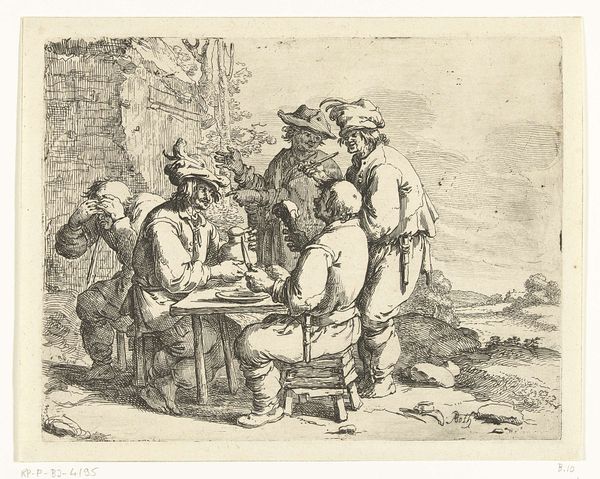
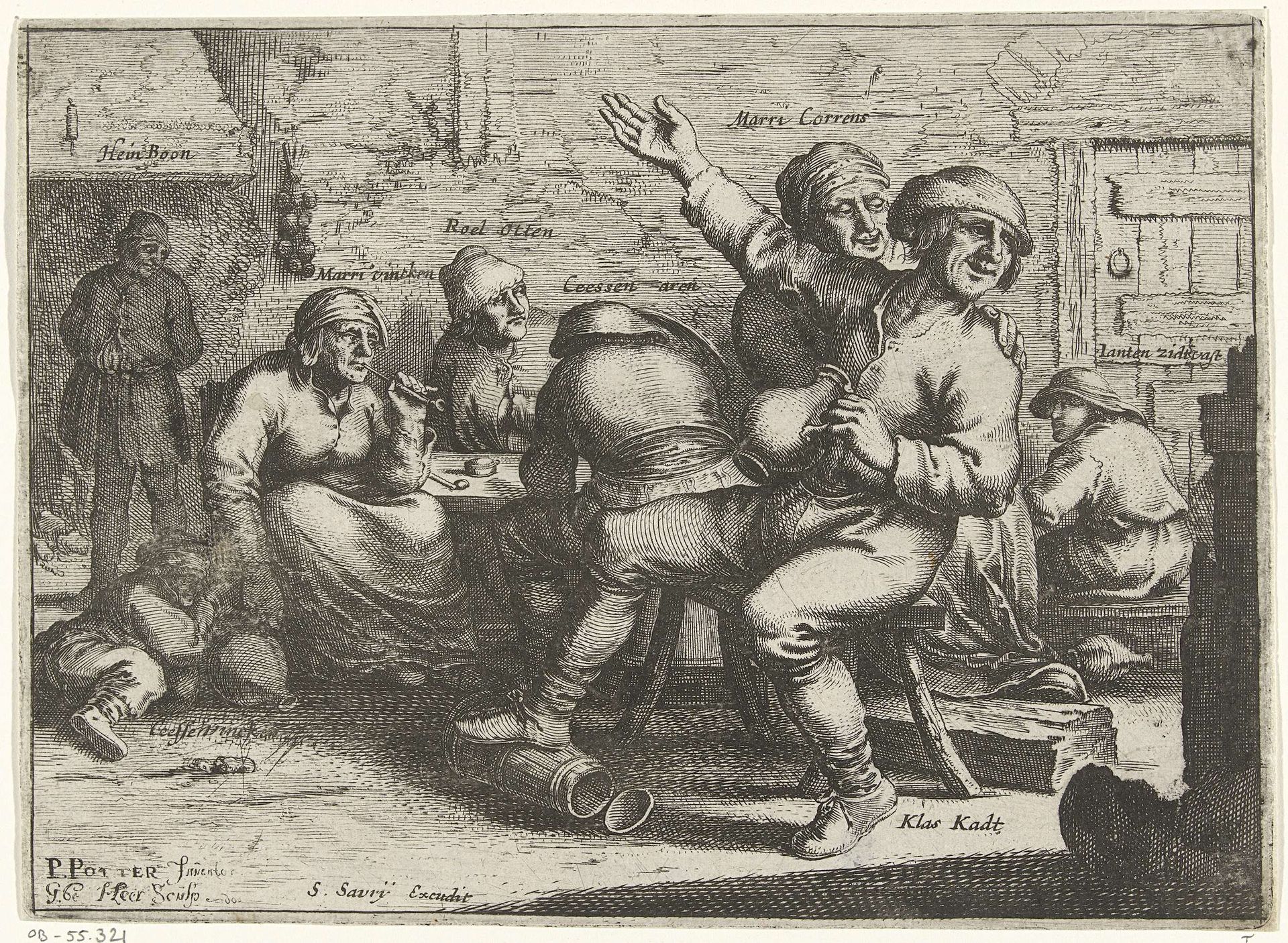
Gerrit de Heer made this etching, "Drinkers and Smokers in an Interior," sometime around the mid-17th century. It depicts a scene of revelry, but also provides a glimpse into the social lives of ordinary people during the Dutch Golden Age. The composition is rich with visual codes. A map hangs on the wall, possibly alluding to Dutch maritime power and trade. We can see tobacco use, a relatively new and increasingly common habit in Europe at the time. The figures themselves, with their exaggerated expressions, could be seen as a commentary on the social norms and behaviors of the lower classes. It's interesting to consider that this print may have been intended for a middle-class audience, offering them a window into a world both familiar and foreign. The historian, equipped with knowledge of Dutch society and the art market, can unpack the layers of meaning embedded in this seemingly simple scene. Archival documents, period literature, and other visual sources can further illuminate our understanding of its cultural context.

Artwork details
- Medium
- engraving
- Dimensions
- height 165 mm, width 226 mm
- Copyright
- Rijks Museum: Open Domain
Tags
Comments
Share your thoughts
About this artwork
Gerrit de Heer made this etching, "Drinkers and Smokers in an Interior," sometime around the mid-17th century. It depicts a scene of revelry, but also provides a glimpse into the social lives of ordinary people during the Dutch Golden Age. The composition is rich with visual codes. A map hangs on the wall, possibly alluding to Dutch maritime power and trade. We can see tobacco use, a relatively new and increasingly common habit in Europe at the time. The figures themselves, with their exaggerated expressions, could be seen as a commentary on the social norms and behaviors of the lower classes. It's interesting to consider that this print may have been intended for a middle-class audience, offering them a window into a world both familiar and foreign. The historian, equipped with knowledge of Dutch society and the art market, can unpack the layers of meaning embedded in this seemingly simple scene. Archival documents, period literature, and other visual sources can further illuminate our understanding of its cultural context.
Comments
Share your thoughts