About this artwork
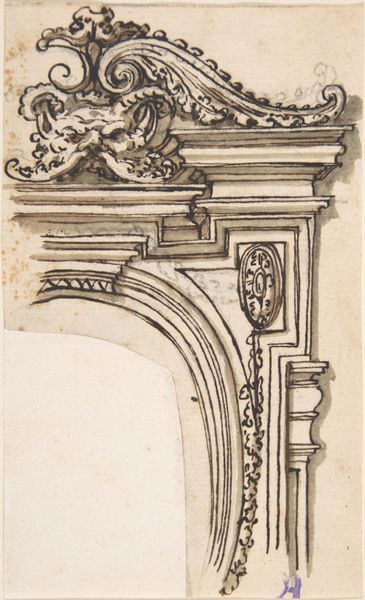
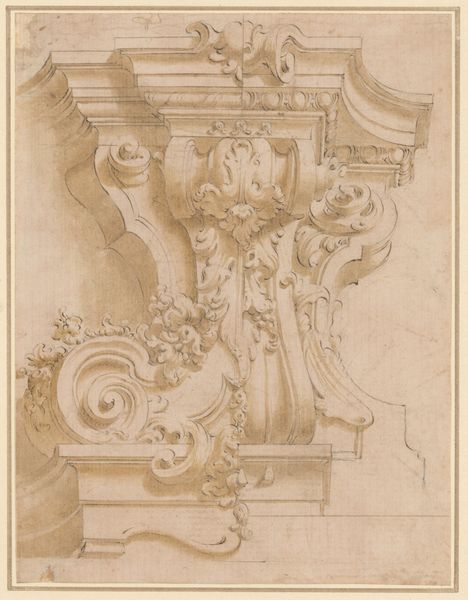
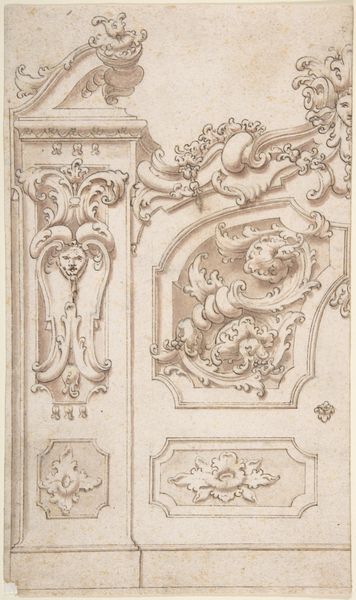
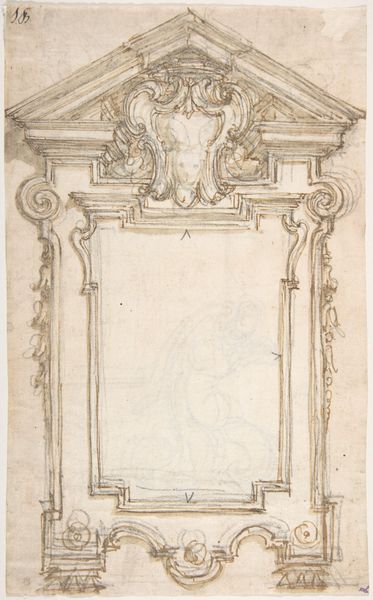
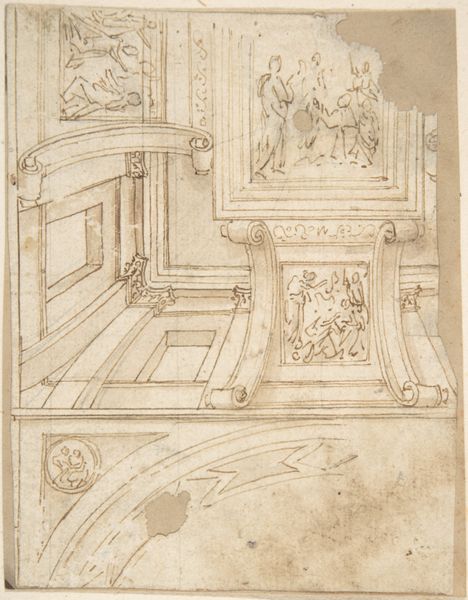
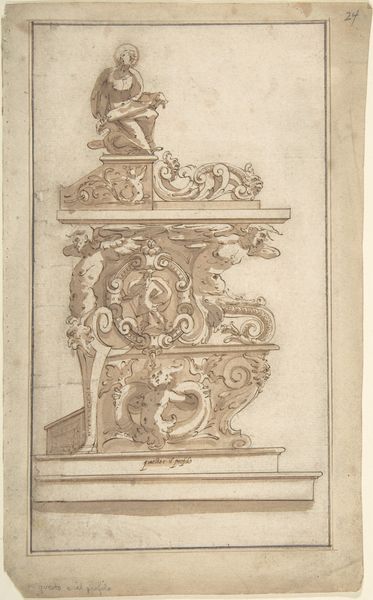
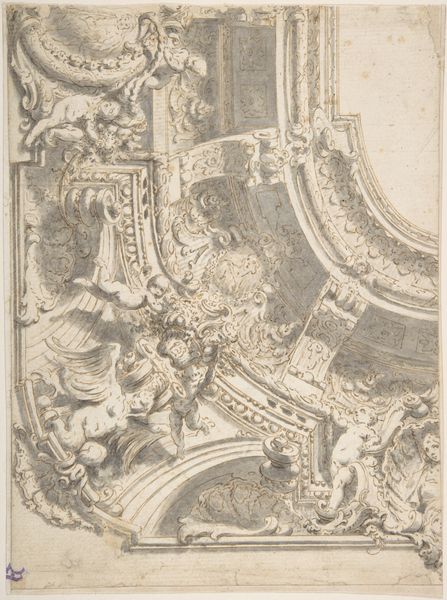
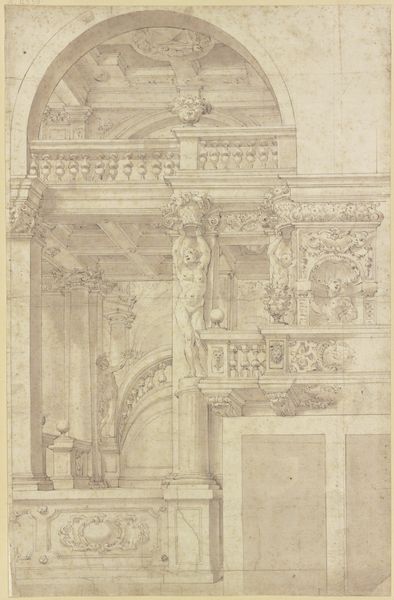
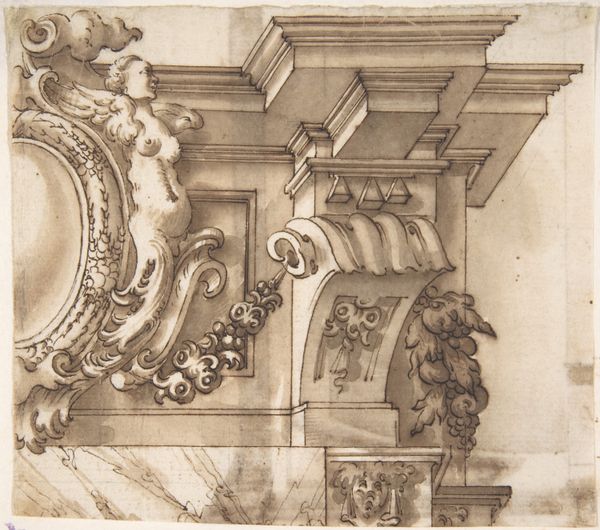
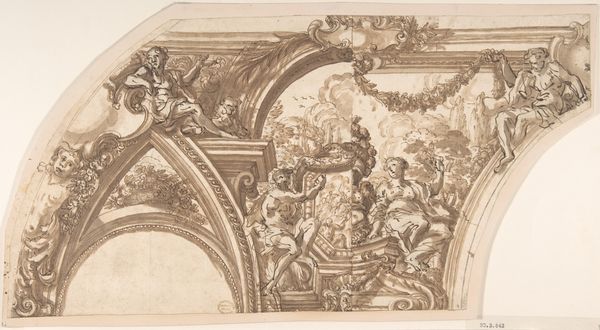
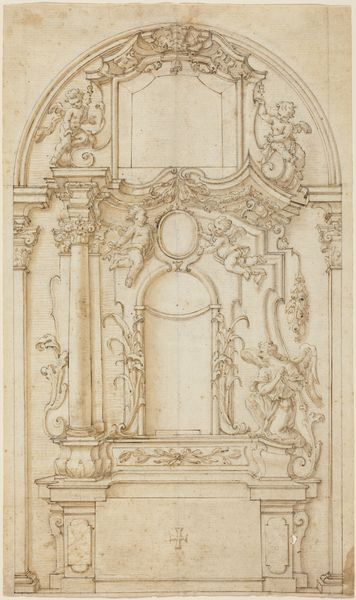
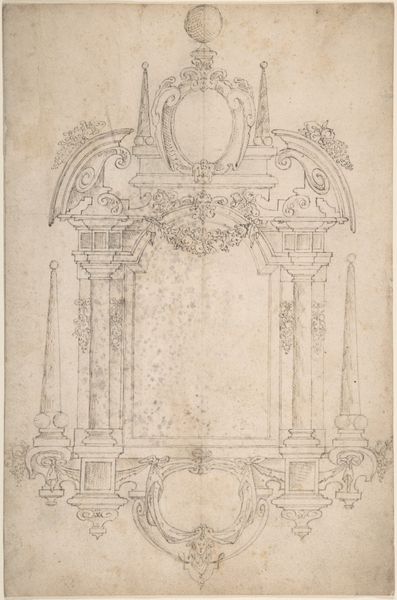
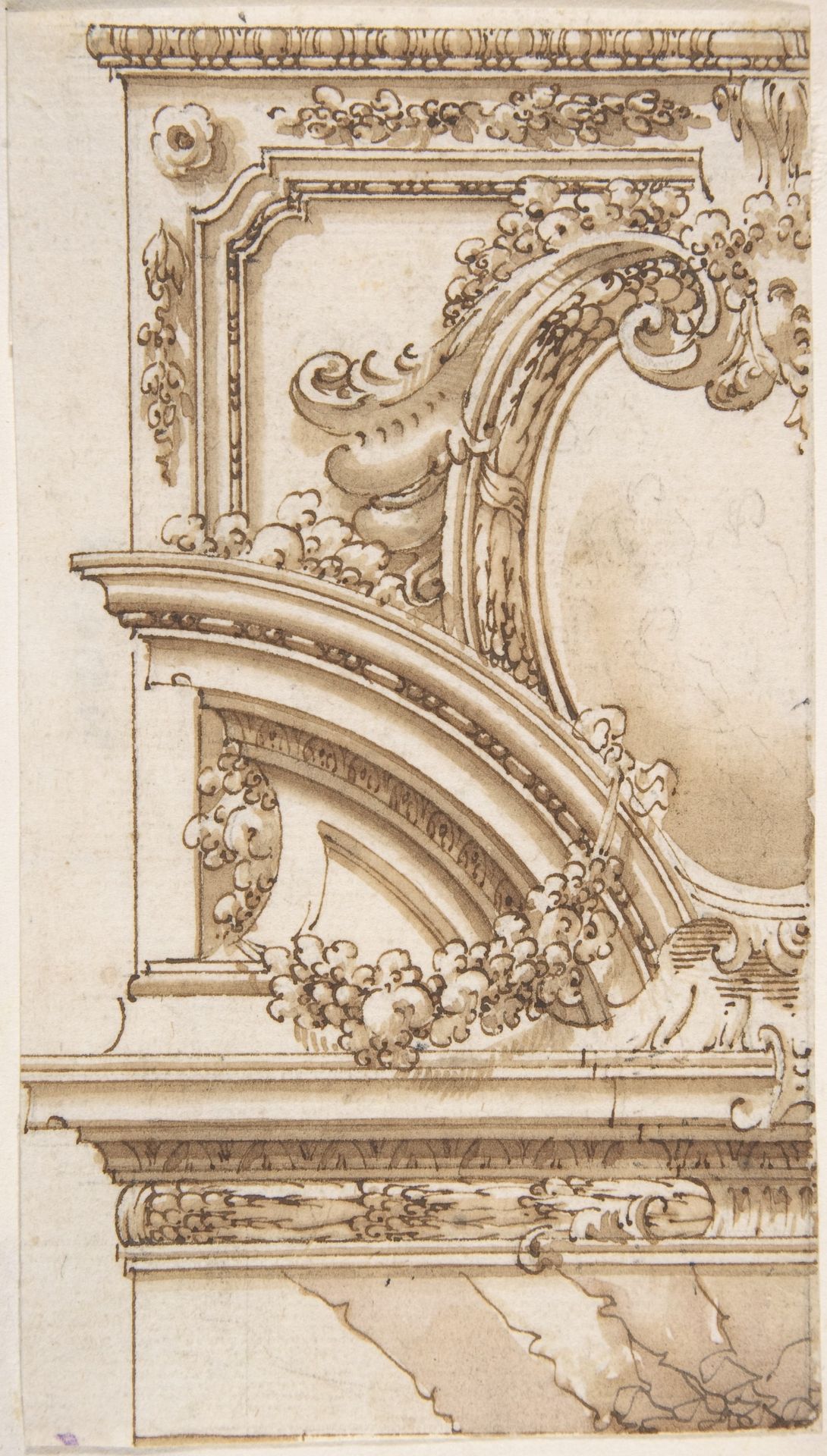
Editor: We're looking at "Designs for an Overdoor Decoration" by an anonymous artist, created between 1740 and 1760. It's an ink and etching drawing. The detail is incredible; it’s so ornate. What’s your interpretation of this design? Curator: The Baroque style, as seen in this drawing, speaks to the political climate of the 18th century. It’s a celebration of power, wouldn’t you agree? The decorative excess wasn't just about aesthetics. It served to create imposing spaces, places of grand spectacle, reinforcing hierarchies and societal control. Editor: I see what you mean about power! It feels more performative, like theatre. What do you think the average person thought of such art and spaces? Curator: Did they have access? That’s the key question. Much of this art would have been intended for a very select elite, and for others, a visual assertion of their limited social mobility. It's about class, right? But also consider gender; who was given space to create *and* to exist within such art? This was hardly a democratic vision of society being depicted here. Editor: That’s a powerful point. So even something like an overdoor decoration reinforces a very specific narrative about who belongs and who doesn’t? Curator: Exactly. The opulence implicitly excludes, defining power structures through artistry. I encourage you to consider what is *not* being shown as you examine the aesthetic. What stories are being omitted? Editor: It's eye-opening to think about it as a statement of inclusion *through* exclusion. Curator: Precisely. Questioning the unspoken assumptions in art forces us to confront larger social injustices. It shows us how the aesthetic and the political are always entwined.
Designs for an Overdoor Decoration (recto); Various Sketches (verso)
1740 - 1760


Artwork details
- Medium
- drawing, print, etching, ink
- Dimensions
- 5-1/2 x 3-1/8 in. (14.0 x 7.9 cm)
- Location
- Metropolitan Museum of Art, New York, NY
- Copyright
- Public Domain
Tags
Comments
Share your thoughts
About this artwork
Editor: We're looking at "Designs for an Overdoor Decoration" by an anonymous artist, created between 1740 and 1760. It's an ink and etching drawing. The detail is incredible; it’s so ornate. What’s your interpretation of this design? Curator: The Baroque style, as seen in this drawing, speaks to the political climate of the 18th century. It’s a celebration of power, wouldn’t you agree? The decorative excess wasn't just about aesthetics. It served to create imposing spaces, places of grand spectacle, reinforcing hierarchies and societal control. Editor: I see what you mean about power! It feels more performative, like theatre. What do you think the average person thought of such art and spaces? Curator: Did they have access? That’s the key question. Much of this art would have been intended for a very select elite, and for others, a visual assertion of their limited social mobility. It's about class, right? But also consider gender; who was given space to create *and* to exist within such art? This was hardly a democratic vision of society being depicted here. Editor: That’s a powerful point. So even something like an overdoor decoration reinforces a very specific narrative about who belongs and who doesn’t? Curator: Exactly. The opulence implicitly excludes, defining power structures through artistry. I encourage you to consider what is *not* being shown as you examine the aesthetic. What stories are being omitted? Editor: It's eye-opening to think about it as a statement of inclusion *through* exclusion. Curator: Precisely. Questioning the unspoken assumptions in art forces us to confront larger social injustices. It shows us how the aesthetic and the political are always entwined.
Comments
Share your thoughts