About this artwork
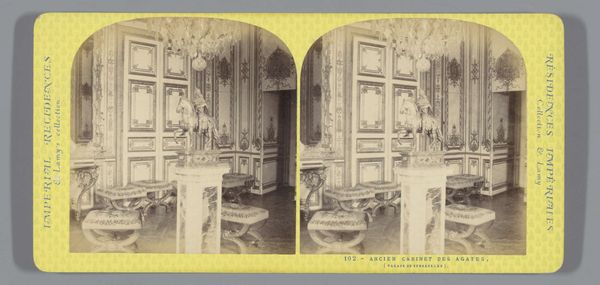
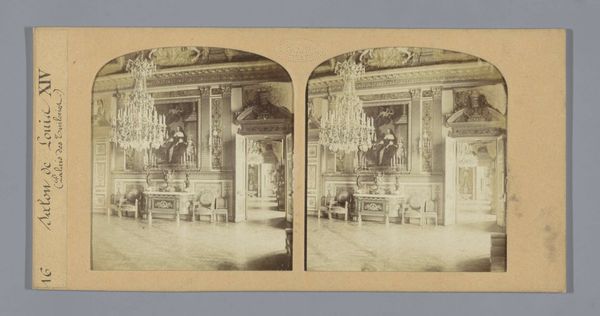
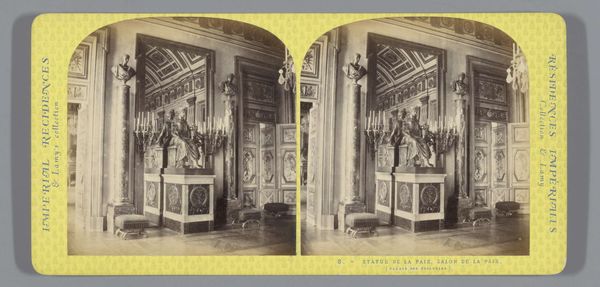
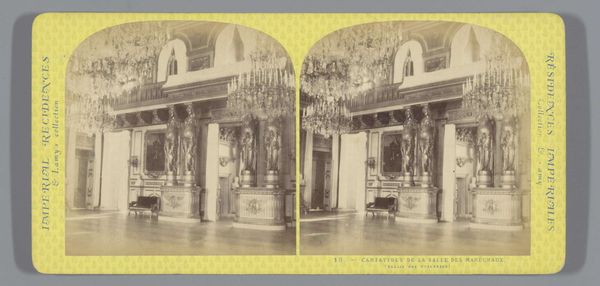
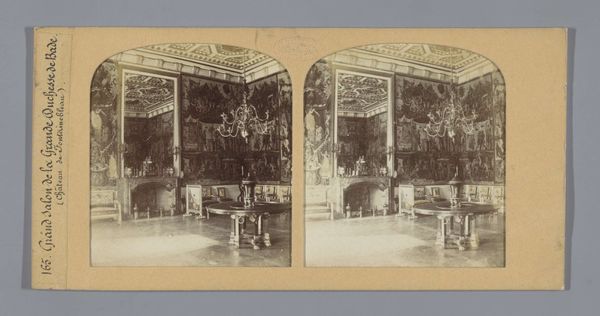
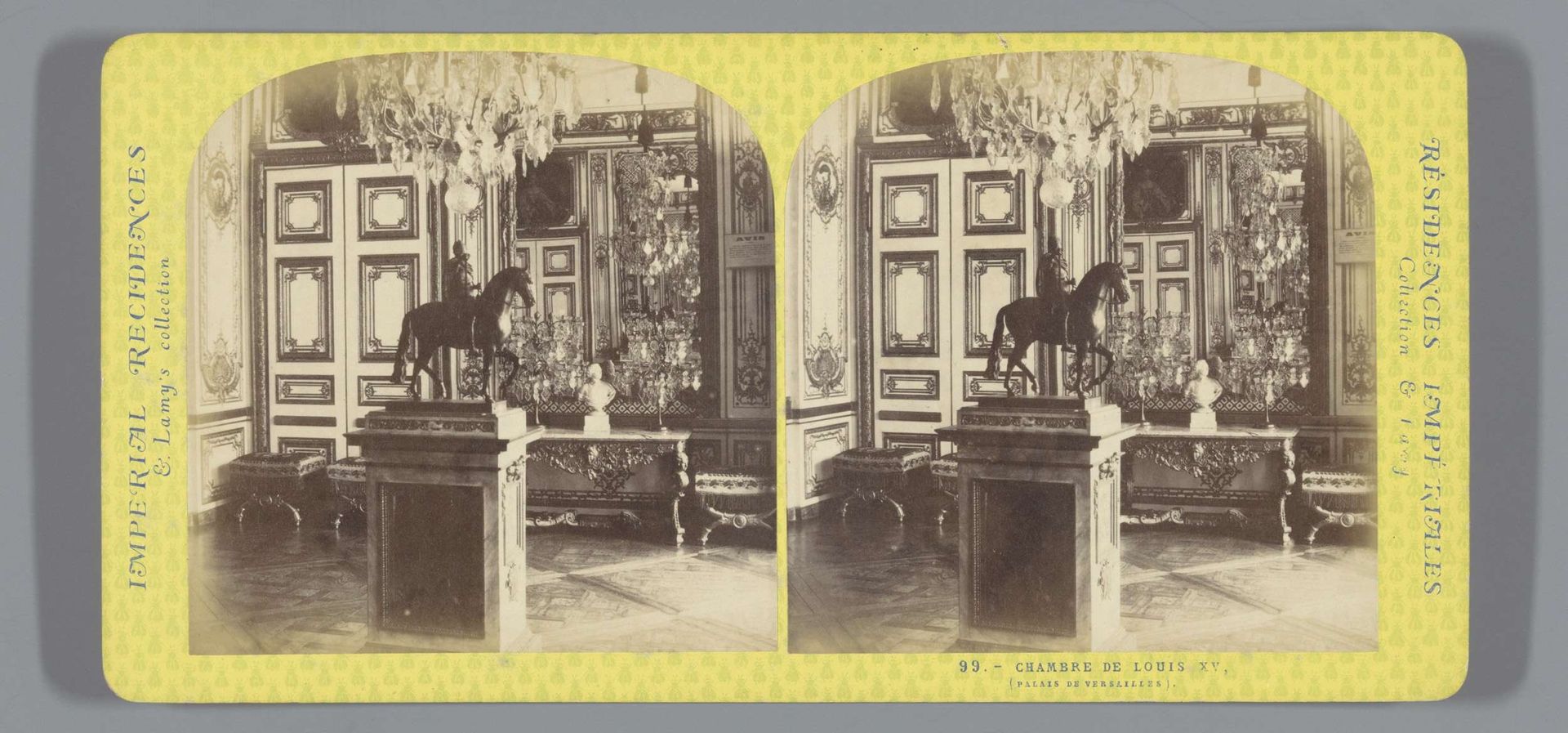
This is a stereoscopic photograph by Ernest Eléonor Pierre Lamy, capturing the interior of King Louis XV's chamber at the Palace of Versailles. The composition is structured by a play of light and shadow, emphasizing the room's elaborate ornamentation. The focal point is a sculptural equestrian figure which stands assertively atop a cubic plinth. The high contrast and monochromatic palette serve to highlight the textures and the interplay between hard, geometric forms and softer, organic details. The photograph's formal structure mirrors the hierarchical organization of the depicted space. The sculptor's technique creates a visual language of power and authority. Consider how the photograph invites us to reflect on the construction and representation of power through architectural and artistic forms. Ultimately, the photograph functions as a cultural artifact, documenting and interrogating the aesthetics and ideologies of its time. It prompts us to consider the ways in which space, objects, and images intersect to shape our understanding of history and authority.
Interieur van de kamer van koning Lodewijk XV in het paleis van Versailles
c. 1860 - 1880

Artwork details
- Dimensions
- height 85 mm, width 170 mm
- Copyright
- Rijks Museum: Open Domain
Comments
Share your thoughts
About this artwork
This is a stereoscopic photograph by Ernest Eléonor Pierre Lamy, capturing the interior of King Louis XV's chamber at the Palace of Versailles. The composition is structured by a play of light and shadow, emphasizing the room's elaborate ornamentation. The focal point is a sculptural equestrian figure which stands assertively atop a cubic plinth. The high contrast and monochromatic palette serve to highlight the textures and the interplay between hard, geometric forms and softer, organic details. The photograph's formal structure mirrors the hierarchical organization of the depicted space. The sculptor's technique creates a visual language of power and authority. Consider how the photograph invites us to reflect on the construction and representation of power through architectural and artistic forms. Ultimately, the photograph functions as a cultural artifact, documenting and interrogating the aesthetics and ideologies of its time. It prompts us to consider the ways in which space, objects, and images intersect to shape our understanding of history and authority.
Comments
Share your thoughts