About this artwork
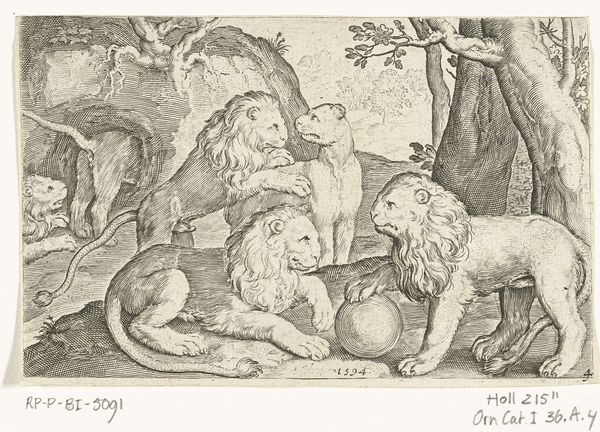
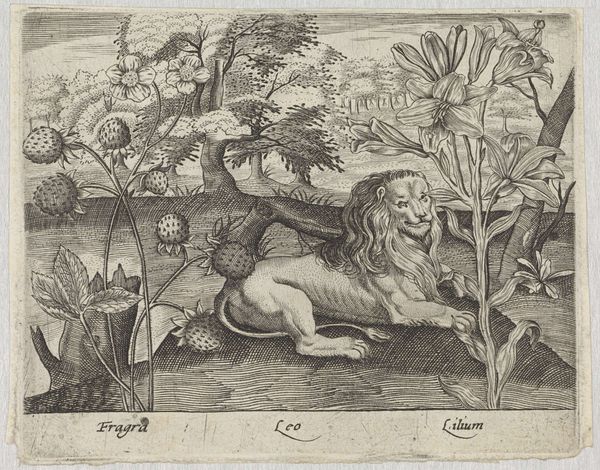
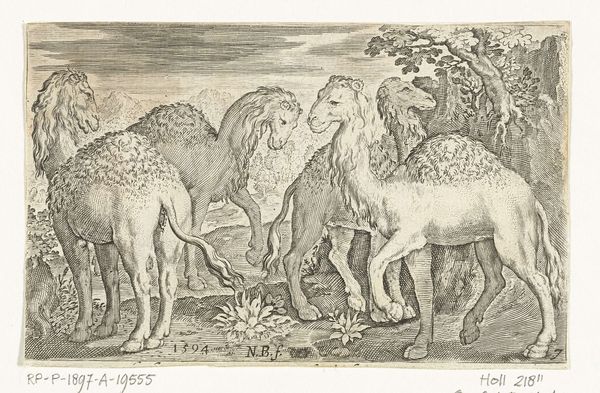
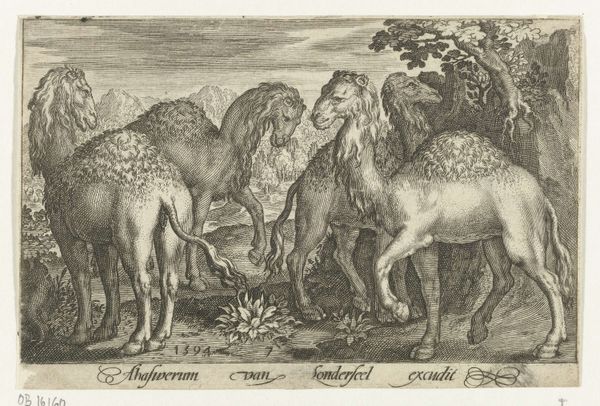
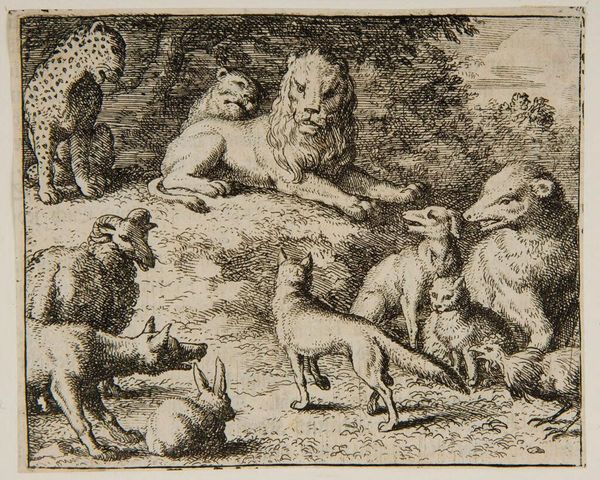
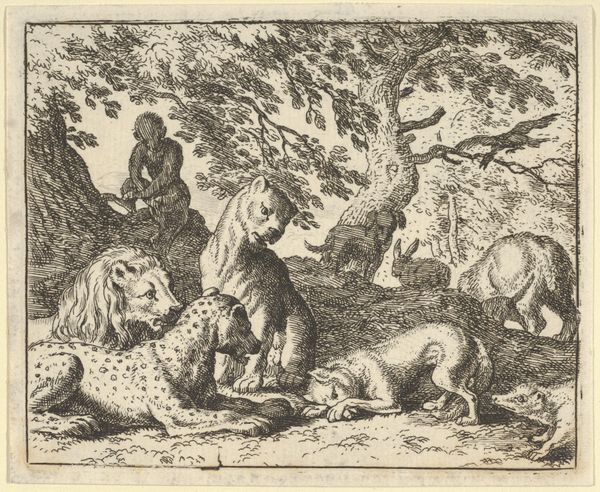
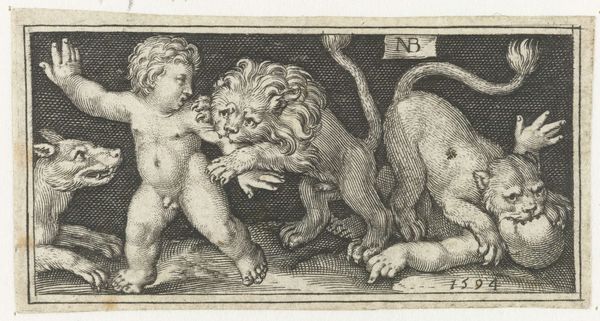
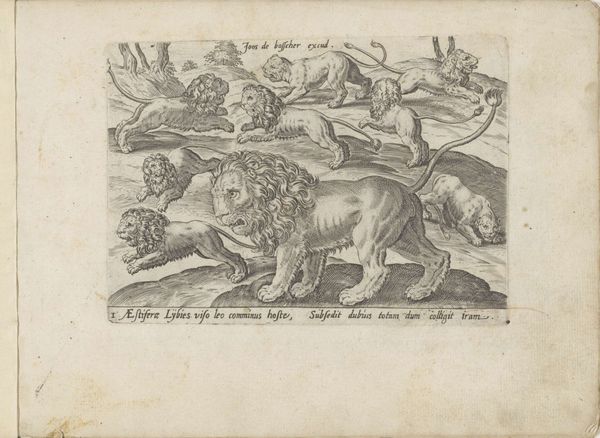
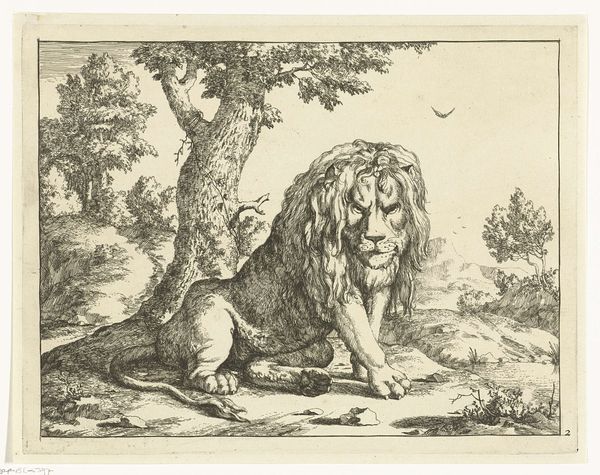
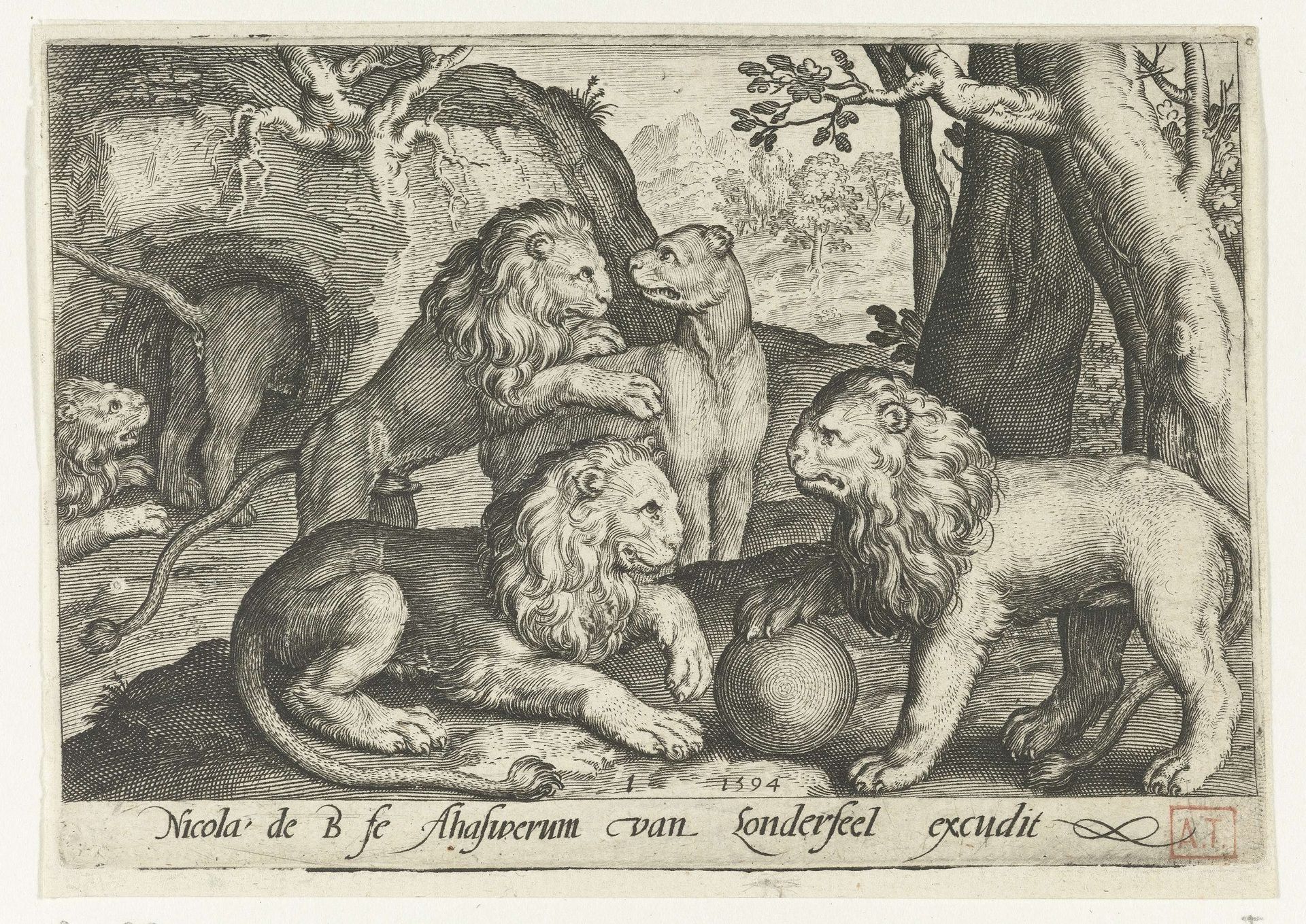
Nicolaes de Bruyn’s engraving presents us with a pride of lions in a seemingly tranquil yet subtly charged scene. The lion, throughout history, has been a potent symbol of power, courage, and royalty, often associated with solar deities and leadership. Here, a notable motif is the lion with its paw resting upon a sphere. This gesture harkens back to ancient depictions of rulers and gods, symbolizing dominion over the earth. We see echoes of this in classical statues of emperors and Renaissance allegories of earthly power. Consider, for instance, how this image resonates with similar motifs in Egyptian art, where the lion embodies the pharaoh's strength. The emotional depth lies in the contrast between the lion's serene posture and the latent power it represents. This tension engages our subconscious, stirring a primeval recognition of authority and control. This symbol is not static, it evolves, resurfaces, and accumulates new layers of meaning, reflecting our ever-changing cultural landscape.

Artwork details
- Medium
- print, engraving
- Dimensions
- height 89 mm, width 129 mm
- Location
- Rijksmuseum
- Copyright
- Rijks Museum: Open Domain
Tags
Comments
Share your thoughts
About this artwork
Nicolaes de Bruyn’s engraving presents us with a pride of lions in a seemingly tranquil yet subtly charged scene. The lion, throughout history, has been a potent symbol of power, courage, and royalty, often associated with solar deities and leadership. Here, a notable motif is the lion with its paw resting upon a sphere. This gesture harkens back to ancient depictions of rulers and gods, symbolizing dominion over the earth. We see echoes of this in classical statues of emperors and Renaissance allegories of earthly power. Consider, for instance, how this image resonates with similar motifs in Egyptian art, where the lion embodies the pharaoh's strength. The emotional depth lies in the contrast between the lion's serene posture and the latent power it represents. This tension engages our subconscious, stirring a primeval recognition of authority and control. This symbol is not static, it evolves, resurfaces, and accumulates new layers of meaning, reflecting our ever-changing cultural landscape.
Comments
Share your thoughts