About this artwork
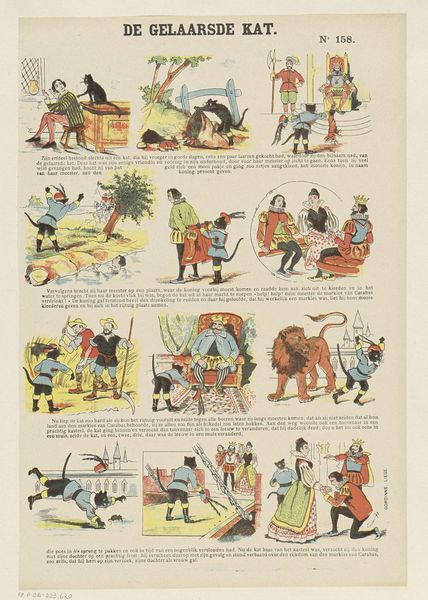
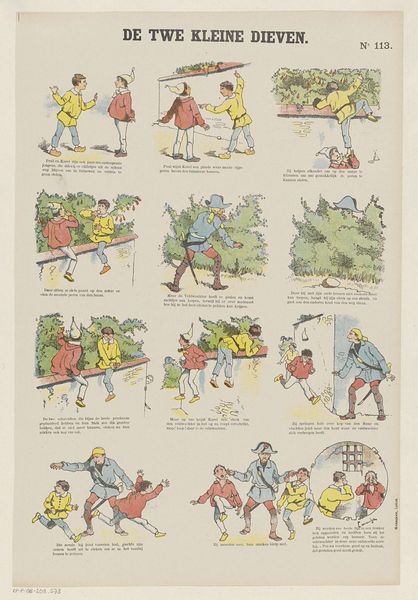
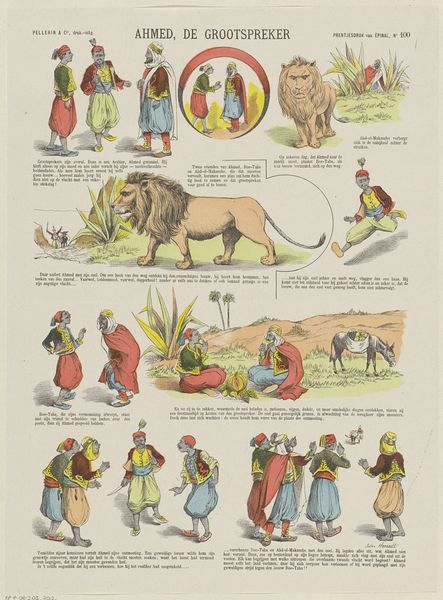
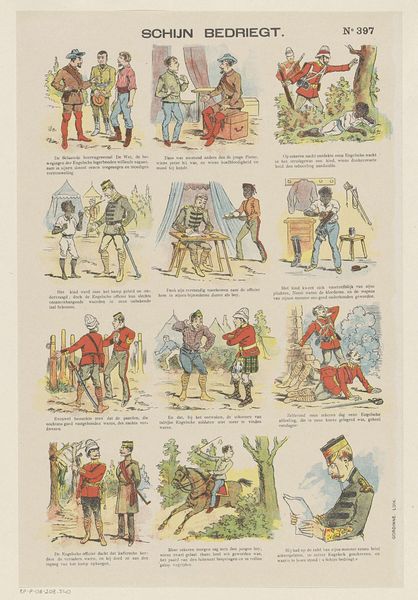
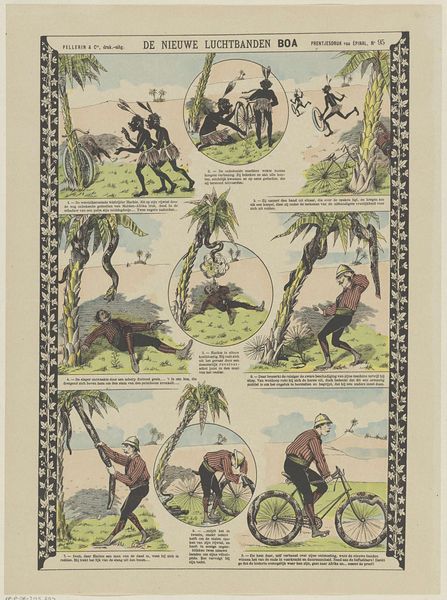
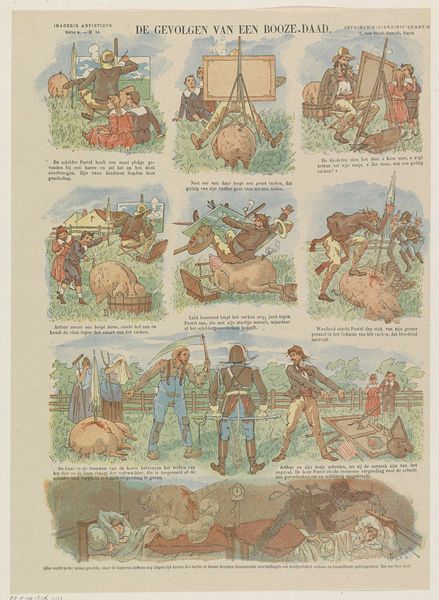
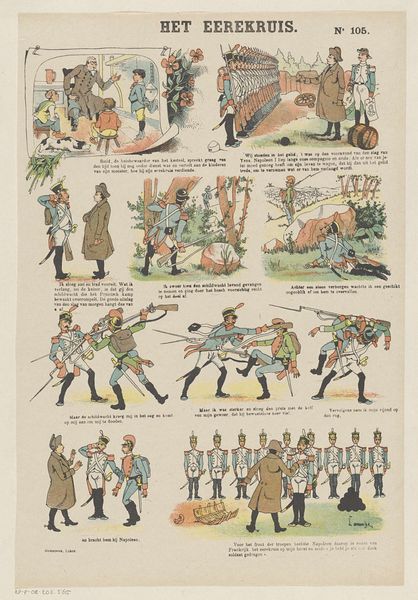
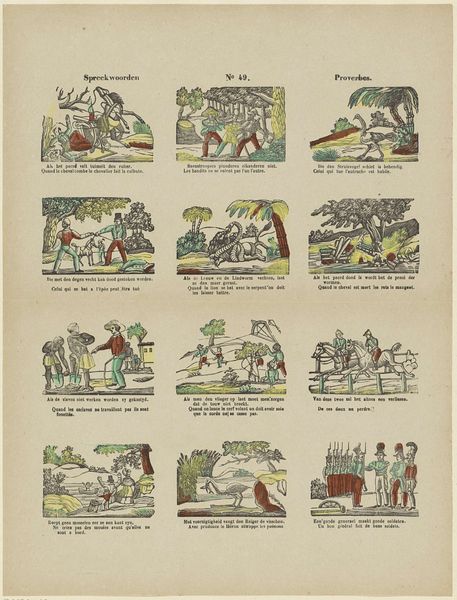
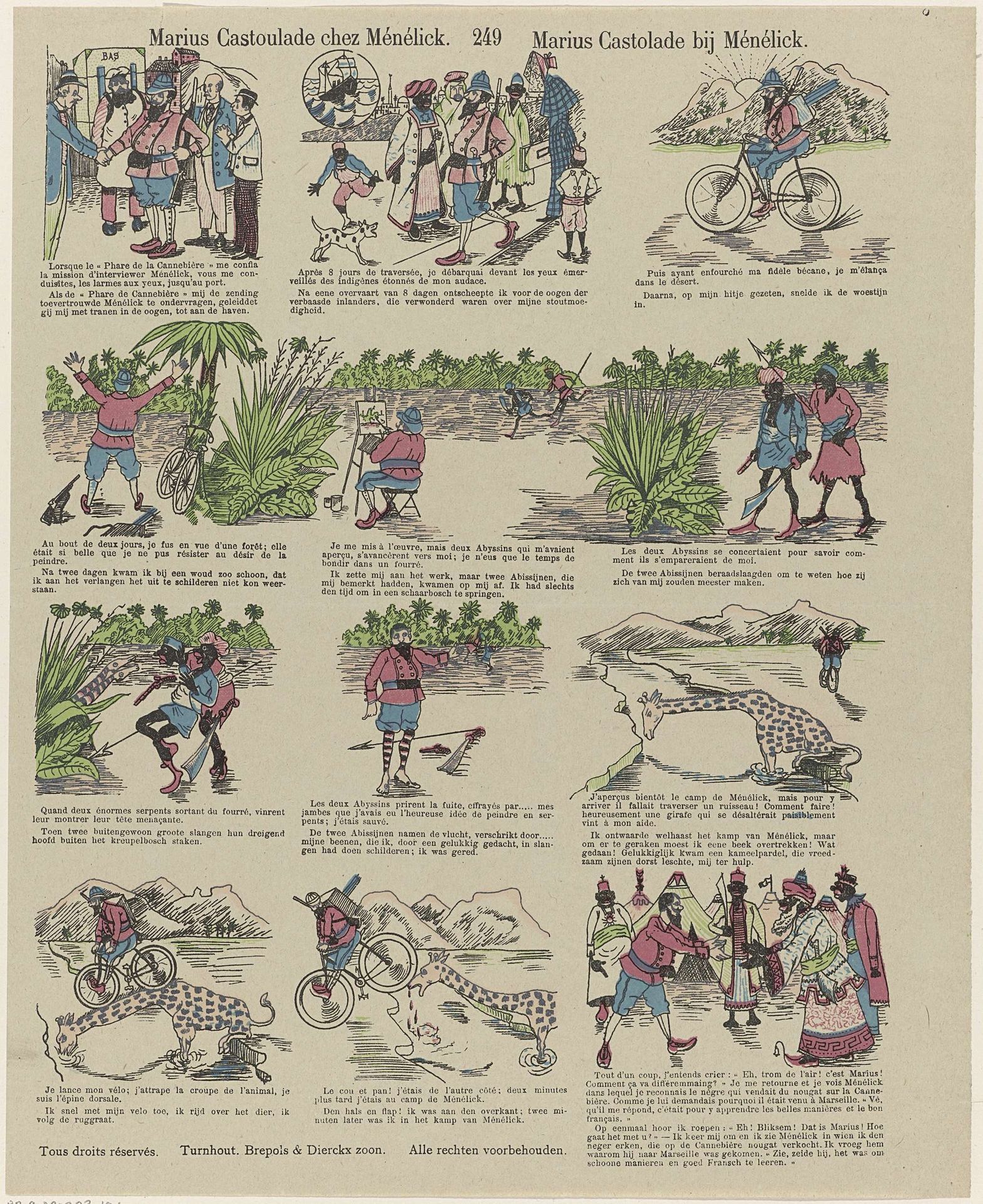
This illustrated print titled 'Marius Castiulade ches Ménélick' produced by Brepols & Dierckx Zoon, presents a series of scenes depicting a colonial narrative. The images tell a story of an encounter with Ménélick II, emperor of Ethiopia from 1889 to 1913. The comic-strip format and style suggest this work functions as social commentary, reflecting the time it was made, and as a piece of popular culture meant for broad consumption. The juxtaposition of the central figure with images of African people raises questions about cultural representation and power dynamics. The caricatured depictions reflect stereotypical views prevalent during the colonial era. This work reminds us to reflect on the historical context of imperial expansion and its impact on cultural exchange. By showing scenes that may once have been perceived as humorous, the work now serves as a stark reminder of the narratives and attitudes that supported colonial endeavors.
Marius Castiulade ches Ménélick / Marius Castolade bij Ménélick
1833 - 1911

Brepols & Dierckx zoon
@brepolsdierckxzoonLocation
RijksmuseumArtwork details
- Medium
- drawing, print, pen
- Dimensions
- height 382 mm, width 311 mm
- Location
- Rijksmuseum
- Copyright
- Rijks Museum: Open Domain
Tags
drawing
comic strip sketch
narrative-art
comic strip
personal sketchbook
sketchwork
illustrative and welcoming imagery
comic
pen work
sketchbook drawing
pen
storyboard and sketchbook work
sketchbook art
doodle art
Comments
Be the first to share your thoughts about this work.
About this artwork
This illustrated print titled 'Marius Castiulade ches Ménélick' produced by Brepols & Dierckx Zoon, presents a series of scenes depicting a colonial narrative. The images tell a story of an encounter with Ménélick II, emperor of Ethiopia from 1889 to 1913. The comic-strip format and style suggest this work functions as social commentary, reflecting the time it was made, and as a piece of popular culture meant for broad consumption. The juxtaposition of the central figure with images of African people raises questions about cultural representation and power dynamics. The caricatured depictions reflect stereotypical views prevalent during the colonial era. This work reminds us to reflect on the historical context of imperial expansion and its impact on cultural exchange. By showing scenes that may once have been perceived as humorous, the work now serves as a stark reminder of the narratives and attitudes that supported colonial endeavors.
Comments
Be the first to share your thoughts about this work.