About this artwork
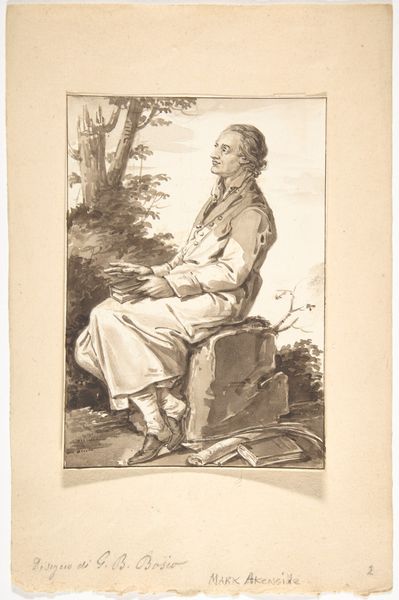
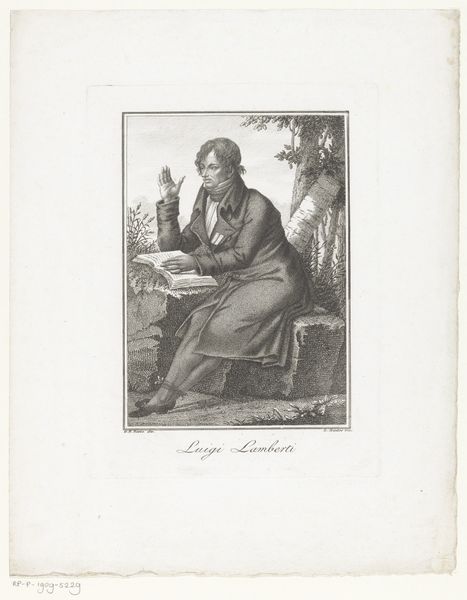
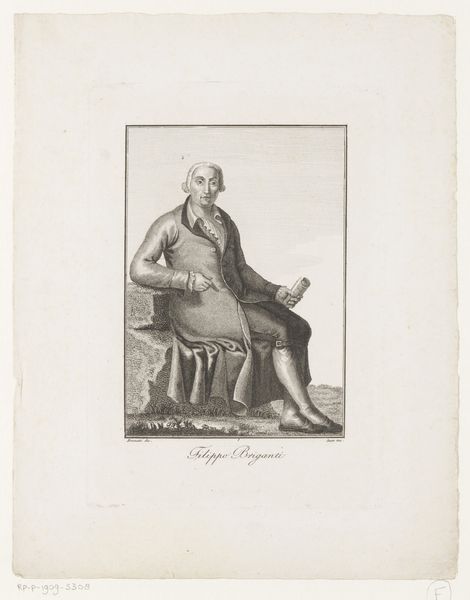
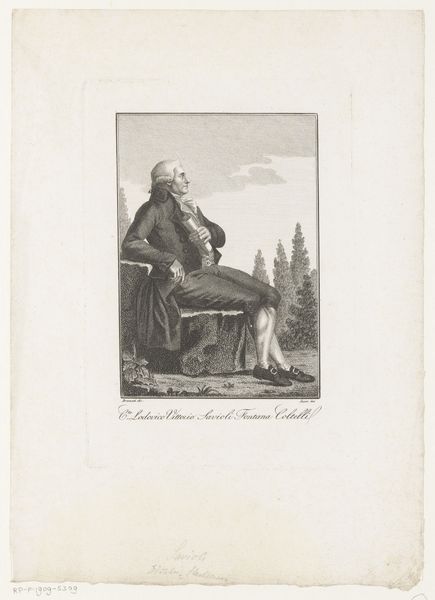
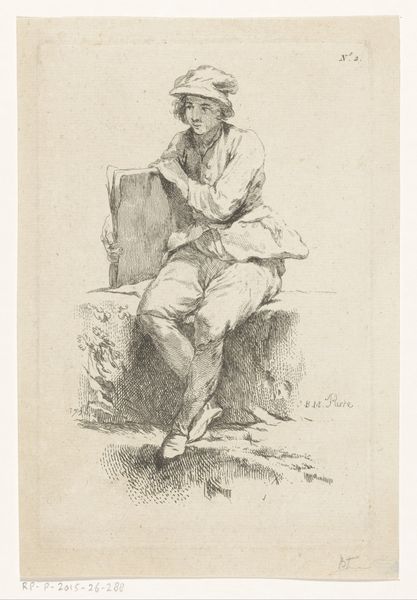
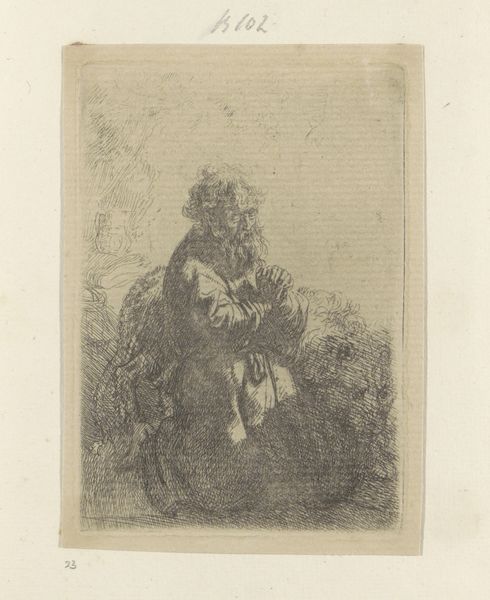
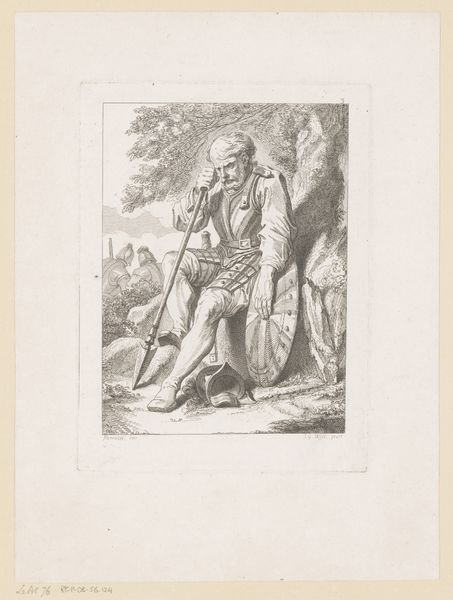
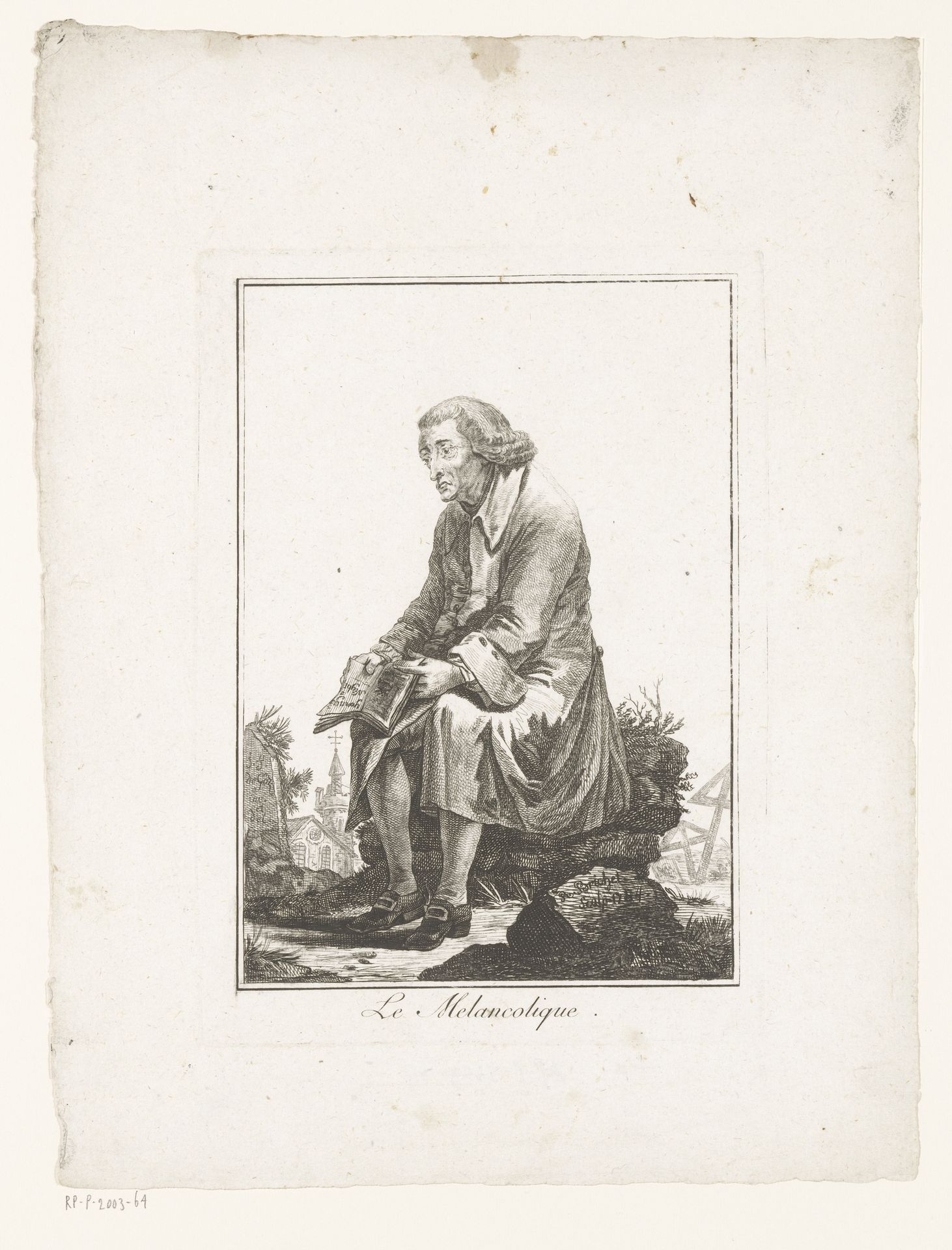
Editor: Here we have "Old Man Seated on a Stone with a Book in his Hands," created in 1784, currently residing at the Rijksmuseum. The work combines pen, ink, and engraving on paper. It strikes me as rather somber, perhaps reflective. What stands out to you about it? Curator: It is fascinating how the artist, Robert Brichet, utilizes the very process of engraving – a laborious and repetitive technique - to represent, and perhaps even embody, the melancholy of the subject. Consider the marks themselves, the individual lines etched onto the plate: how does this connect to the human labour and toil of Brichet to convey its sombre sentiment? Editor: That’s a really interesting take. So you're focusing not just on the image itself but the labour involved in creating it? Curator: Exactly. This connects to the means of production during the late 18th century, when printmaking was crucial for disseminating information. In the same context the mass consumption of printed matter and printed imagery provided a direct access to public discourse to all levels of society. We see, in a sense, how the "high art" of portraiture is being interwoven with the everyday world of printed media. Notice how the choice of material and the technique of production shaped its message and meaning. Editor: So it's not just a portrait, but a comment on the industrial processes influencing art at the time. That really shifts my perspective on the artwork. Curator: Precisely. What seems initially like a simple portrait reveals itself to be a complex intersection of material, technique, and social commentary once we consider its production and consumption within the broader cultural landscape. Editor: I never considered the material processes being so important when evaluating this! I'll definitely be thinking about the artist's work very differently from now on. Curator: That is the key, I find, to opening our eyes to the multiple readings that art has to offer!
Oude man gezeten op een steen met een boek in zijn handen 1784

Robert Brichet
1750 - 1850Location
RijksmuseumArtwork details
- Medium
- drawing, paper, pen, engraving
- Dimensions
- height 224 mm, width 160 mm
- Location
- Rijksmuseum
- Copyright
- Rijks Museum: Open Domain
Tags
portrait
drawing
neoclacissism
paper
15_18th-century
pen
genre-painting
engraving
Comments
No comments
About this artwork
Editor: Here we have "Old Man Seated on a Stone with a Book in his Hands," created in 1784, currently residing at the Rijksmuseum. The work combines pen, ink, and engraving on paper. It strikes me as rather somber, perhaps reflective. What stands out to you about it? Curator: It is fascinating how the artist, Robert Brichet, utilizes the very process of engraving – a laborious and repetitive technique - to represent, and perhaps even embody, the melancholy of the subject. Consider the marks themselves, the individual lines etched onto the plate: how does this connect to the human labour and toil of Brichet to convey its sombre sentiment? Editor: That’s a really interesting take. So you're focusing not just on the image itself but the labour involved in creating it? Curator: Exactly. This connects to the means of production during the late 18th century, when printmaking was crucial for disseminating information. In the same context the mass consumption of printed matter and printed imagery provided a direct access to public discourse to all levels of society. We see, in a sense, how the "high art" of portraiture is being interwoven with the everyday world of printed media. Notice how the choice of material and the technique of production shaped its message and meaning. Editor: So it's not just a portrait, but a comment on the industrial processes influencing art at the time. That really shifts my perspective on the artwork. Curator: Precisely. What seems initially like a simple portrait reveals itself to be a complex intersection of material, technique, and social commentary once we consider its production and consumption within the broader cultural landscape. Editor: I never considered the material processes being so important when evaluating this! I'll definitely be thinking about the artist's work very differently from now on. Curator: That is the key, I find, to opening our eyes to the multiple readings that art has to offer!
Comments
No comments