About this artwork
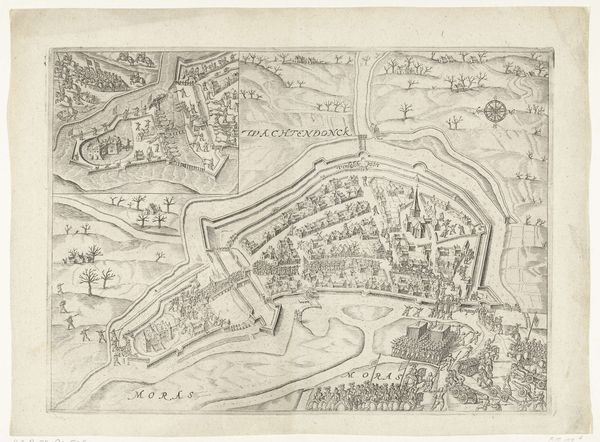
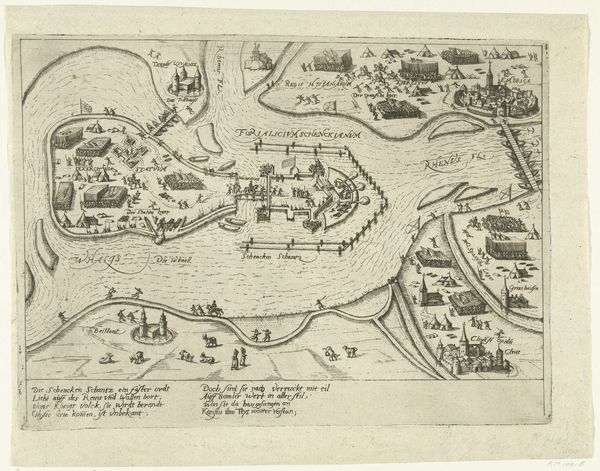
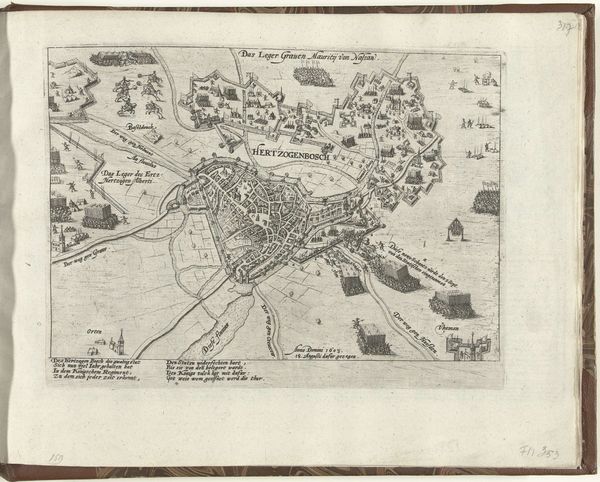
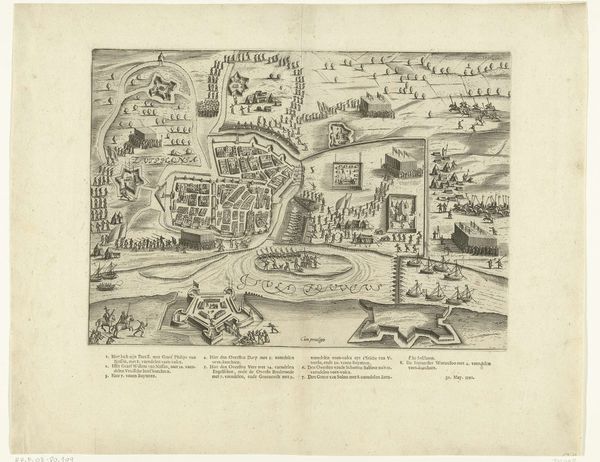
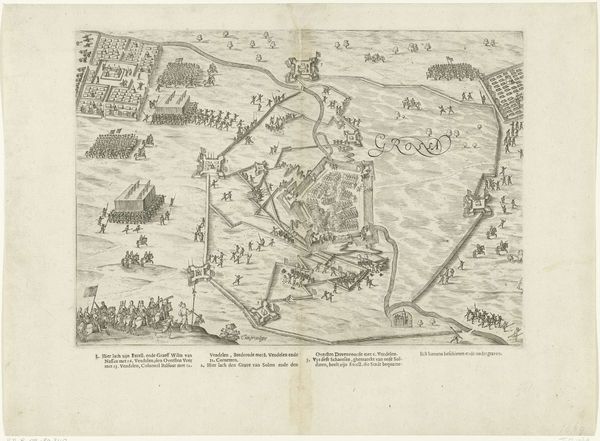
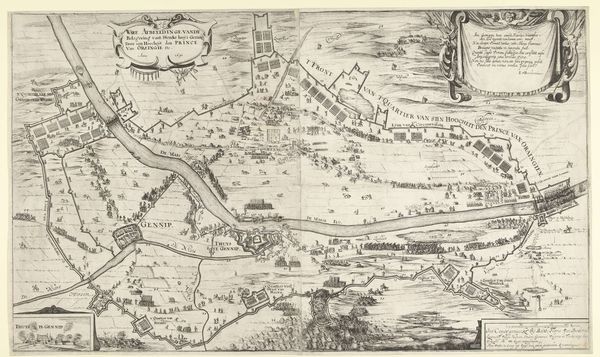
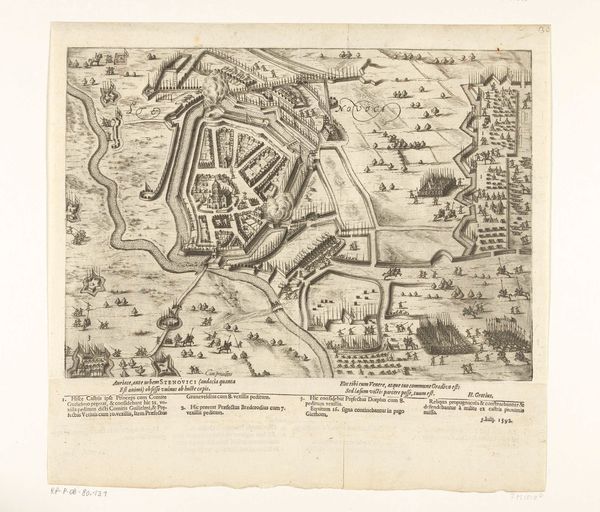
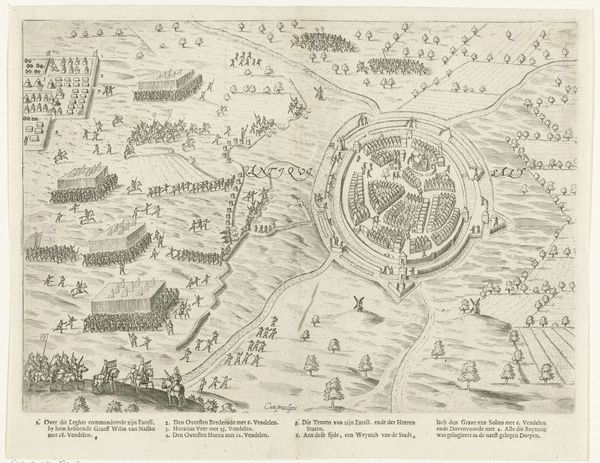
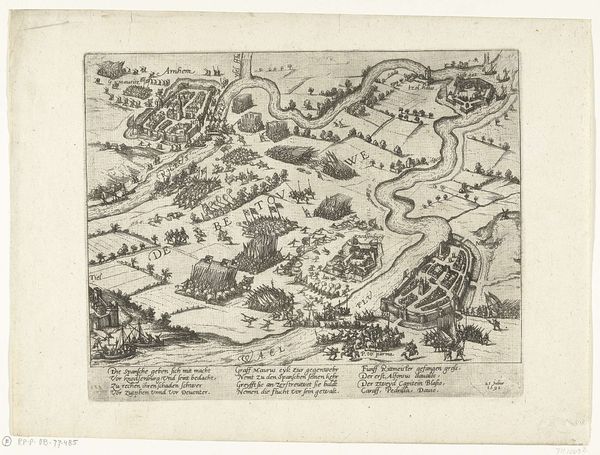
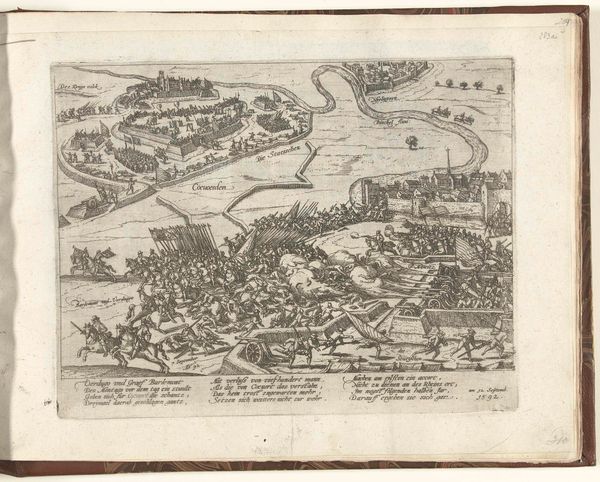
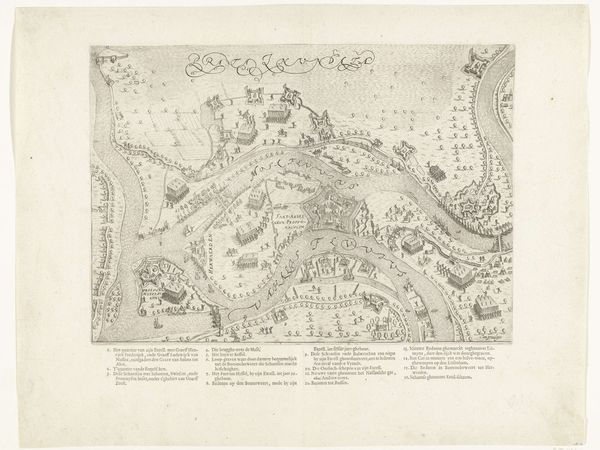
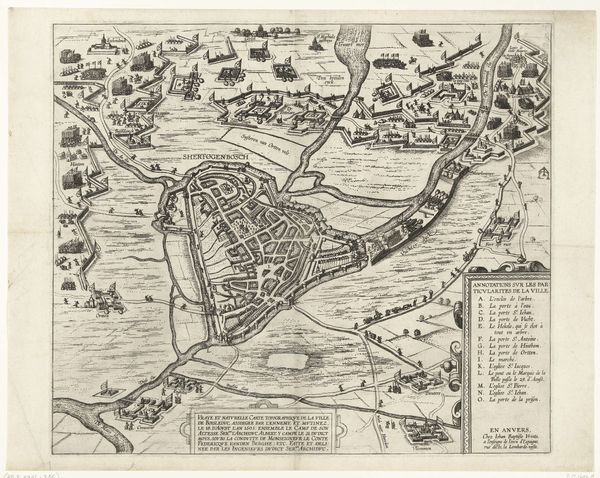
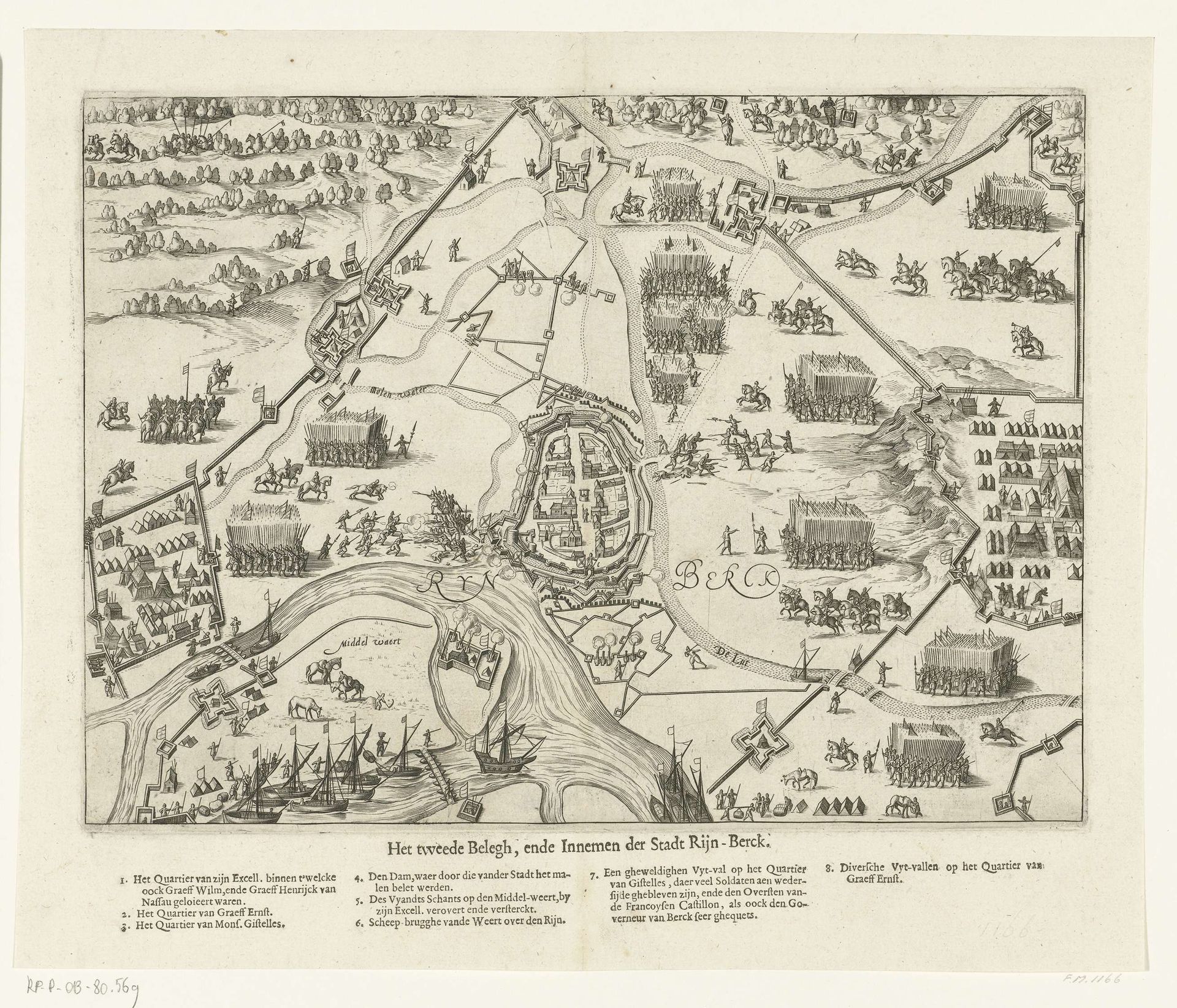
Bartholomeus Willemsz. Dolendo created this print of the Siege and Capture of Rheinberg by Maurits in 1601. The detailed rendering, achieved through engraving, presents a bird's-eye view of the siege. The composition is highly structured, dividing the scene into distinct zones of military activity around the fortified city. The artist employs a network of precise lines to define the topography, fortifications, and troop formations. This meticulousness creates a sense of order and control, yet the density of detail also conveys the intensity of the military operation. The use of linear perspective flattens the scene, emphasizing the strategic layout rather than depth. The print's overall structure and linear quality offer a formal representation of military strategy and power. It functions less as a depiction of lived experience and more as an abstracted, semiotic map. The detailed rendering serves to categorize and codify space according to military interests. This print can be interpreted as a visual construction of power.
Beleg en inname van Rheinberg door Maurits, 1601
1601 - 1610

Bartholomeus Willemsz. Dolendo
1572 - 1626Location
RijksmuseumArtwork details
- Medium
- print, engraving
- Dimensions
- height 287 mm, width 345 mm
- Location
- Rijksmuseum
- Copyright
- Rijks Museum: Open Domain
Tags
Comments
Share your thoughts
About this artwork
Bartholomeus Willemsz. Dolendo created this print of the Siege and Capture of Rheinberg by Maurits in 1601. The detailed rendering, achieved through engraving, presents a bird's-eye view of the siege. The composition is highly structured, dividing the scene into distinct zones of military activity around the fortified city. The artist employs a network of precise lines to define the topography, fortifications, and troop formations. This meticulousness creates a sense of order and control, yet the density of detail also conveys the intensity of the military operation. The use of linear perspective flattens the scene, emphasizing the strategic layout rather than depth. The print's overall structure and linear quality offer a formal representation of military strategy and power. It functions less as a depiction of lived experience and more as an abstracted, semiotic map. The detailed rendering serves to categorize and codify space according to military interests. This print can be interpreted as a visual construction of power.
Comments
Share your thoughts