About this artwork
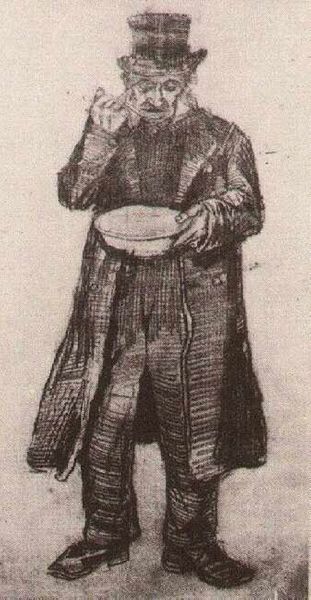
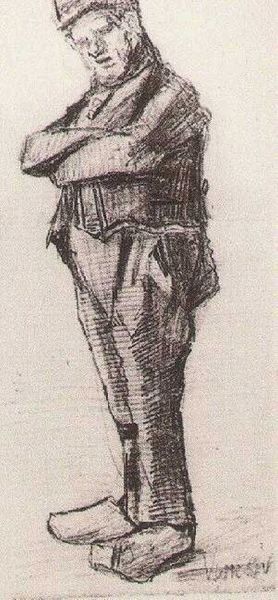
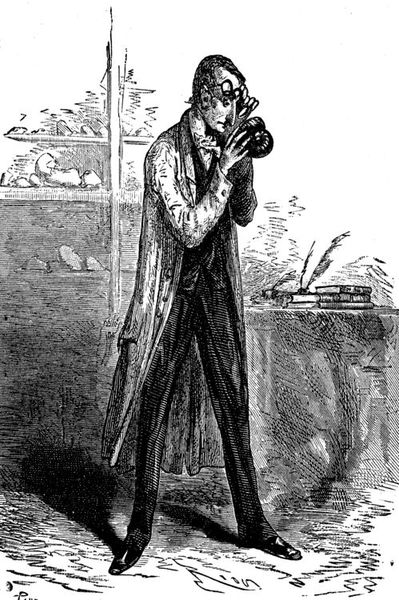
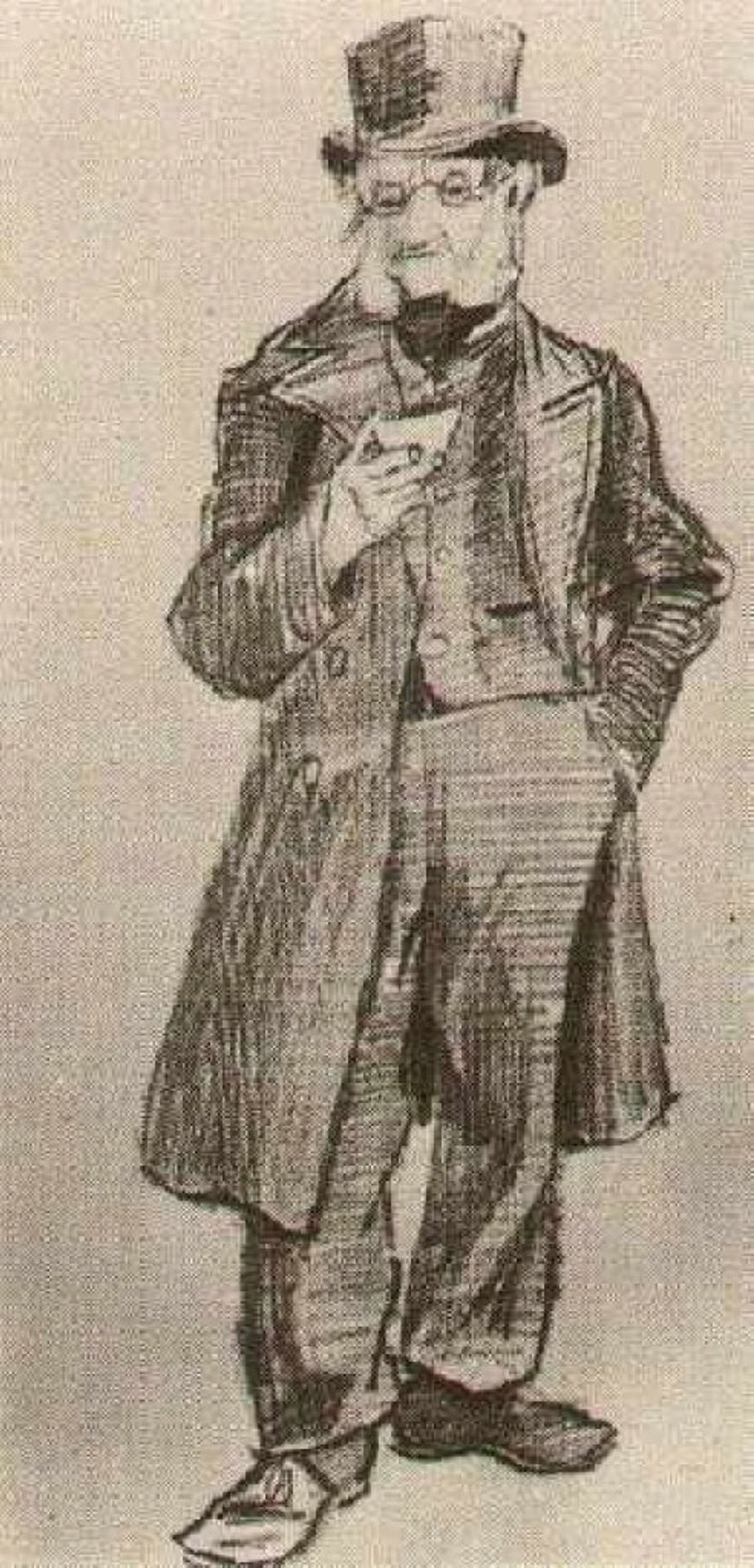
Vincent van Gogh made this drawing of an Orphan Man with Top Hat, Holding Cup, using pen and ink, on paper. Van Gogh uses hatching and cross-hatching techniques, layering lines to build tone and shadow. The varying pressure of the pen creates a sense of depth and texture, from the man's clothing to the subtle contours of his face. These linear patterns are not just descriptive; they also convey the emotional weight of the subject, highlighting the man's weariness and quiet dignity. The quick, expressive strokes give the drawing an immediacy, as if capturing a fleeting moment. Van Gogh doesn't idealize his subject; instead, the rawness of the drawing reflects the man's harsh reality, and provides an intimacy of vision. The image invites us to reflect on the lives of working-class individuals during Van Gogh's time, the labor and the social conditions that shape their experiences. By focusing on the materiality and processes of art, we can better understand the depth of its meaning.
Orphan Man with Top Hat, Holding Cup
1882

Vincent van Gogh
1853 - 1890Location
Smith College Museum of Art (SCMA), Northampton, MA, USArtwork details
- Medium
- drawing, pencil
- Location
- Smith College Museum of Art (SCMA), Northampton, MA, US
- Copyright
- Public domain
Tags
Comments
Share your thoughts
About this artwork
Vincent van Gogh made this drawing of an Orphan Man with Top Hat, Holding Cup, using pen and ink, on paper. Van Gogh uses hatching and cross-hatching techniques, layering lines to build tone and shadow. The varying pressure of the pen creates a sense of depth and texture, from the man's clothing to the subtle contours of his face. These linear patterns are not just descriptive; they also convey the emotional weight of the subject, highlighting the man's weariness and quiet dignity. The quick, expressive strokes give the drawing an immediacy, as if capturing a fleeting moment. Van Gogh doesn't idealize his subject; instead, the rawness of the drawing reflects the man's harsh reality, and provides an intimacy of vision. The image invites us to reflect on the lives of working-class individuals during Van Gogh's time, the labor and the social conditions that shape their experiences. By focusing on the materiality and processes of art, we can better understand the depth of its meaning.
Comments
Share your thoughts