About this artwork
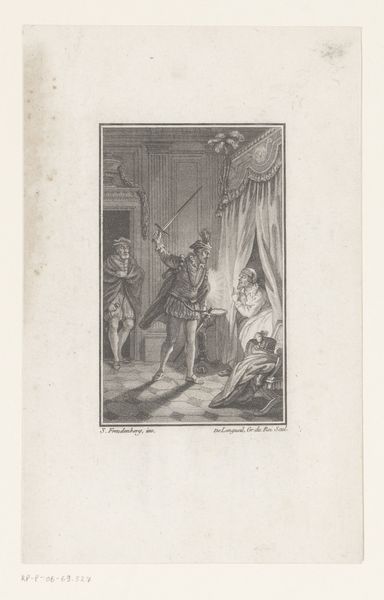
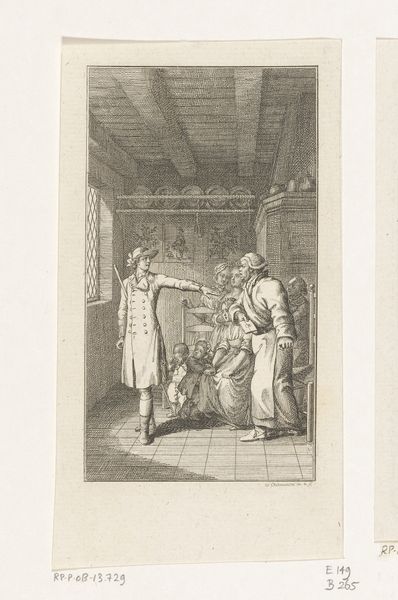
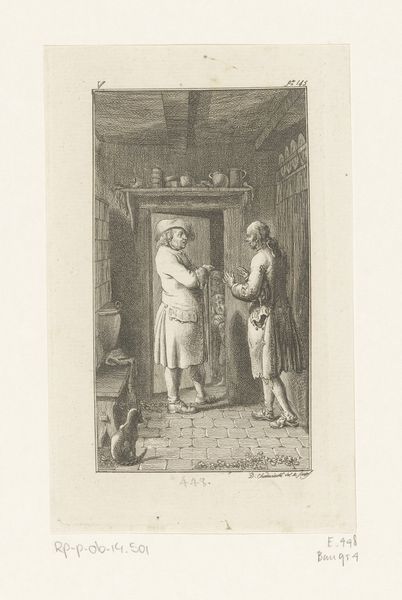
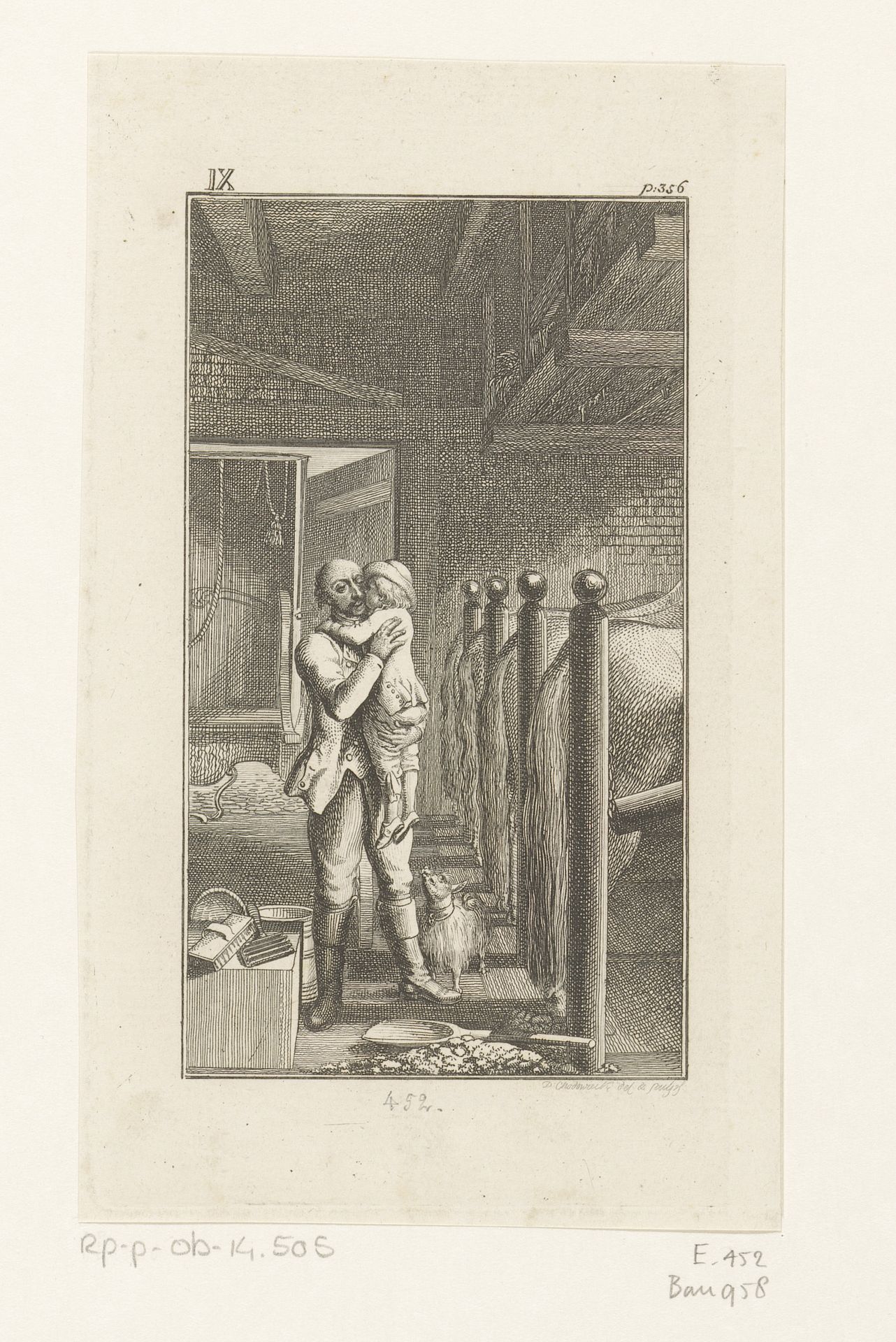
Daniel Nikolaus Chodowiecki created this print, Karl Kust Koetsier Franz op zijn snor, using etching. The composition depicts an intimate moment between a father and son set within the confines of a stable, highlighting the intersections of class, labor, and familial affection in 18th-century life. Produced in Germany during the Enlightenment, the artwork reflects the era's interest in domestic life. The stable setting is significant, and the horses behind the figures suggest a commentary on social hierarchy and the roles individuals play within it. The warm embrace between father and son may gently critique the rigid class structures of the time, proposing alternative values rooted in familial bonds. To understand Chodowiecki’s commentary fully, scholars consult period literature, social histories, and records of artistic patronage. This print reminds us that art is a product of its time.
Karl kust koetsier Franz op zijn snor
1782

Daniel Nikolaus Chodowiecki
1726 - 1801Location
RijksmuseumArtwork details
- Dimensions
- height 160 mm, width 97 mm
- Location
- Rijksmuseum
- Copyright
- Rijks Museum: Open Domain
Comments
Share your thoughts
About this artwork
Daniel Nikolaus Chodowiecki created this print, Karl Kust Koetsier Franz op zijn snor, using etching. The composition depicts an intimate moment between a father and son set within the confines of a stable, highlighting the intersections of class, labor, and familial affection in 18th-century life. Produced in Germany during the Enlightenment, the artwork reflects the era's interest in domestic life. The stable setting is significant, and the horses behind the figures suggest a commentary on social hierarchy and the roles individuals play within it. The warm embrace between father and son may gently critique the rigid class structures of the time, proposing alternative values rooted in familial bonds. To understand Chodowiecki’s commentary fully, scholars consult period literature, social histories, and records of artistic patronage. This print reminds us that art is a product of its time.
Comments
Share your thoughts