About this artwork
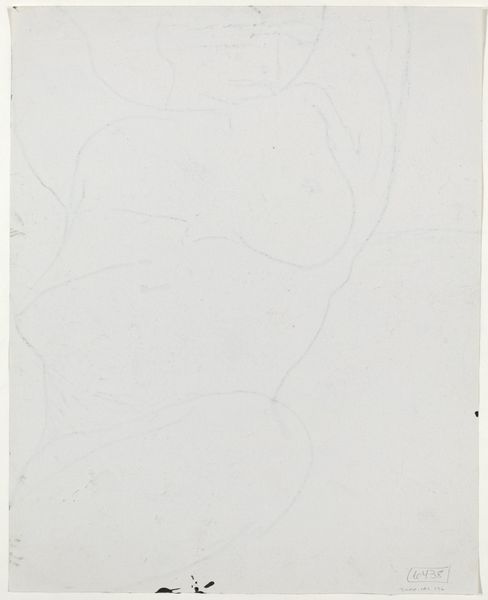
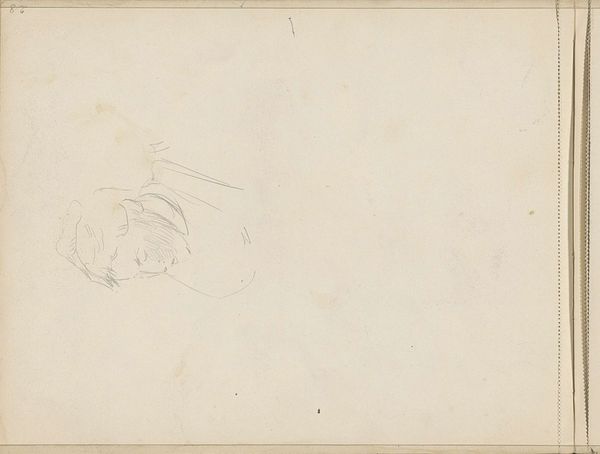
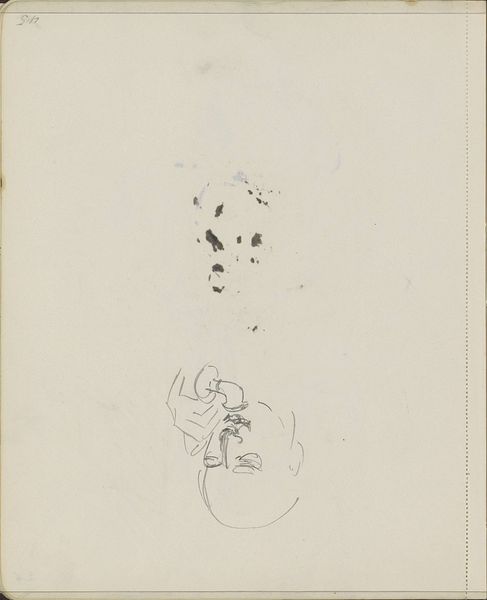
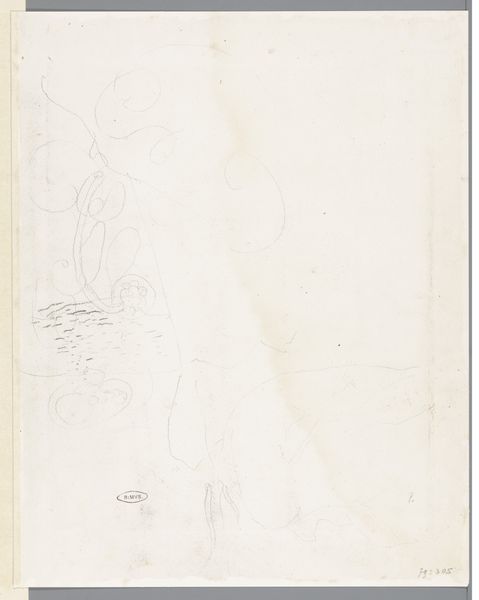
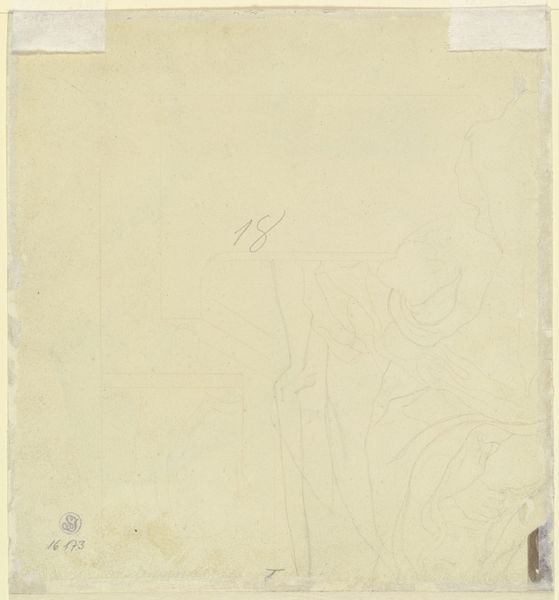
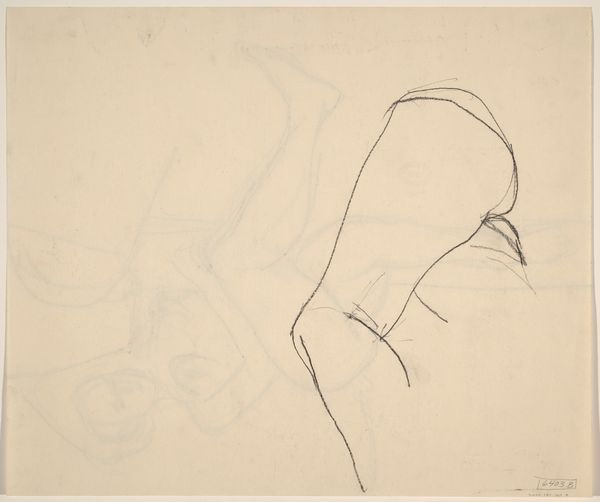
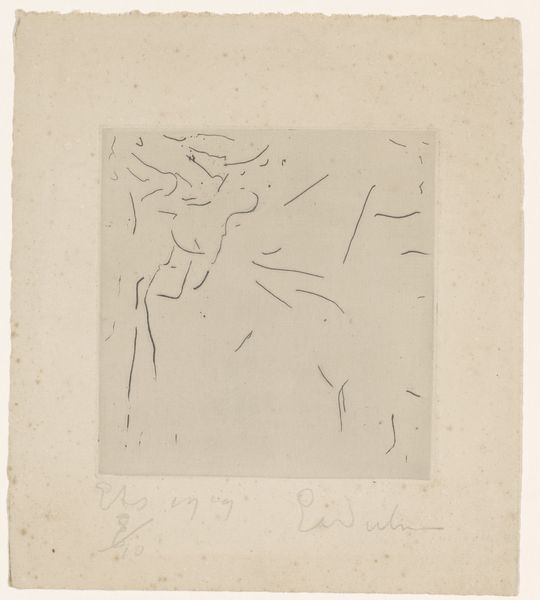
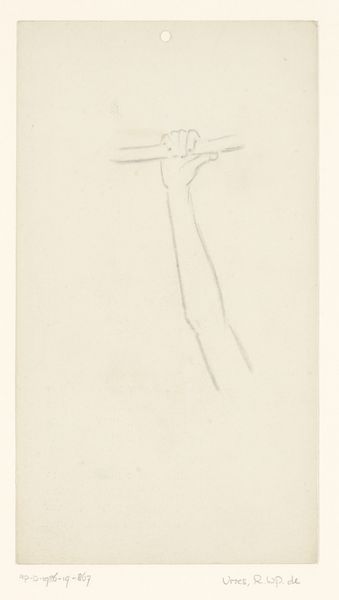
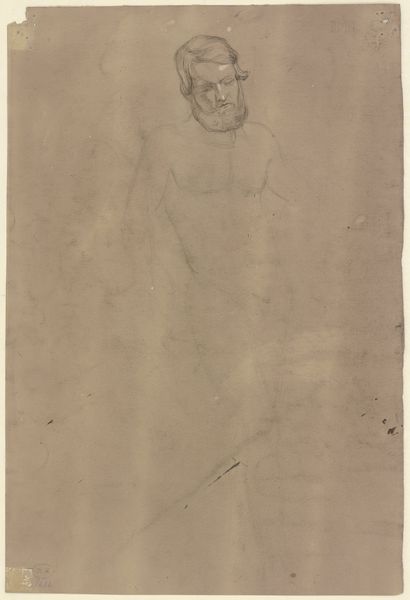
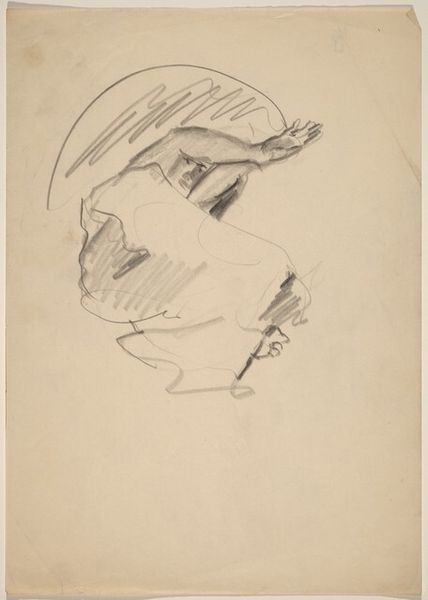
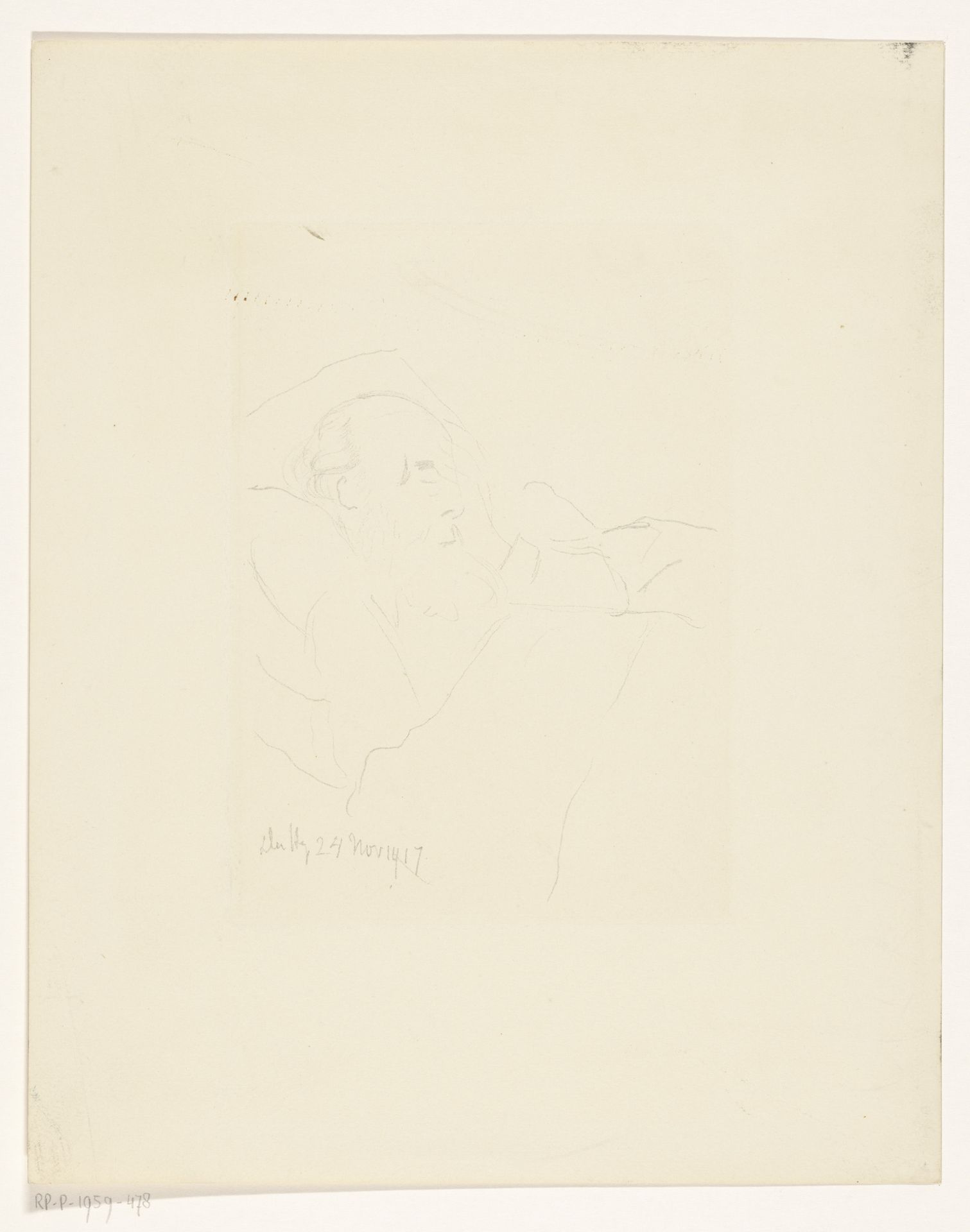
This is a pencil drawing of Carel Cachet on his deathbed, made by an unknown artist. Cachet, born in 1864, was a Dutch artist known for his decorative designs and bookbindings, deeply influenced by the Arts and Crafts movement. Consider the cultural context: Cachet lived through a period of immense social change and two World Wars. This drawing, a simple sketch, captures a deeply personal and intimate moment. It invites contemplation on mortality, memory, and the representation of death. The sketch deviates from traditional representations of death that often romanticize or idealize the deceased. Instead, it offers a raw, unadorned glimpse into the final moments of a life. What does it mean to witness such a private moment, rendered in such a delicate medium? The fragility of the pencil lines mirrors the transience of life itself. It evokes empathy, connecting us to the universal experience of loss.
Portret van Carel Cachet op zijn sterfbed
Possibly 1917

Carel Adolph Lion Cachet
1864 - 1945Location
RijksmuseumArtwork details
- Medium
- drawing, pencil
- Dimensions
- height 193 mm, width 140 mm
- Location
- Rijksmuseum
- Copyright
- Rijks Museum: Open Domain
Tags
portrait
drawing
pencil sketch
landscape
figuration
pencil
sketchbook drawing
Comments
Be the first to share your thoughts about this work.
About this artwork
This is a pencil drawing of Carel Cachet on his deathbed, made by an unknown artist. Cachet, born in 1864, was a Dutch artist known for his decorative designs and bookbindings, deeply influenced by the Arts and Crafts movement. Consider the cultural context: Cachet lived through a period of immense social change and two World Wars. This drawing, a simple sketch, captures a deeply personal and intimate moment. It invites contemplation on mortality, memory, and the representation of death. The sketch deviates from traditional representations of death that often romanticize or idealize the deceased. Instead, it offers a raw, unadorned glimpse into the final moments of a life. What does it mean to witness such a private moment, rendered in such a delicate medium? The fragility of the pencil lines mirrors the transience of life itself. It evokes empathy, connecting us to the universal experience of loss.
Comments
Be the first to share your thoughts about this work.