About this artwork
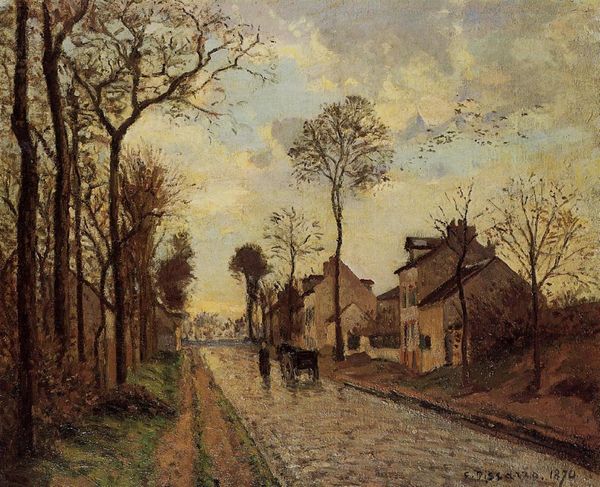
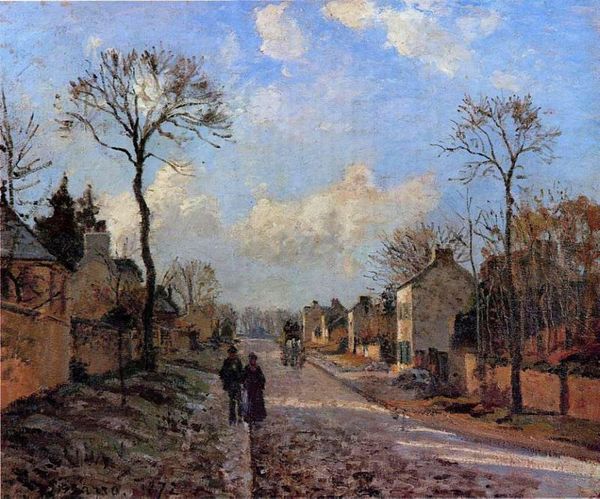
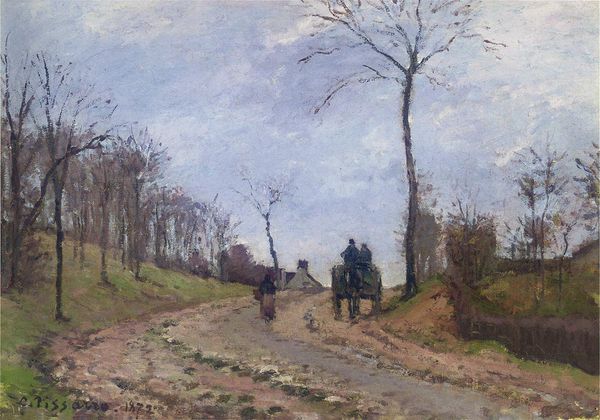
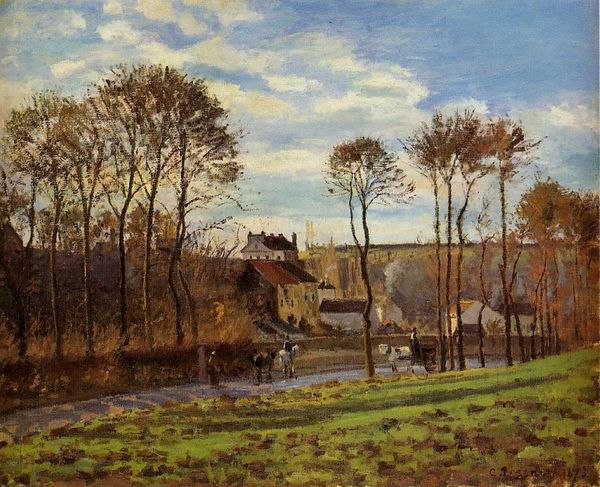
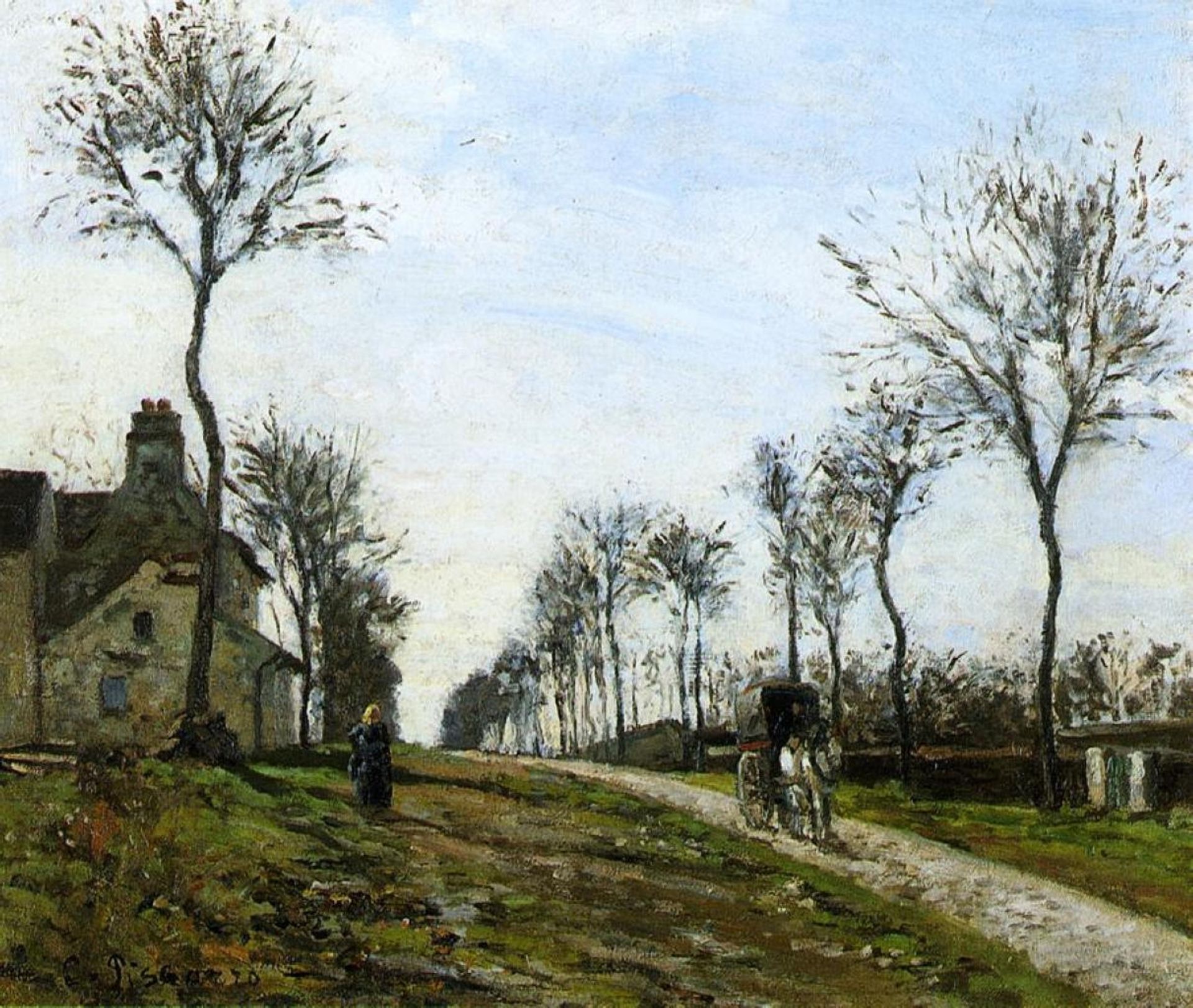
Editor: So, we’re looking at Camille Pissarro's "Road to Louveciennes," an oil painting. The bare trees and muted colors give it such a stark, almost melancholic feeling. What do you see in this piece? Curator: The road itself is a potent symbol. Roads often represent journeys, paths of life, and transitions. Pissarro presents a seemingly ordinary road, yet the slightly ominous atmosphere conjures themes of mortality, as nature seems to rest, suggesting contemplation of life's cycles. What do you notice about the figures on the road? Editor: I see a woman walking on the side and a horse-drawn carriage. They seem quite small, almost insignificant against the vastness of the landscape. Curator: Exactly. They emphasize our relationship to the surrounding environment, like small components inhabiting this larger space. The figures' scale underscores how personal histories take place alongside significant changes and monumental continuities, where everyday happenings contrast sharply with enduring elements like land and sky. Notice the color palette too. Editor: Mostly earth tones, grays, and pale blues. It contributes to the overall subdued feeling, wouldn't you agree? Curator: Indeed. The colors contribute to a muted symbolic code – browns symbolizing grounding, blues alluding to the vast and the spiritual, combined they evoke feelings of reflection, maybe even acceptance of transience. How does that feeling resonate with you? Editor: It's interesting. I initially saw sadness, but understanding the symbolism shifts my perspective. It's more contemplative than sad. Curator: Yes. And perhaps Pissarro wanted viewers to pause, to reflect on the passage of time and the ever-changing landscape of life. It shows how visual elements have deeply anchored meanings in how we process change and enduring human emotions. Editor: I’ll definitely remember that – images are often deeper than initial glances, telling bigger stories about shared beliefs!

Artwork details
- Medium
- painting, plein-air, oil-paint
- Copyright
- Public domain
Tags
Comments
Share your thoughts
About this artwork
Editor: So, we’re looking at Camille Pissarro's "Road to Louveciennes," an oil painting. The bare trees and muted colors give it such a stark, almost melancholic feeling. What do you see in this piece? Curator: The road itself is a potent symbol. Roads often represent journeys, paths of life, and transitions. Pissarro presents a seemingly ordinary road, yet the slightly ominous atmosphere conjures themes of mortality, as nature seems to rest, suggesting contemplation of life's cycles. What do you notice about the figures on the road? Editor: I see a woman walking on the side and a horse-drawn carriage. They seem quite small, almost insignificant against the vastness of the landscape. Curator: Exactly. They emphasize our relationship to the surrounding environment, like small components inhabiting this larger space. The figures' scale underscores how personal histories take place alongside significant changes and monumental continuities, where everyday happenings contrast sharply with enduring elements like land and sky. Notice the color palette too. Editor: Mostly earth tones, grays, and pale blues. It contributes to the overall subdued feeling, wouldn't you agree? Curator: Indeed. The colors contribute to a muted symbolic code – browns symbolizing grounding, blues alluding to the vast and the spiritual, combined they evoke feelings of reflection, maybe even acceptance of transience. How does that feeling resonate with you? Editor: It's interesting. I initially saw sadness, but understanding the symbolism shifts my perspective. It's more contemplative than sad. Curator: Yes. And perhaps Pissarro wanted viewers to pause, to reflect on the passage of time and the ever-changing landscape of life. It shows how visual elements have deeply anchored meanings in how we process change and enduring human emotions. Editor: I’ll definitely remember that – images are often deeper than initial glances, telling bigger stories about shared beliefs!
Comments
Share your thoughts