About this artwork
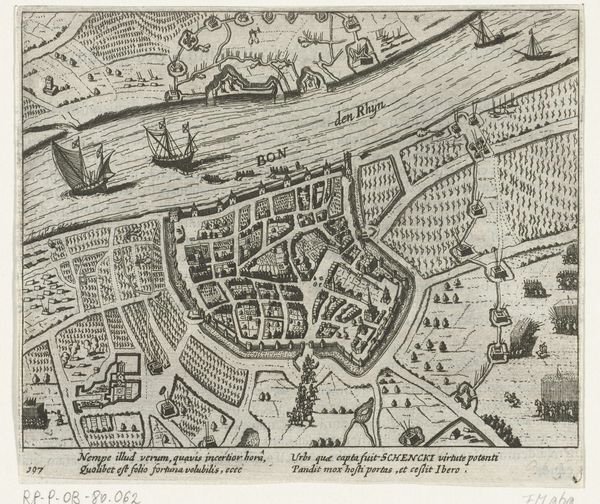
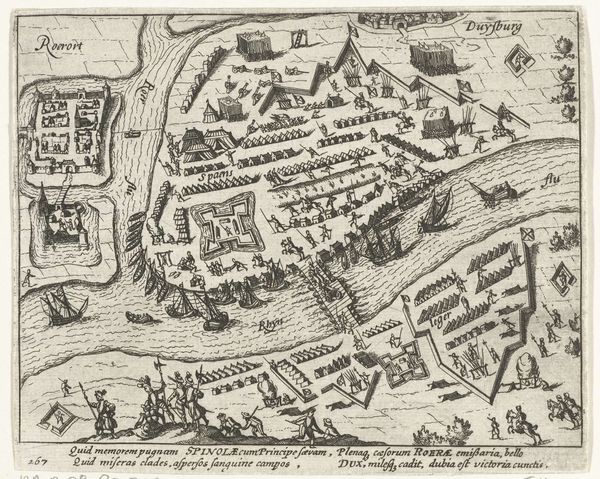
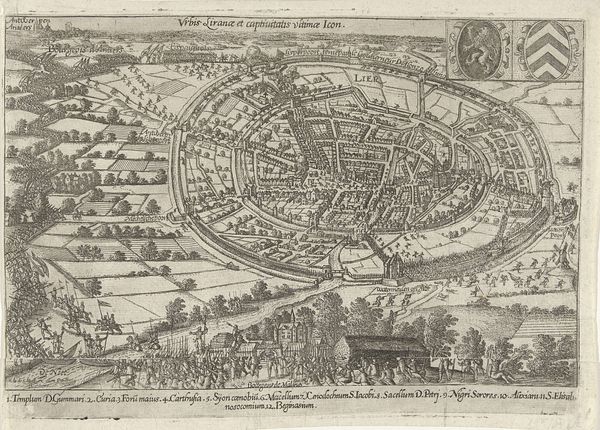
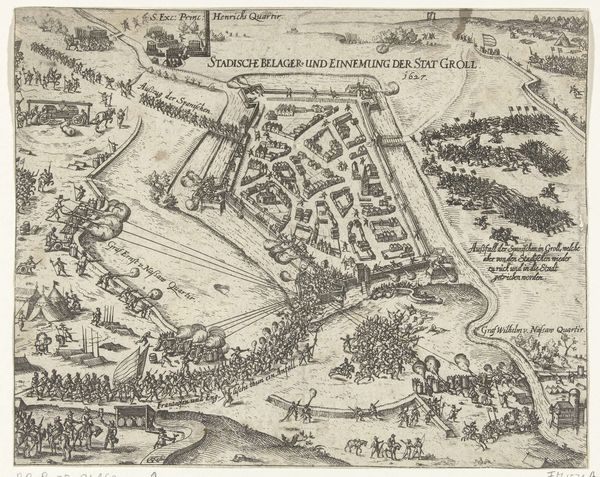
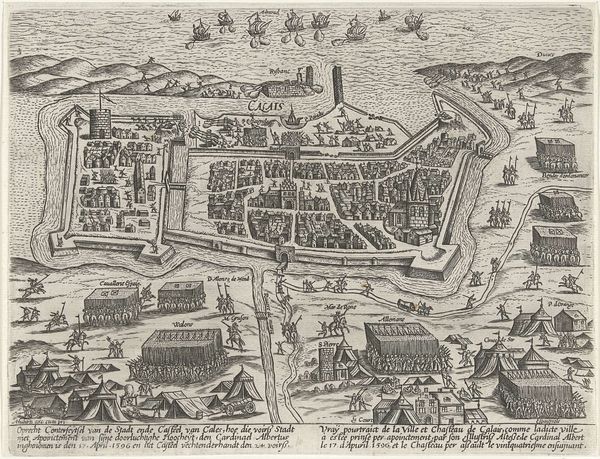
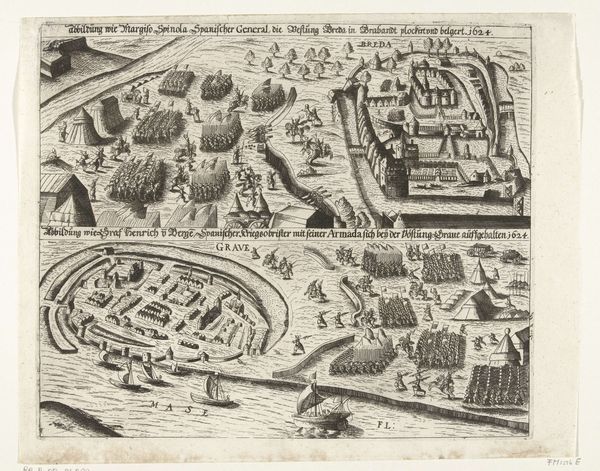
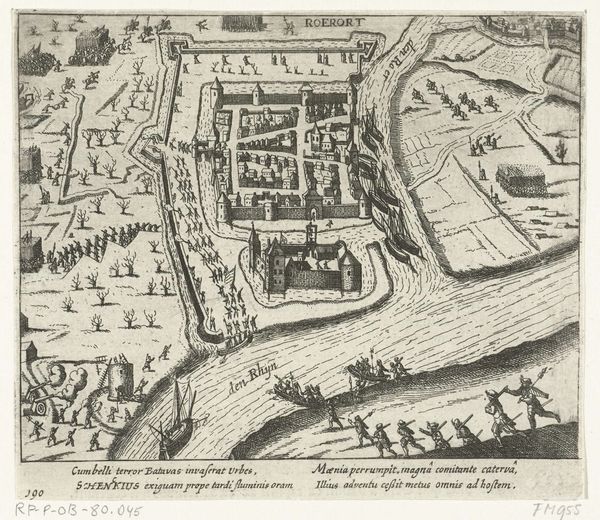
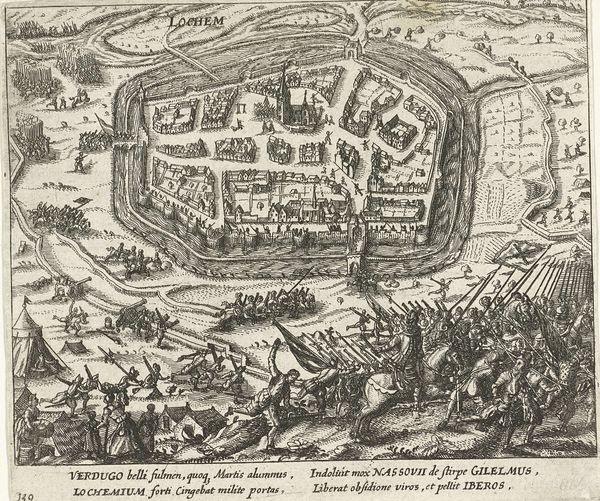
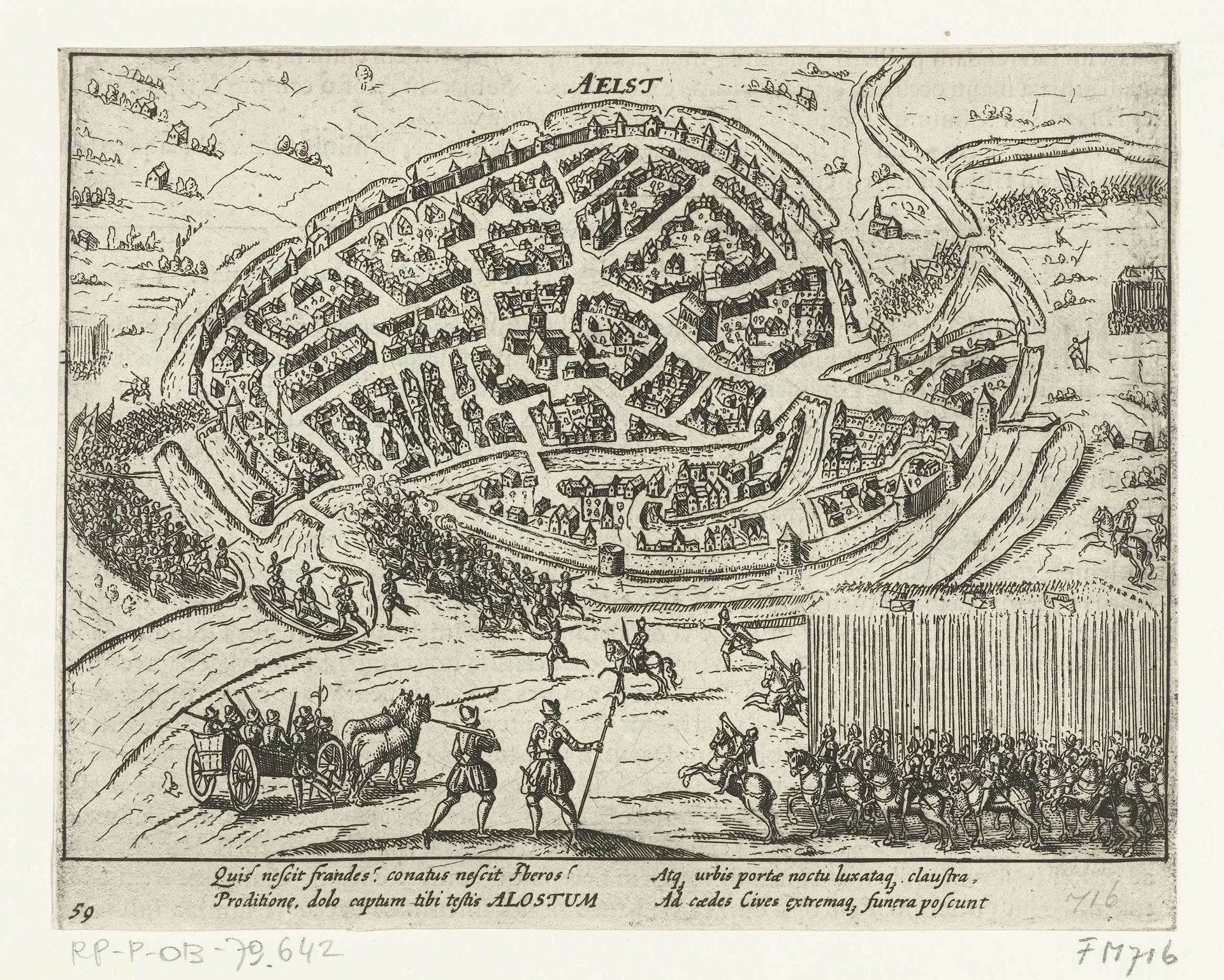
This engraving, titled "Inname van Aalst door de Spanjaarden, 1576," was created by an anonymous artist. Its monochrome palette and fine lines capture a pivotal historical moment with striking clarity. The composition is dominated by the bird's-eye view of Aalst, a city neatly contained within its fortifications. This perspective isn't merely descriptive; it's a strategic overview, typical of military cartography. The stark contrast between the orderly architecture of the city and the chaotic movement of the invading forces creates a visual tension, destabilizing the idea of Aalst as an impenetrable fortress. The artist uses a semiotic system of signs to communicate the city's vulnerability, its gates breached and its inhabitants under siege. The overall structure suggests a shift in power, a breakdown of established order. The artist's engagement with space and representation is less about celebrating victory and more about exploring the fragile nature of political and architectural constructs.

Artwork details
- Medium
- print, engraving
- Dimensions
- height 136 mm, width 172 mm
- Location
- Rijksmuseum
- Copyright
- Rijks Museum: Open Domain
Tags
baroque
geometric
cityscape
history-painting
engraving
Comments
Be the first to share your thoughts about this work.
About this artwork
This engraving, titled "Inname van Aalst door de Spanjaarden, 1576," was created by an anonymous artist. Its monochrome palette and fine lines capture a pivotal historical moment with striking clarity. The composition is dominated by the bird's-eye view of Aalst, a city neatly contained within its fortifications. This perspective isn't merely descriptive; it's a strategic overview, typical of military cartography. The stark contrast between the orderly architecture of the city and the chaotic movement of the invading forces creates a visual tension, destabilizing the idea of Aalst as an impenetrable fortress. The artist uses a semiotic system of signs to communicate the city's vulnerability, its gates breached and its inhabitants under siege. The overall structure suggests a shift in power, a breakdown of established order. The artist's engagement with space and representation is less about celebrating victory and more about exploring the fragile nature of political and architectural constructs.
Comments
Be the first to share your thoughts about this work.