About this artwork
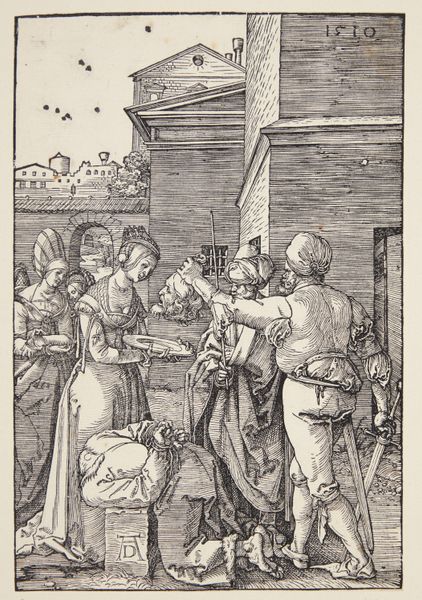
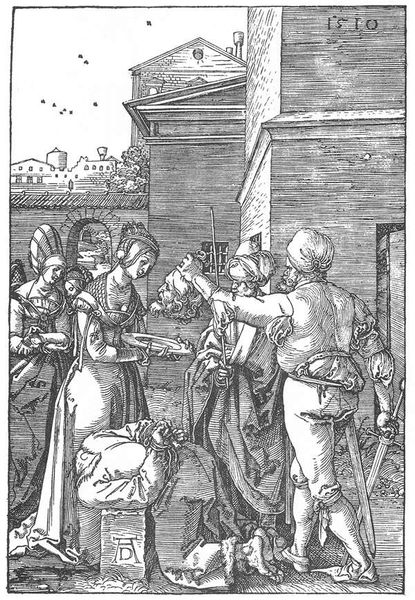
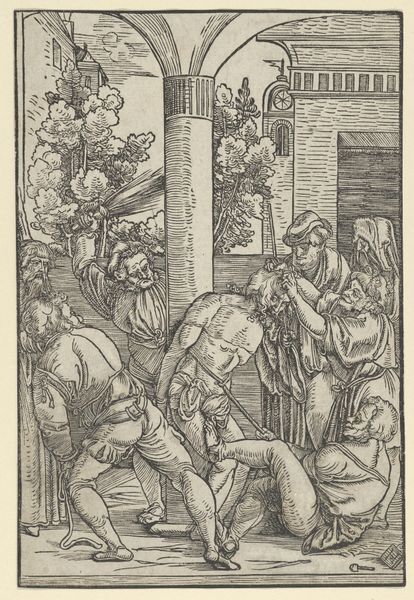
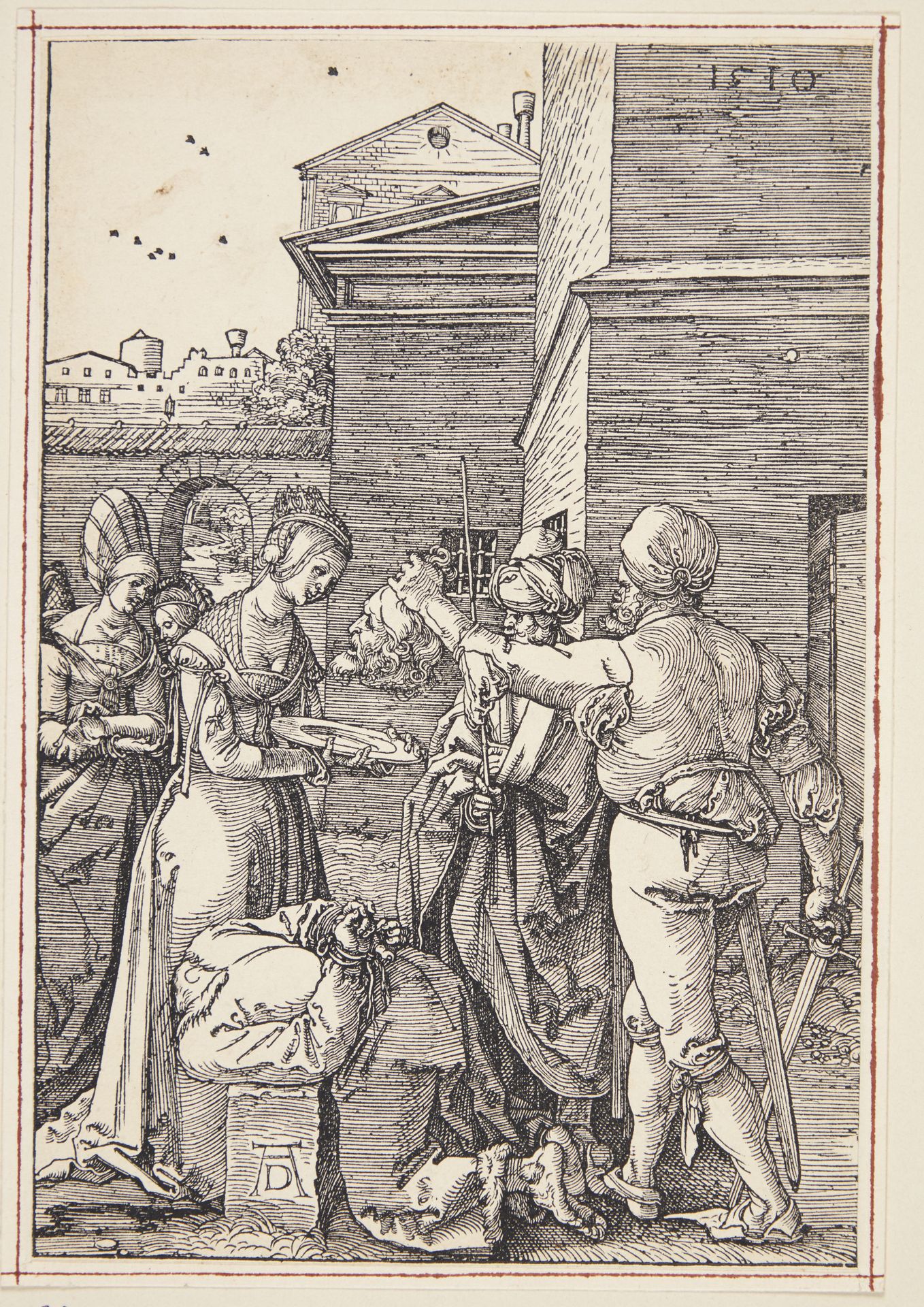
Curator: This woodcut from 1511, by Albrecht Dürer, depicts the beheading of St. John the Baptist. Note the detailed figuration rendered via stark linear patterns across the composition. Editor: Wow. Immediately, I get this creepy, detached vibe, you know? Like the figures are acting out a ritual, and that looming architecture just boxes it all in. The whole thing feels…airless. Curator: Precisely. Consider how Dürer's use of line, particularly in the architectural elements, serves to create a geometric structure that both defines and confines the space. We can decode this constraint further if we see it as reflective of John’s own destiny. Editor: I dig that. It’s like he was trapped, not just by his jailers, but by fate, and Dürer caught that inevitability. Also, can we talk about the beheading itself? No messy blood spray here; it’s almost clinical. Almost business-like, ya know? Curator: Indeed. Observe how the executioner’s posture projects purpose. His body language expresses that the only intention he brings to this scene is duty. From a structuralist viewpoint, we can contrast him with the female figure presenting the tray. She embodies something else, a mixture of malice and power perhaps. Editor: Definitely. It’s as if she relishes the moment, while simultaneously burdened. And is that a little girl clinging to her skirt? Gives you chills, right? This whole thing, the clean lines, the almost nonchalant expressions amidst all the gore—it’s just brilliantly unsettling. Curator: One can easily argue this narrative construction—using calculated perspectives and densely populated scenes—heightens the psycho-spiritual tension, drawing the viewer into an event far bigger than its literal elements. It reveals, ultimately, more than it depicts. Editor: I love how Dürer makes something so awful almost… beautiful, in a haunting kind of way. The craftsmanship and story work together to stick with you. Not sure I can shake it off any time soon.
The beheading of St. John the Baptist
1511


Artwork details
- Medium
- print, woodcut
- Dimensions
- 202 mm (height) x 142 mm (width) (monteringsmaal)
- Location
- SMK - Statens Museum for Kunst
Tags
narrative-art
figuration
woodcut
history-painting
northern-renaissance
italian-renaissance
Comments
Be the first to share your thoughts about this work.
About this artwork
Curator: This woodcut from 1511, by Albrecht Dürer, depicts the beheading of St. John the Baptist. Note the detailed figuration rendered via stark linear patterns across the composition. Editor: Wow. Immediately, I get this creepy, detached vibe, you know? Like the figures are acting out a ritual, and that looming architecture just boxes it all in. The whole thing feels…airless. Curator: Precisely. Consider how Dürer's use of line, particularly in the architectural elements, serves to create a geometric structure that both defines and confines the space. We can decode this constraint further if we see it as reflective of John’s own destiny. Editor: I dig that. It’s like he was trapped, not just by his jailers, but by fate, and Dürer caught that inevitability. Also, can we talk about the beheading itself? No messy blood spray here; it’s almost clinical. Almost business-like, ya know? Curator: Indeed. Observe how the executioner’s posture projects purpose. His body language expresses that the only intention he brings to this scene is duty. From a structuralist viewpoint, we can contrast him with the female figure presenting the tray. She embodies something else, a mixture of malice and power perhaps. Editor: Definitely. It’s as if she relishes the moment, while simultaneously burdened. And is that a little girl clinging to her skirt? Gives you chills, right? This whole thing, the clean lines, the almost nonchalant expressions amidst all the gore—it’s just brilliantly unsettling. Curator: One can easily argue this narrative construction—using calculated perspectives and densely populated scenes—heightens the psycho-spiritual tension, drawing the viewer into an event far bigger than its literal elements. It reveals, ultimately, more than it depicts. Editor: I love how Dürer makes something so awful almost… beautiful, in a haunting kind of way. The craftsmanship and story work together to stick with you. Not sure I can shake it off any time soon.
Comments
Be the first to share your thoughts about this work.