About this artwork
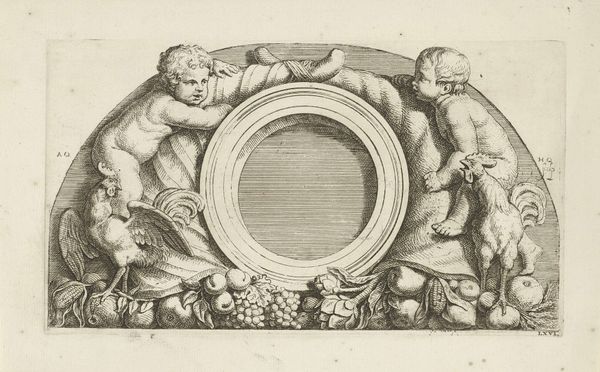
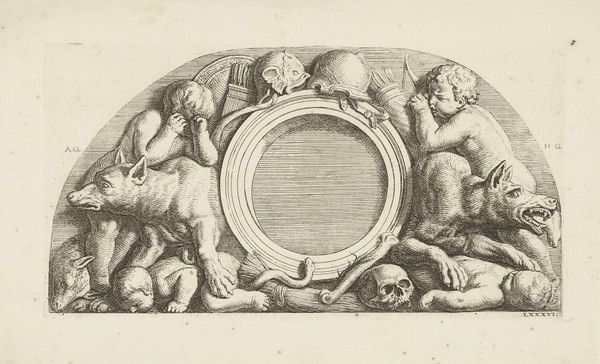
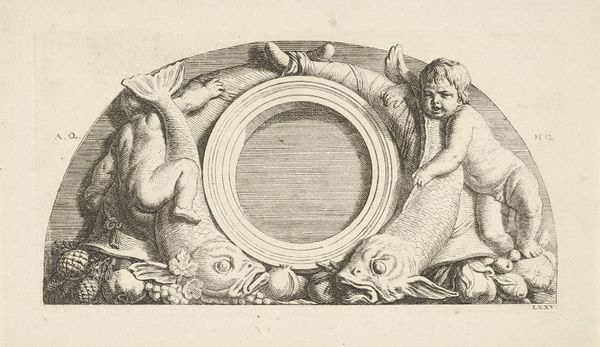
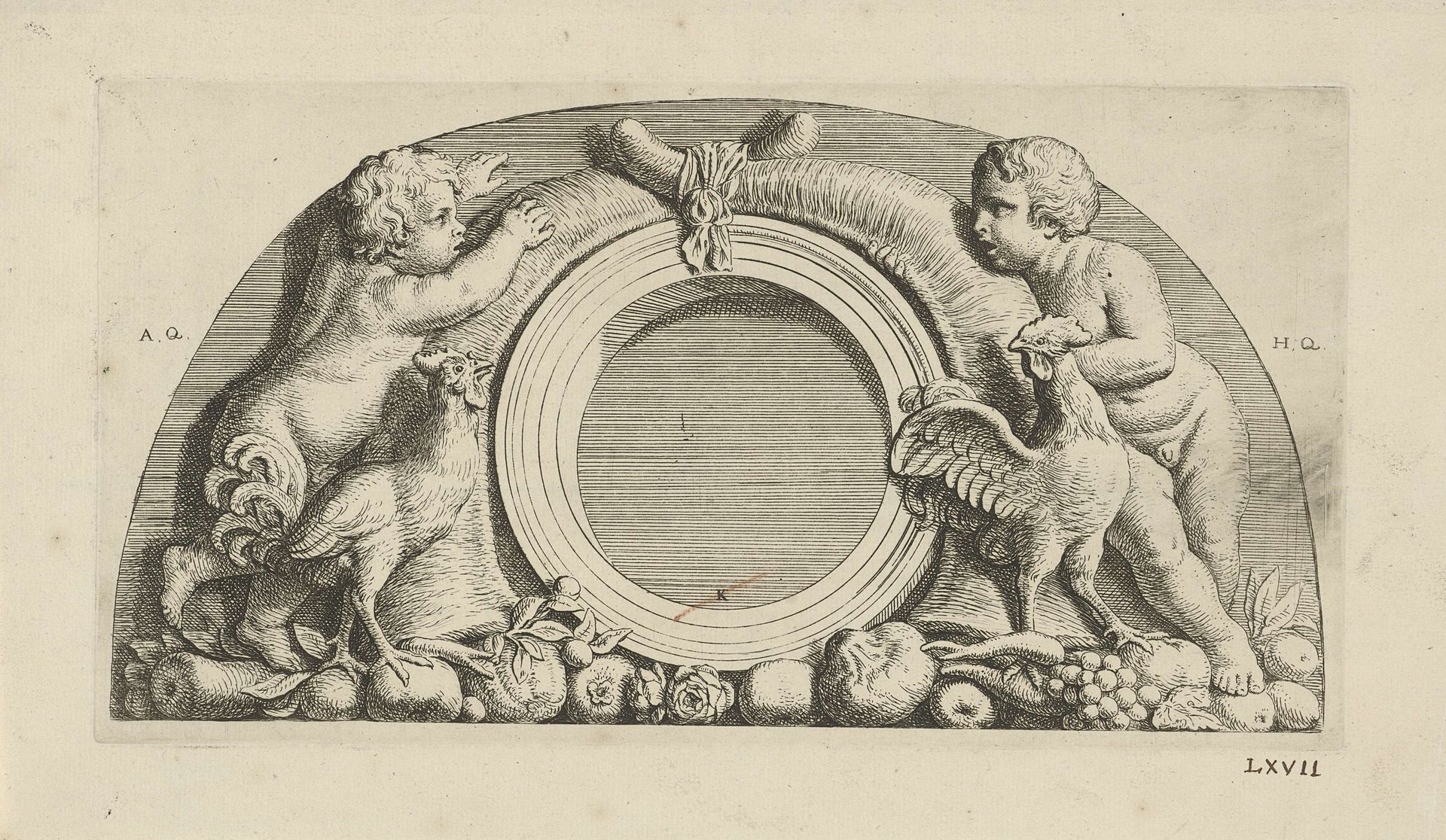
Hubert Quellinus created this lunette, titled 'Putti, Roosters, and Cornucopias in the Western Gallery of the Town Hall on the Dam,' with etching. Created during the Dutch Golden Age, this piece reflects the era's embrace of civic pride and prosperity. Two putti, chubby male children, flank a central frame, each accompanied by a rooster and an array of fruits symbolizing abundance. While seemingly innocent, the image is loaded with the socio-political dimensions of the time. The cornucopias are symbols of wealth. The putti, often seen in classical art, were used as motifs to render authority as cute and innocent. The roosters may symbolize vigilance and courage, qualities associated with the Dutch Republic's newfound independence and commercial prowess. This work embodies both a celebration of national identity and, perhaps unconsciously, its inherent biases and exclusions.
Lunette met putti, hanen en hoornen des overvloeds in de westelijke galerij van het Stadhuis op de Dam
1655 - 1665

Hubert Quellinus
1619 - 1687Location
RijksmuseumArtwork details
- Medium
- print, engraving
- Dimensions
- height 152 mm, width 286 mm
- Location
- Rijksmuseum
- Copyright
- Rijks Museum: Open Domain
Tags
Comments
Share your thoughts
About this artwork
Hubert Quellinus created this lunette, titled 'Putti, Roosters, and Cornucopias in the Western Gallery of the Town Hall on the Dam,' with etching. Created during the Dutch Golden Age, this piece reflects the era's embrace of civic pride and prosperity. Two putti, chubby male children, flank a central frame, each accompanied by a rooster and an array of fruits symbolizing abundance. While seemingly innocent, the image is loaded with the socio-political dimensions of the time. The cornucopias are symbols of wealth. The putti, often seen in classical art, were used as motifs to render authority as cute and innocent. The roosters may symbolize vigilance and courage, qualities associated with the Dutch Republic's newfound independence and commercial prowess. This work embodies both a celebration of national identity and, perhaps unconsciously, its inherent biases and exclusions.
Comments
Share your thoughts