About this artwork
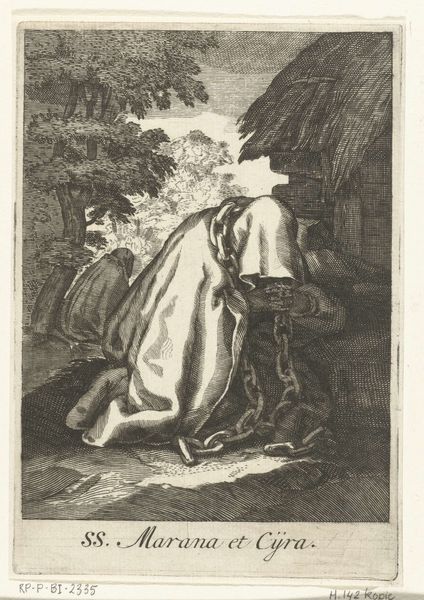
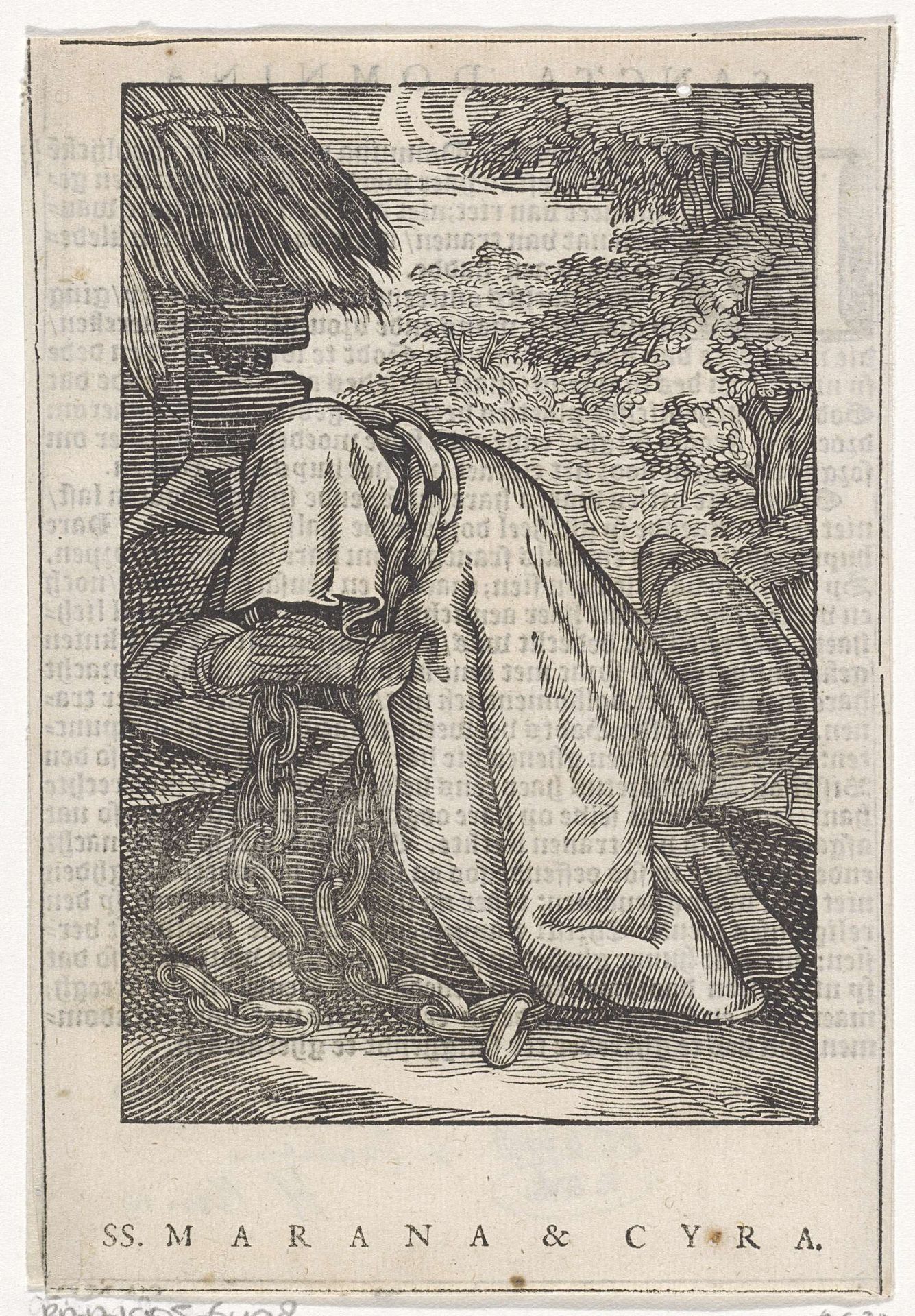
This engraving depicts Saint Marana and Saint Cyra as hermits, and was created by Christoffel van Sichem the Younger. Notice the chains binding these women. Throughout history, chains have symbolized both physical and spiritual bondage. Here, they signify the saints' devotion and self-imposed penance, reflecting a powerful desire to transcend earthly desires. We can find echoes of this motif in ancient ascetic practices, where self-inflicted hardship was seen as a path to enlightenment. Consider the emotional weight of this image: the downcast gaze, the rough-hewn shelter, the heavy chains. These elements stir within us a sense of empathy, tapping into our collective understanding of suffering and sacrifice. The chains, meant to confine, paradoxically liberate the spirit, a visual testament to the complexities of faith and the human psyche. This paradoxical symbolism, passed down through history, shows us that the image of the chain, like the very idea of sacrifice, is far from a linear progression.
Heilige Marana van Syrië en heilige Cyra als kluizenaressen met ketenen 1644

Christoffel van (II) Sichem
1581 - 1658Location
RijksmuseumArtwork details
- Medium
- print, engraving
- Dimensions
- height 153 mm, width 105 mm
- Location
- Rijksmuseum
- Copyright
- Rijks Museum: Open Domain
Tags
baroque
landscape
figuration
history-painting
engraving
Comments
No comments
About this artwork
This engraving depicts Saint Marana and Saint Cyra as hermits, and was created by Christoffel van Sichem the Younger. Notice the chains binding these women. Throughout history, chains have symbolized both physical and spiritual bondage. Here, they signify the saints' devotion and self-imposed penance, reflecting a powerful desire to transcend earthly desires. We can find echoes of this motif in ancient ascetic practices, where self-inflicted hardship was seen as a path to enlightenment. Consider the emotional weight of this image: the downcast gaze, the rough-hewn shelter, the heavy chains. These elements stir within us a sense of empathy, tapping into our collective understanding of suffering and sacrifice. The chains, meant to confine, paradoxically liberate the spirit, a visual testament to the complexities of faith and the human psyche. This paradoxical symbolism, passed down through history, shows us that the image of the chain, like the very idea of sacrifice, is far from a linear progression.
Comments
No comments