About this artwork
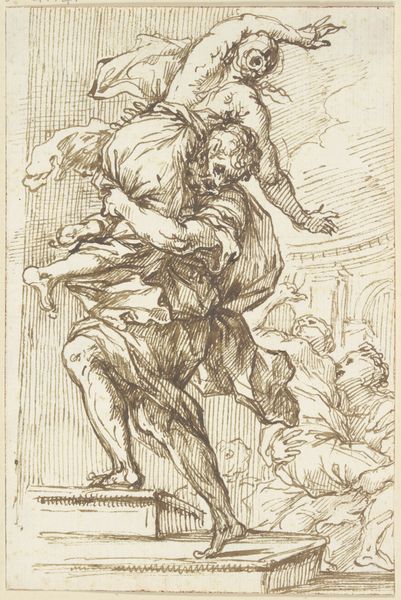
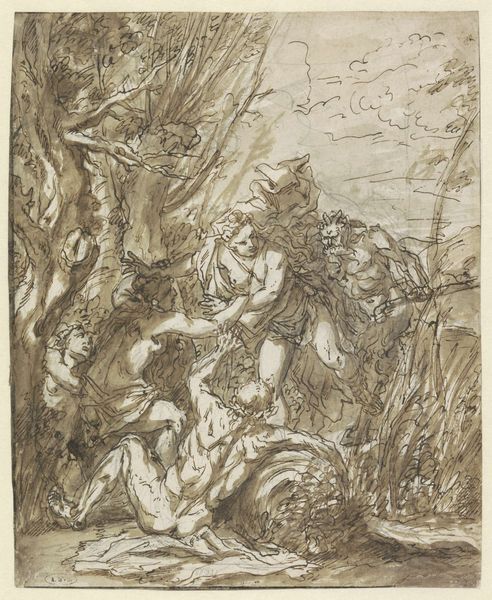
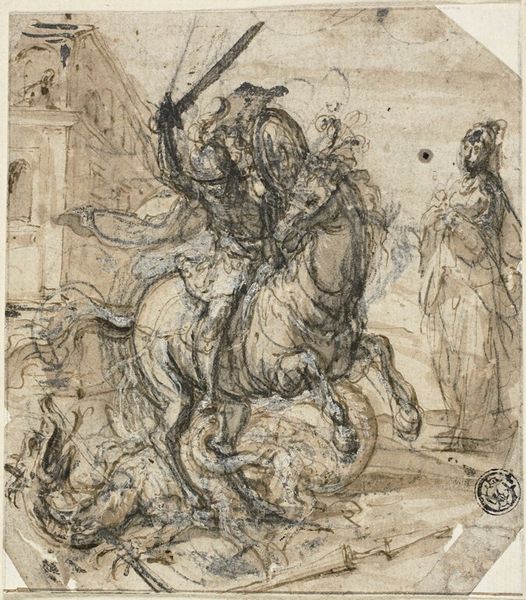
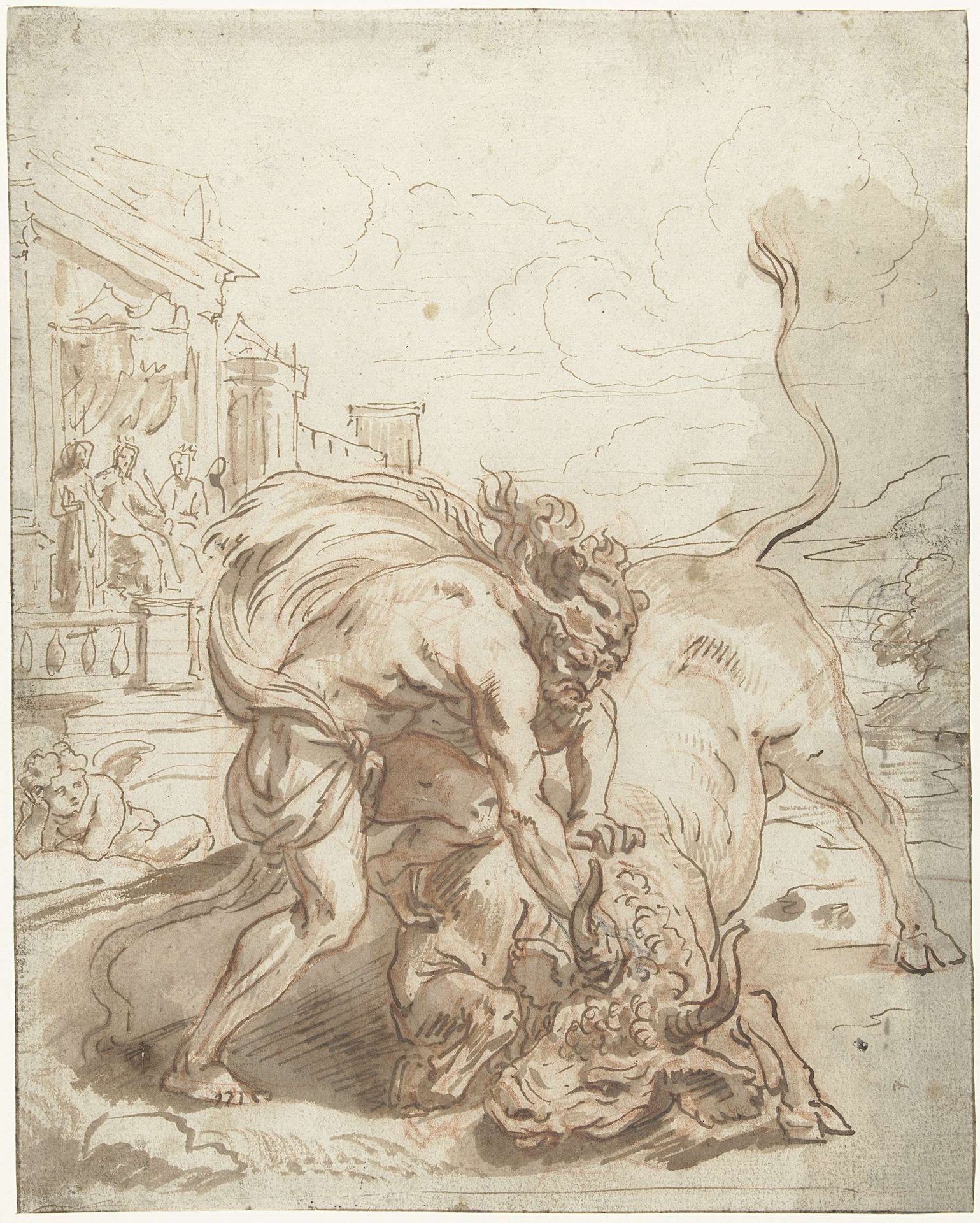
Abraham van Diepenbeeck created this drawing, Hercules verslaat Acheloüs in de gedaante van een stier, using pen in brown and gray ink. The composition is dominated by the struggle between Hercules and the bull, Acheloüs, rendered with dynamic lines and a strong sense of movement. Notice how the artist used hatching and cross-hatching to create depth and volume, particularly in the figures of Hercules and the bull. This technique emphasizes their musculature and the tension of their struggle. Diepenbeeck seems to emphasize form and structure over explicit narrative. The architectural backdrop and the onlookers are secondary. Hercules's triumph over Acheloüs symbolizes order overcoming chaos. The drawing becomes a meditation on power, transformation, and the imposition of human will. The very act of drawing, with its lines defining form and space, mirrors this imposition of order. Through these formal choices, the artwork invites us to consider the underlying structures of myth. It prompts questions about how we interpret narratives, and how the artist’s formal techniques contribute to the construction of meaning.
Hercules verslaat Acheloüs in de gedaante van een stier
1653 - 1655

Abraham van Diepenbeeck
1596 - 1675Location
RijksmuseumArtwork details
- Medium
- drawing, ink, pen
- Dimensions
- height 283 mm, width 223 mm
- Location
- Rijksmuseum
- Copyright
- Rijks Museum: Open Domain
Tags
Comments
Share your thoughts
About this artwork
Abraham van Diepenbeeck created this drawing, Hercules verslaat Acheloüs in de gedaante van een stier, using pen in brown and gray ink. The composition is dominated by the struggle between Hercules and the bull, Acheloüs, rendered with dynamic lines and a strong sense of movement. Notice how the artist used hatching and cross-hatching to create depth and volume, particularly in the figures of Hercules and the bull. This technique emphasizes their musculature and the tension of their struggle. Diepenbeeck seems to emphasize form and structure over explicit narrative. The architectural backdrop and the onlookers are secondary. Hercules's triumph over Acheloüs symbolizes order overcoming chaos. The drawing becomes a meditation on power, transformation, and the imposition of human will. The very act of drawing, with its lines defining form and space, mirrors this imposition of order. Through these formal choices, the artwork invites us to consider the underlying structures of myth. It prompts questions about how we interpret narratives, and how the artist’s formal techniques contribute to the construction of meaning.
Comments
Share your thoughts