About this artwork
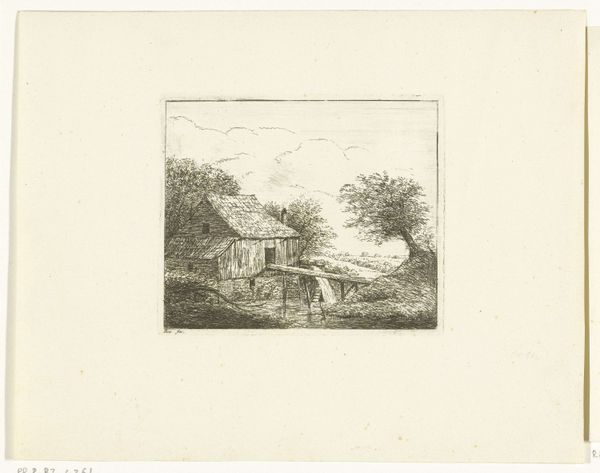
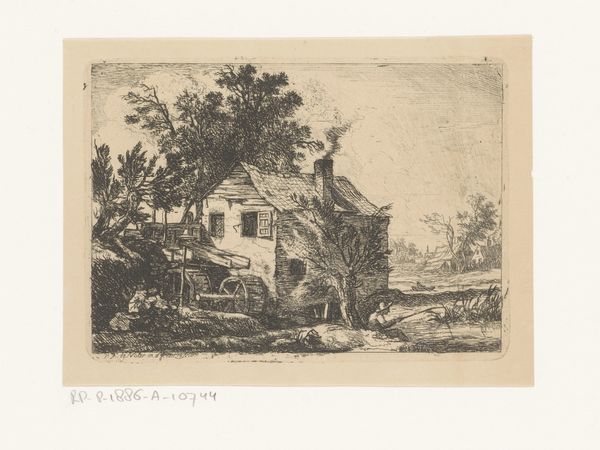
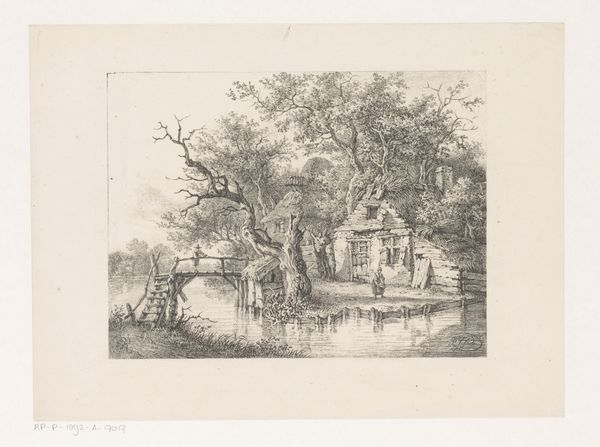
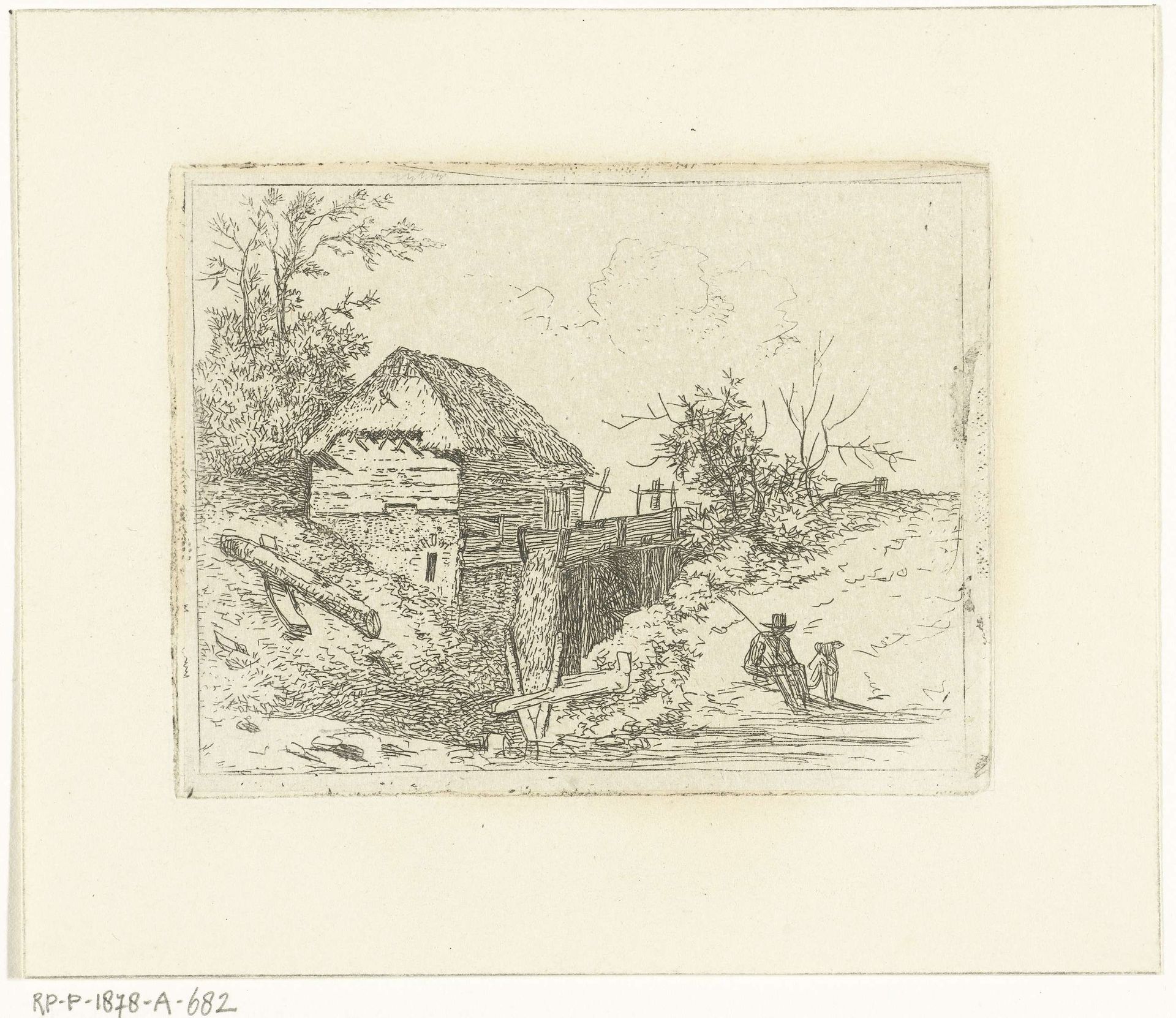
Editor: We’re looking at “Landscape with Watermill and Man with Dog,” an etching by Albertus Brondgeest, dating somewhere between 1796 and 1849. The detail achieved in such a small print is striking. What symbols do you see at play here? Curator: It's fascinating how Brondgeest uses such a common scene to evoke deeper meanings. Notice how the watermill itself – a symbol of progress and industry – is juxtaposed with the weary traveler resting alongside his dog. Consider what these familiar elements might mean in relation to the Romantic period in which it was created. Editor: The Romantic period was all about elevating nature, right? But here, nature and industry are together. Is it a harmonious pairing, or something else? Curator: Perhaps it’s an expression of the changing landscape, the impact of human activity. The mill represents not only labor and mechanical advancement but a specific period of increasing societal industrialisation, altering not just physical spaces, but emotional and psychological ones, too. What about the man and the dog - what do they suggest to you? Editor: Loyalty, companionship, perhaps a slower, simpler way of life… a retreat? Curator: Exactly. They represent enduring human values, suggesting that even as the world changes, certain connections—with nature, with animals, with oneself—remain constant. Think of the dog as more than just a pet; its enduring faithfulness offers a reassuring echo within a rapidly modernising world. Editor: That makes so much sense. The image is not just a landscape but a commentary. Curator: Yes, Brondgeest uses the image as a stage on which enduring narratives play out against changing backgrounds, blending cultural memory and individual experience. Editor: I never would have picked up on that level of symbolism! This has deepened my appreciation for the artwork considerably. Curator: And understanding this layering helps to reconnect with the artist’s time and our own. Visual language offers such resonant connections through history.
Landschap met watermolen en man met hond
1796 - 1849

Albertus Brondgeest
1786 - 1849Location
RijksmuseumArtwork details
- Medium
- drawing, print, etching
- Dimensions
- height 82 mm, width 86 mm
- Location
- Rijksmuseum
- Copyright
- Rijks Museum: Open Domain
Tags
Comments
Share your thoughts
About this artwork
Editor: We’re looking at “Landscape with Watermill and Man with Dog,” an etching by Albertus Brondgeest, dating somewhere between 1796 and 1849. The detail achieved in such a small print is striking. What symbols do you see at play here? Curator: It's fascinating how Brondgeest uses such a common scene to evoke deeper meanings. Notice how the watermill itself – a symbol of progress and industry – is juxtaposed with the weary traveler resting alongside his dog. Consider what these familiar elements might mean in relation to the Romantic period in which it was created. Editor: The Romantic period was all about elevating nature, right? But here, nature and industry are together. Is it a harmonious pairing, or something else? Curator: Perhaps it’s an expression of the changing landscape, the impact of human activity. The mill represents not only labor and mechanical advancement but a specific period of increasing societal industrialisation, altering not just physical spaces, but emotional and psychological ones, too. What about the man and the dog - what do they suggest to you? Editor: Loyalty, companionship, perhaps a slower, simpler way of life… a retreat? Curator: Exactly. They represent enduring human values, suggesting that even as the world changes, certain connections—with nature, with animals, with oneself—remain constant. Think of the dog as more than just a pet; its enduring faithfulness offers a reassuring echo within a rapidly modernising world. Editor: That makes so much sense. The image is not just a landscape but a commentary. Curator: Yes, Brondgeest uses the image as a stage on which enduring narratives play out against changing backgrounds, blending cultural memory and individual experience. Editor: I never would have picked up on that level of symbolism! This has deepened my appreciation for the artwork considerably. Curator: And understanding this layering helps to reconnect with the artist’s time and our own. Visual language offers such resonant connections through history.
Comments
Share your thoughts