About this artwork
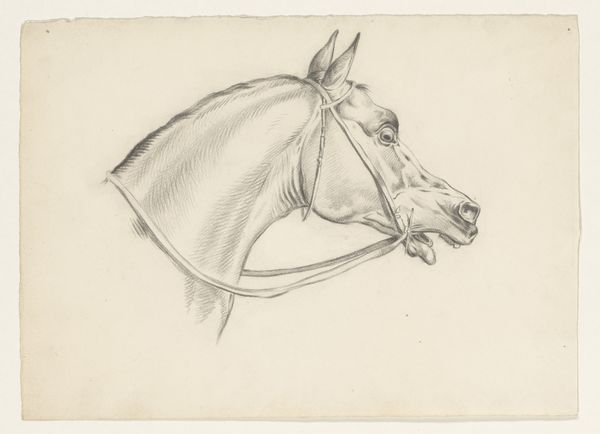
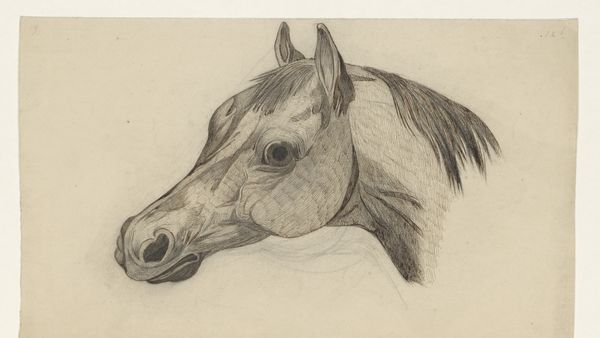
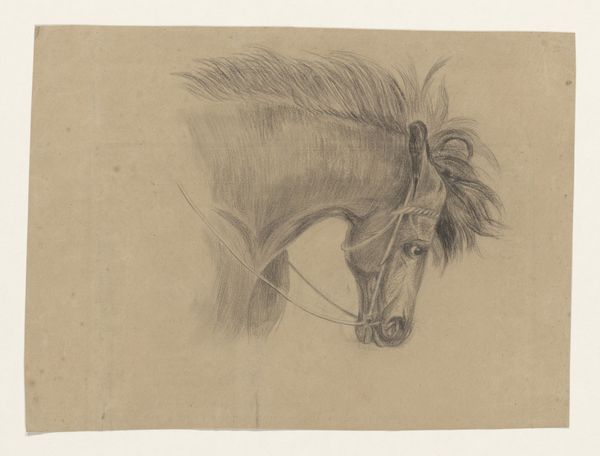
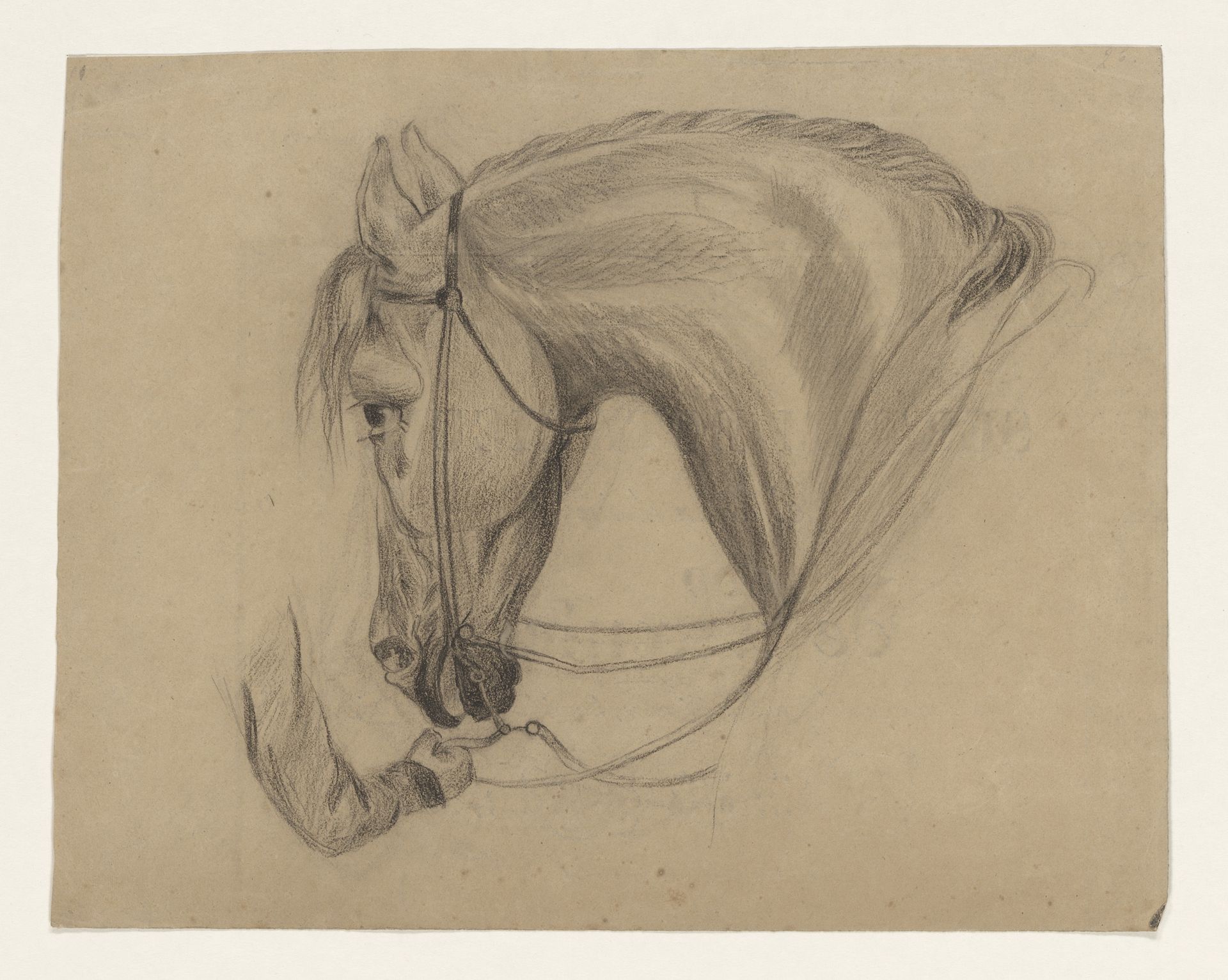
Curator: Here we have Johannes Tavenraat's "Hoofd van een paard, naar links," or "Head of a Horse, Facing Left," created sometime between 1819 and 1881. It’s a pencil drawing. Editor: Oh, I love this. There's something so gentle about the lines. It’s like he’s not just drawing a horse but capturing a fleeting thought. Almost melancholic. Curator: Indeed. Notice the subtle hatching used to define the contours and create a sense of volume, particularly around the horse's neck and cheek. The bridling is also rendered with delicate precision. Editor: Yes, but the eye... It's like a dark pool reflecting a bigger, sadder world. It reminds me of how animals seem to hold all the untold stories of human behavior. What do you think Tavenraat was aiming for? Curator: The work stands as an excellent example of academic realism. The artist’s mastery of anatomy and skillful use of light and shadow lend the subject a compelling sense of presence. This devotion to observable truth serves to make his subject more vital. Editor: See, I knew you'd get technical! I reckon he was feeling something when he drew this. You can’t spend that much time staring at a horse’s face without getting a sense of who they are. Maybe he saw his own reflection in that dark eye. You know, that feeling of being a noble beast yoked to something greater. Curator: A projection of the self, perhaps. Still, to consider this work primarily for its expressive value neglects the sophistication of Tavenraat's technical achievement, which provides a sense of corporeal reality. Editor: But isn’t that the point? Great art messes with you. It should feel real, like the air on your skin or a whisper in your ear. I think Tavenraat wanted us to meet this horse, not just analyze its lines. Curator: It is difficult to refute such intuitive conviction. It appears our discussion has created an aperture through which to behold this piece. Editor: Precisely! That little horse head there contains more thoughts than you think!

Artwork details
- Medium
- drawing, pencil
- Dimensions
- height 208 mm, width 263 mm
- Location
- Rijksmuseum
- Copyright
- Rijks Museum: Open Domain
Tags
portrait
pencil drawn
drawing
imaginative character sketch
light pencil work
animal
pencil sketch
personal sketchbook
idea generation sketch
ink drawing experimentation
pencil
horse
sketchbook drawing
pencil work
sketchbook art
realism
Comments
No comments
About this artwork
Curator: Here we have Johannes Tavenraat's "Hoofd van een paard, naar links," or "Head of a Horse, Facing Left," created sometime between 1819 and 1881. It’s a pencil drawing. Editor: Oh, I love this. There's something so gentle about the lines. It’s like he’s not just drawing a horse but capturing a fleeting thought. Almost melancholic. Curator: Indeed. Notice the subtle hatching used to define the contours and create a sense of volume, particularly around the horse's neck and cheek. The bridling is also rendered with delicate precision. Editor: Yes, but the eye... It's like a dark pool reflecting a bigger, sadder world. It reminds me of how animals seem to hold all the untold stories of human behavior. What do you think Tavenraat was aiming for? Curator: The work stands as an excellent example of academic realism. The artist’s mastery of anatomy and skillful use of light and shadow lend the subject a compelling sense of presence. This devotion to observable truth serves to make his subject more vital. Editor: See, I knew you'd get technical! I reckon he was feeling something when he drew this. You can’t spend that much time staring at a horse’s face without getting a sense of who they are. Maybe he saw his own reflection in that dark eye. You know, that feeling of being a noble beast yoked to something greater. Curator: A projection of the self, perhaps. Still, to consider this work primarily for its expressive value neglects the sophistication of Tavenraat's technical achievement, which provides a sense of corporeal reality. Editor: But isn’t that the point? Great art messes with you. It should feel real, like the air on your skin or a whisper in your ear. I think Tavenraat wanted us to meet this horse, not just analyze its lines. Curator: It is difficult to refute such intuitive conviction. It appears our discussion has created an aperture through which to behold this piece. Editor: Precisely! That little horse head there contains more thoughts than you think!
Comments
No comments