About this artwork
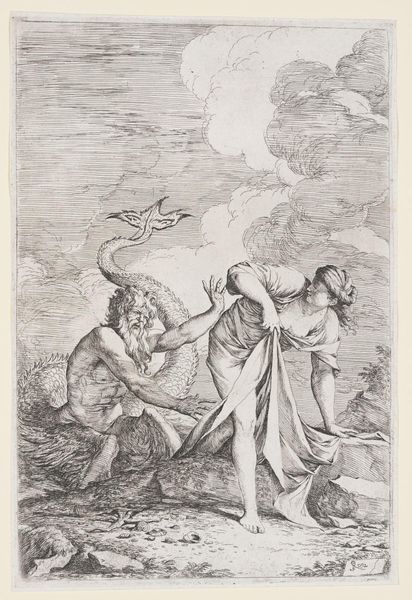
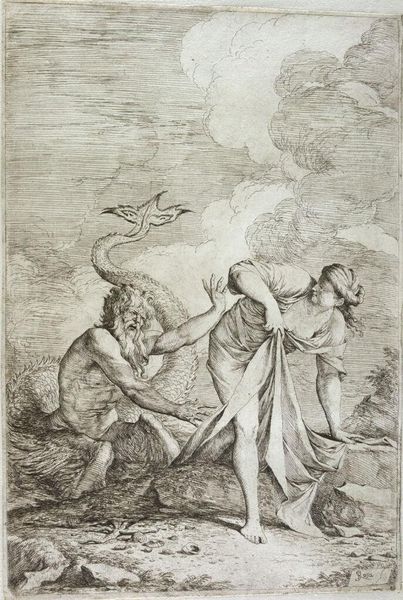
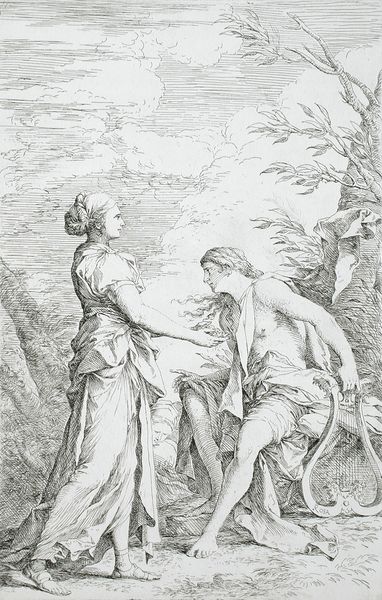
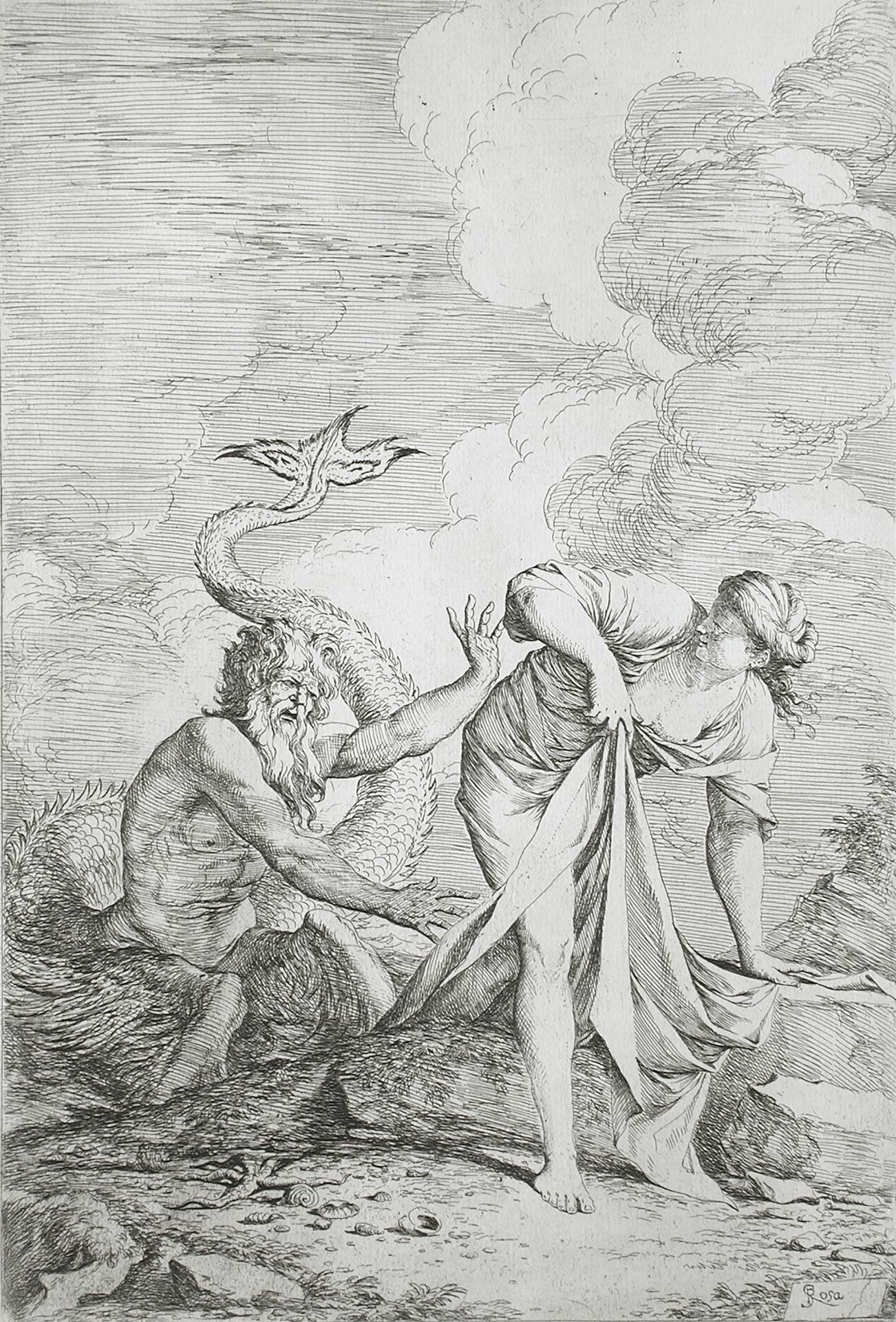
Salvator Rosa made this print, Glaucus and Scylla, sometime in the 17th century, using etching techniques. Rosa lived in a time shaped by the Baroque era’s dramatic flair and the intellectual ferment of the Enlightenment's early stages. This piece brings to life a scene straight from Ovid’s Metamorphoses. Glaucus, once a mortal fisherman, became a sea god and passionately desired the nymph Scylla. But she spurned his advances, repulsed by his aquatic form. In Ovid's telling, Glaucus then seeks the help of the witch Circe, who falls in love with him, and out of spite, poisons the water where Scylla bathed, transforming her into a sea monster. Rosa doesn’t shy away from portraying Scylla’s terror, as she strains away from Glaucus. It invites us to contemplate themes of transformation, desire, and rejection, all while reflecting on the societal anxieties about power, beauty, and the monstrous.
Glaucus and Scylla 1661

Salvator Rosa
1615 - 1673
Los Angeles County Museum of Art
Los Angeles County Museum of Art (LACMA), Los Angeles, CA, USArtwork details
- Location
- Los Angeles County Museum of Art (LACMA), Los Angeles, CA, US
- Copyright
- Public domain
Tags
amateur sketch
light pencil work
pencil sketch
incomplete sketchy
charcoal drawing
pencil drawing
detailed observational sketch
human
pencil work
fantasy sketch
initial sketch
Comments
No comments
About this artwork
Salvator Rosa made this print, Glaucus and Scylla, sometime in the 17th century, using etching techniques. Rosa lived in a time shaped by the Baroque era’s dramatic flair and the intellectual ferment of the Enlightenment's early stages. This piece brings to life a scene straight from Ovid’s Metamorphoses. Glaucus, once a mortal fisherman, became a sea god and passionately desired the nymph Scylla. But she spurned his advances, repulsed by his aquatic form. In Ovid's telling, Glaucus then seeks the help of the witch Circe, who falls in love with him, and out of spite, poisons the water where Scylla bathed, transforming her into a sea monster. Rosa doesn’t shy away from portraying Scylla’s terror, as she strains away from Glaucus. It invites us to contemplate themes of transformation, desire, and rejection, all while reflecting on the societal anxieties about power, beauty, and the monstrous.
Comments
No comments