About this artwork
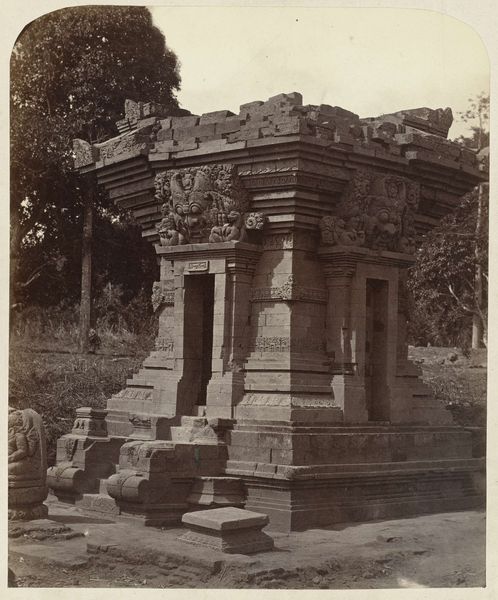
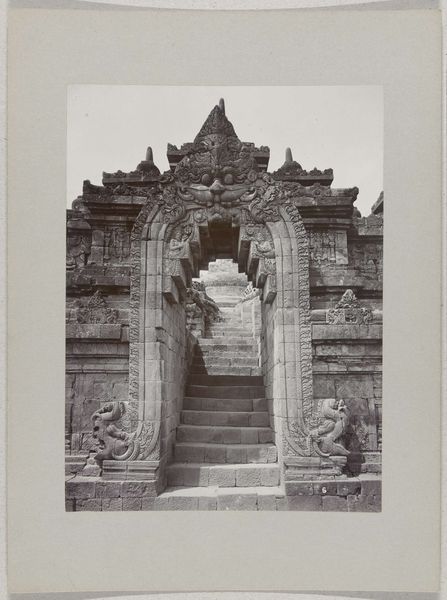
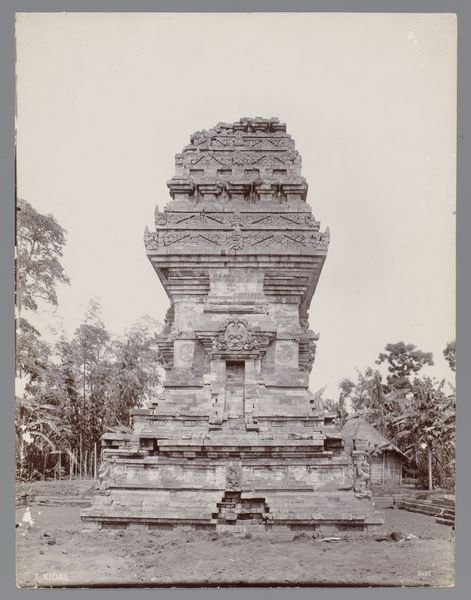
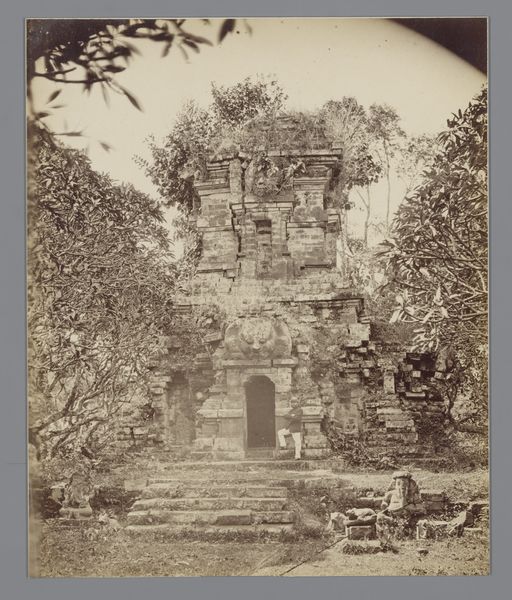
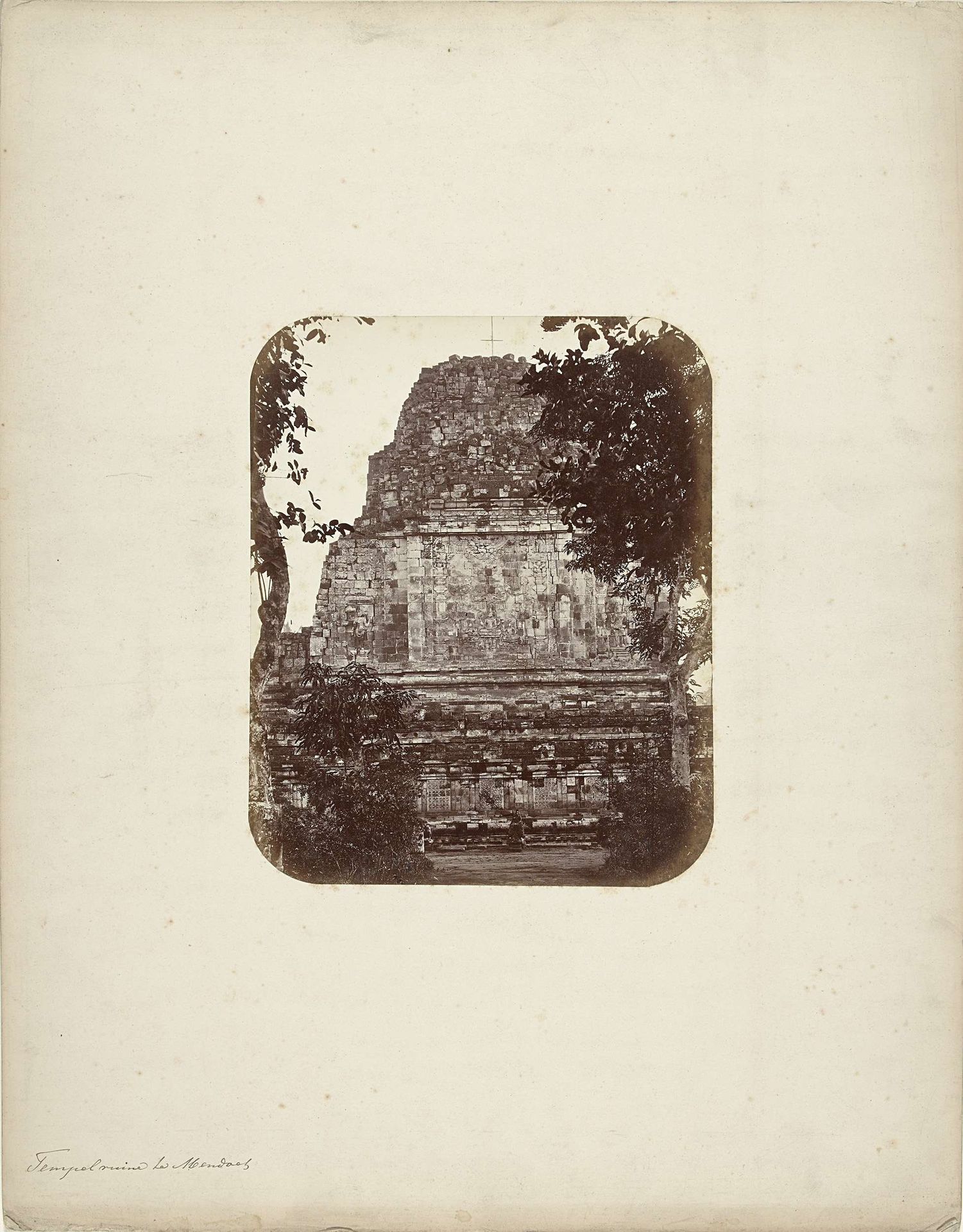
Editor: This is "Buddhist temple Candi Mendut on Central Java," a gelatin silver print by Woodbury & Page, created between 1860 and 1880. It has such a timeless feel. What stories do you think this photograph tells us about its context? Curator: It’s interesting to consider this image through the lens of colonial gaze. Woodbury & Page, a European firm, documented this significant Buddhist temple. What does it mean to capture and circulate images of culturally important sites within a colonial framework? Editor: I never thought of it that way! It seems so objective at first glance. Curator: Exactly! And that's the insidious part. Photography, especially in its early days, was often presented as objective truth. But consider: who held the camera? Whose perspective shaped the composition, the framing, and ultimately, the narrative? How did the circulation of these images reinforce or challenge existing power structures? Editor: So, this image isn't just about documenting a temple; it's about power dynamics and representation. How does this relate to our understanding of Asian art today? Curator: It pushes us to be critical of the archives. It also means decentering a Western viewpoint and thinking more intersectionally about gender and race and questioning who had the power in Southeast Asia to tell stories, and whose voices were being suppressed. Editor: That's a powerful reminder to always question the perspectives behind historical documentation. Curator: Precisely. And it highlights the need to amplify marginalized voices and create a more equitable understanding of art history. What do you make of the trees almost obscuring our direct view? Editor: I’m now seeing this photograph, and the very act of capturing it, with fresh eyes.
Boeddhistische tempel Candi Mendut op Midden-Java
1860 - 1880

Woodbury & Page
@woodburypageLocation
RijksmuseumArtwork details
- Medium
- tempera, print, photography, site-specific, gelatin-silver-print
- Dimensions
- height 241 mm, width 195 mm, height 521 mm, width 406 mm
- Location
- Rijksmuseum
- Copyright
- Rijks Museum: Open Domain
Tags
Comments
Share your thoughts
About this artwork
Editor: This is "Buddhist temple Candi Mendut on Central Java," a gelatin silver print by Woodbury & Page, created between 1860 and 1880. It has such a timeless feel. What stories do you think this photograph tells us about its context? Curator: It’s interesting to consider this image through the lens of colonial gaze. Woodbury & Page, a European firm, documented this significant Buddhist temple. What does it mean to capture and circulate images of culturally important sites within a colonial framework? Editor: I never thought of it that way! It seems so objective at first glance. Curator: Exactly! And that's the insidious part. Photography, especially in its early days, was often presented as objective truth. But consider: who held the camera? Whose perspective shaped the composition, the framing, and ultimately, the narrative? How did the circulation of these images reinforce or challenge existing power structures? Editor: So, this image isn't just about documenting a temple; it's about power dynamics and representation. How does this relate to our understanding of Asian art today? Curator: It pushes us to be critical of the archives. It also means decentering a Western viewpoint and thinking more intersectionally about gender and race and questioning who had the power in Southeast Asia to tell stories, and whose voices were being suppressed. Editor: That's a powerful reminder to always question the perspectives behind historical documentation. Curator: Precisely. And it highlights the need to amplify marginalized voices and create a more equitable understanding of art history. What do you make of the trees almost obscuring our direct view? Editor: I’m now seeing this photograph, and the very act of capturing it, with fresh eyes.
Comments
Share your thoughts