About this artwork
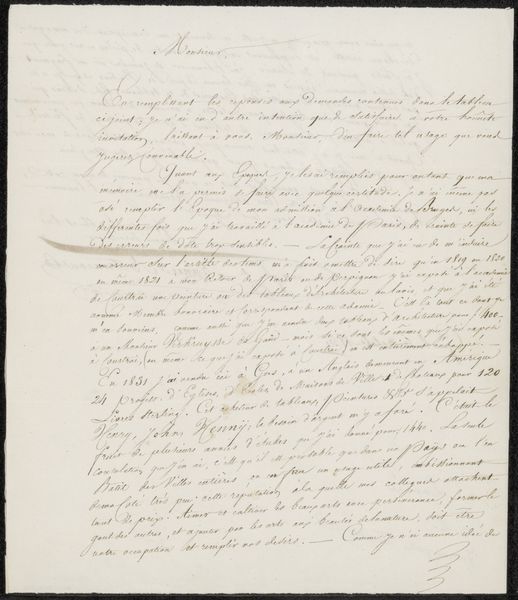
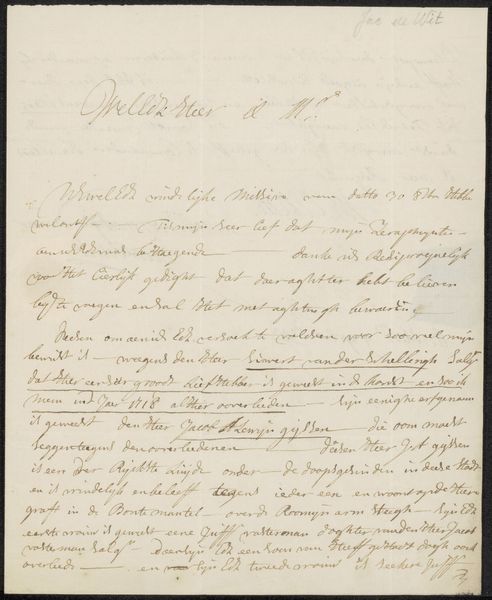
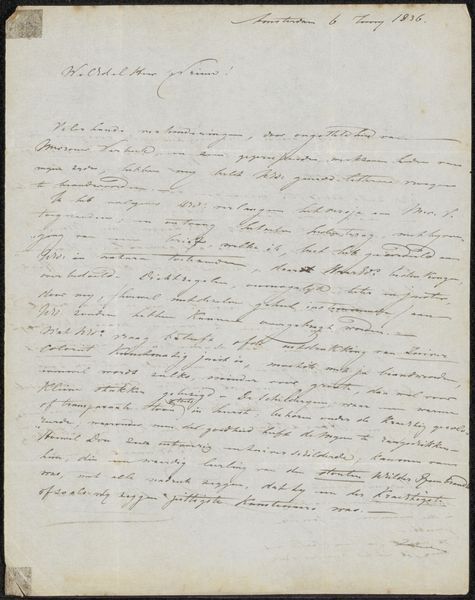
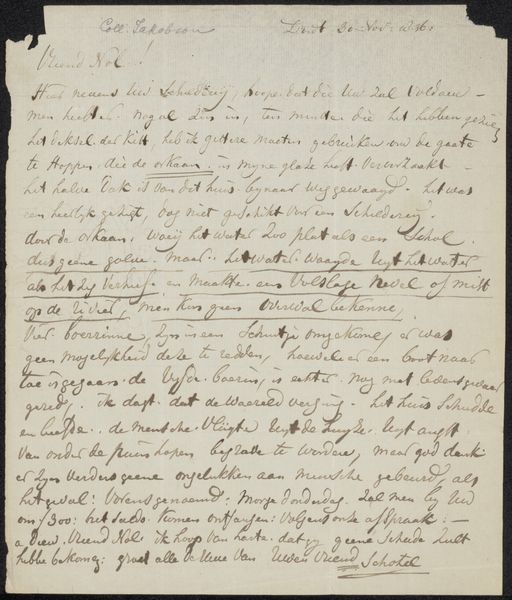
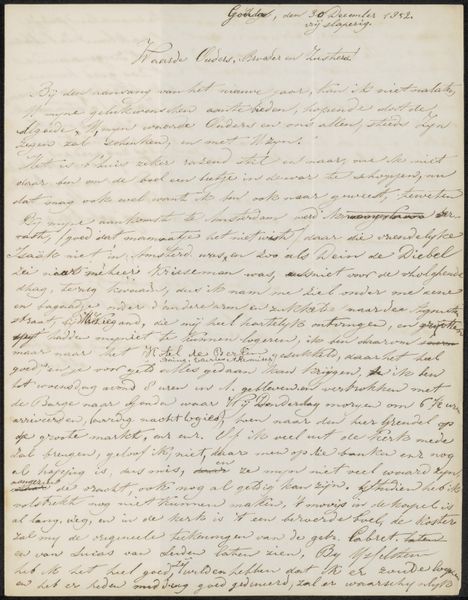
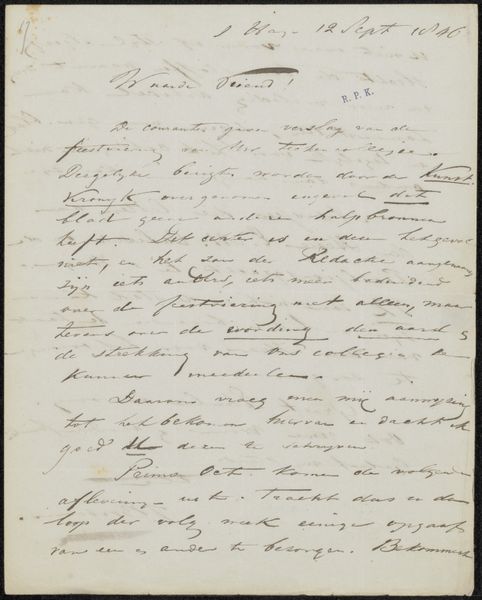
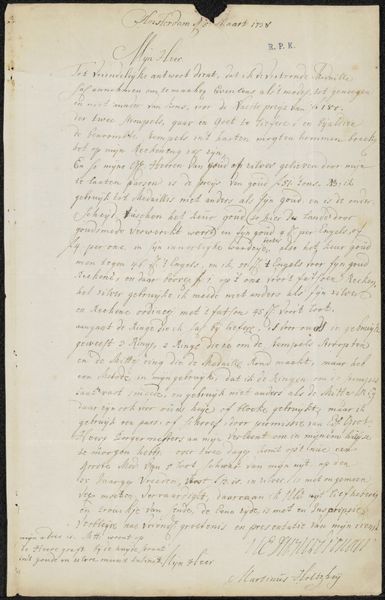
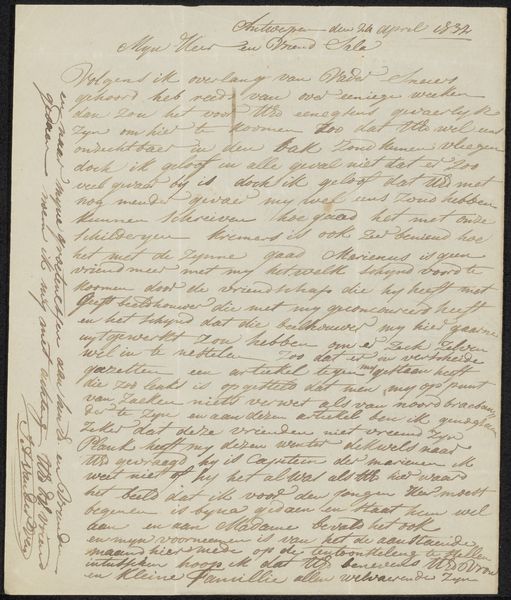
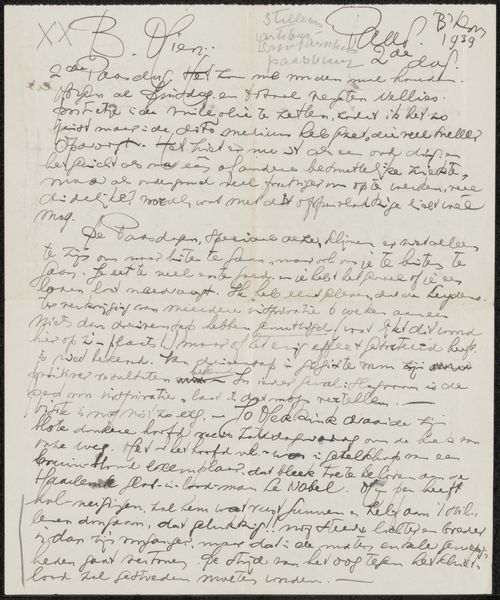
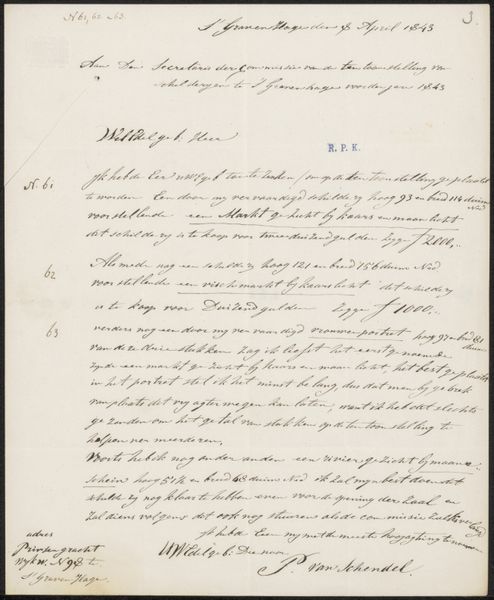
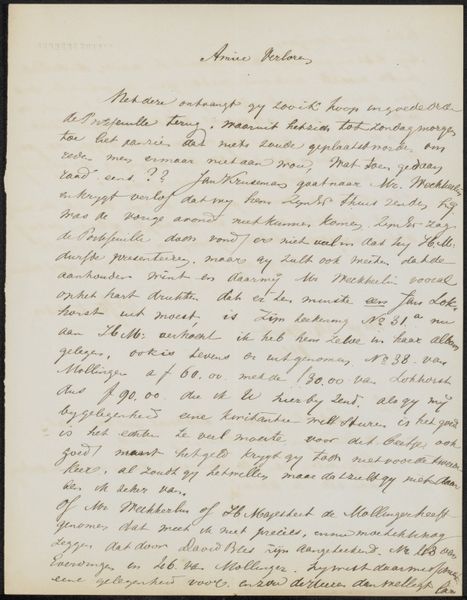
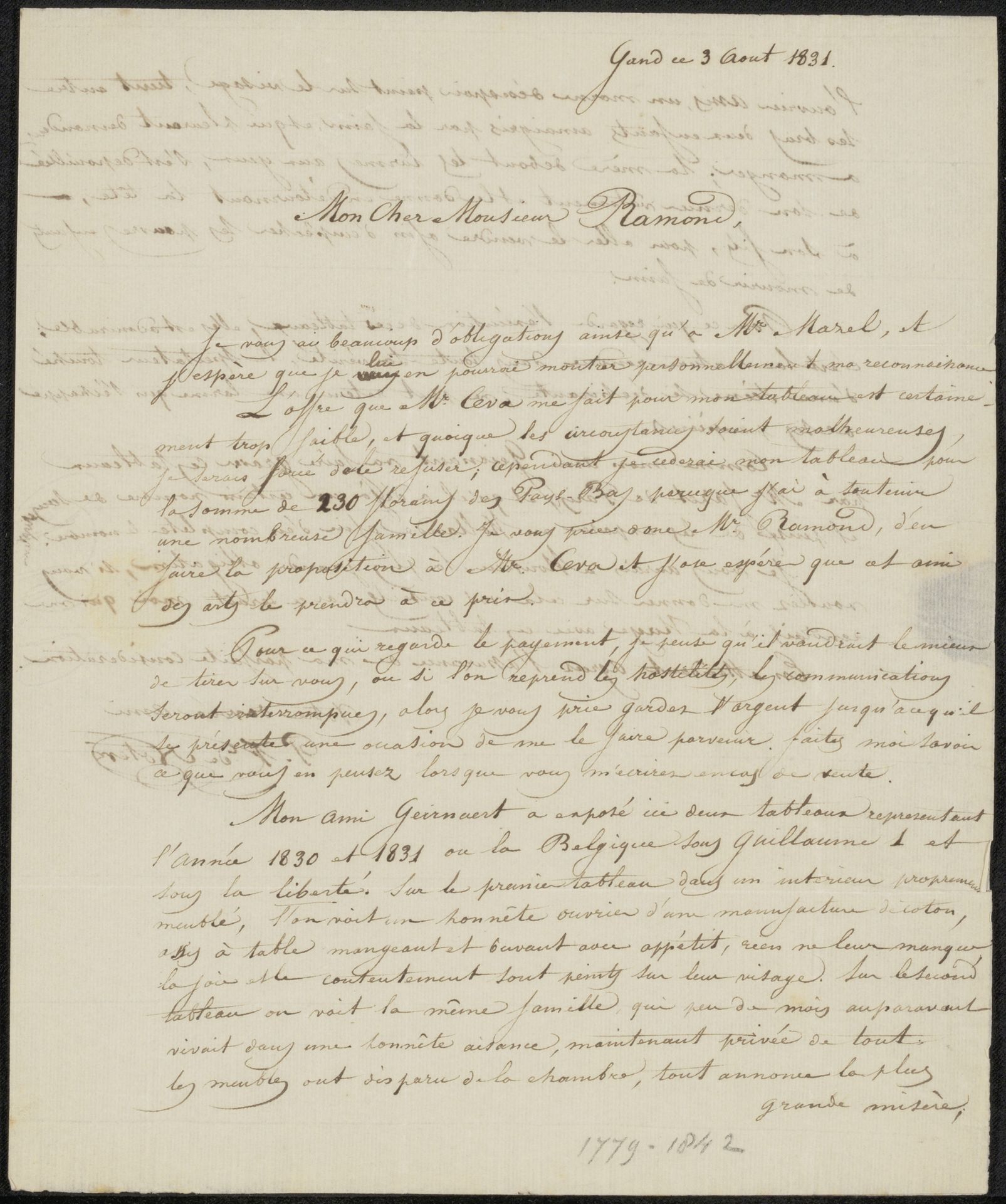
Curator: "Brief aan onbekend," or "Letter to an Unknown Recipient," potentially created between 1831 and 1838 by Pierre François De Noter, intrigues me. Its historical painting style and the media used - pen and ink - offer an interesting lens into the past, currently residing at the Rijksmuseum. What catches your attention initially? Editor: The density of the script. It feels like a glimpse into someone’s urgent thoughts, almost spilling out onto the page. How do you interpret this work, beyond it being a letter? Curator: Well, the script itself acts as a potent symbol. Think of calligraphy, often tied to status and education; the careful penmanship evokes not only communication but also a certain cultural weight, perhaps an air of officialdom or even an appeal for aid. What sort of emotional cues are you picking up from this letter's design? Editor: I guess, beyond the script itself, the sheer volume implies importance. Someone took a great deal of time to write this. But is there anything within the specific phrases themselves that carry weight? Curator: Precisely. Phrases like "...Belgique sous Guillaume 1 at sous la libertés..." reference a turbulent period in Belgian history. The iconography points to revolution, a fight for self-determination against the backdrop of societal upheaval. Consider what ‘liberty’ meant in that moment and how De Noter uses this document to represent that visually. Editor: So it's less about the individual words and more about the cultural context surrounding them? Curator: Indeed. This ‘letter’ becomes a visual record and, more broadly, a reminder of that struggle for identity through those specific figures, ideas, and values represented symbolically through language. By observing this text as an image, one begins to understand its historical and emotional gravity beyond just communication. What has caught your eye that is new? Editor: Seeing the letter now as an "image," rather than strictly writing, emphasizes the connection between historical moment, artistic choices, and this urge to solidify experiences with pen and paper.
Brief aan onbekend Possibly 1831 - 1838

Pierre François De Noter
1779 - 1843Location
RijksmuseumArtwork details
- Medium
- drawing, ink, pen
- Location
- Rijksmuseum
- Copyright
- Rijks Museum: Open Domain
Tags
drawing
ink
pen
history-painting
calligraphy
Comments
No comments
About this artwork
Curator: "Brief aan onbekend," or "Letter to an Unknown Recipient," potentially created between 1831 and 1838 by Pierre François De Noter, intrigues me. Its historical painting style and the media used - pen and ink - offer an interesting lens into the past, currently residing at the Rijksmuseum. What catches your attention initially? Editor: The density of the script. It feels like a glimpse into someone’s urgent thoughts, almost spilling out onto the page. How do you interpret this work, beyond it being a letter? Curator: Well, the script itself acts as a potent symbol. Think of calligraphy, often tied to status and education; the careful penmanship evokes not only communication but also a certain cultural weight, perhaps an air of officialdom or even an appeal for aid. What sort of emotional cues are you picking up from this letter's design? Editor: I guess, beyond the script itself, the sheer volume implies importance. Someone took a great deal of time to write this. But is there anything within the specific phrases themselves that carry weight? Curator: Precisely. Phrases like "...Belgique sous Guillaume 1 at sous la libertés..." reference a turbulent period in Belgian history. The iconography points to revolution, a fight for self-determination against the backdrop of societal upheaval. Consider what ‘liberty’ meant in that moment and how De Noter uses this document to represent that visually. Editor: So it's less about the individual words and more about the cultural context surrounding them? Curator: Indeed. This ‘letter’ becomes a visual record and, more broadly, a reminder of that struggle for identity through those specific figures, ideas, and values represented symbolically through language. By observing this text as an image, one begins to understand its historical and emotional gravity beyond just communication. What has caught your eye that is new? Editor: Seeing the letter now as an "image," rather than strictly writing, emphasizes the connection between historical moment, artistic choices, and this urge to solidify experiences with pen and paper.
Comments
No comments