1797
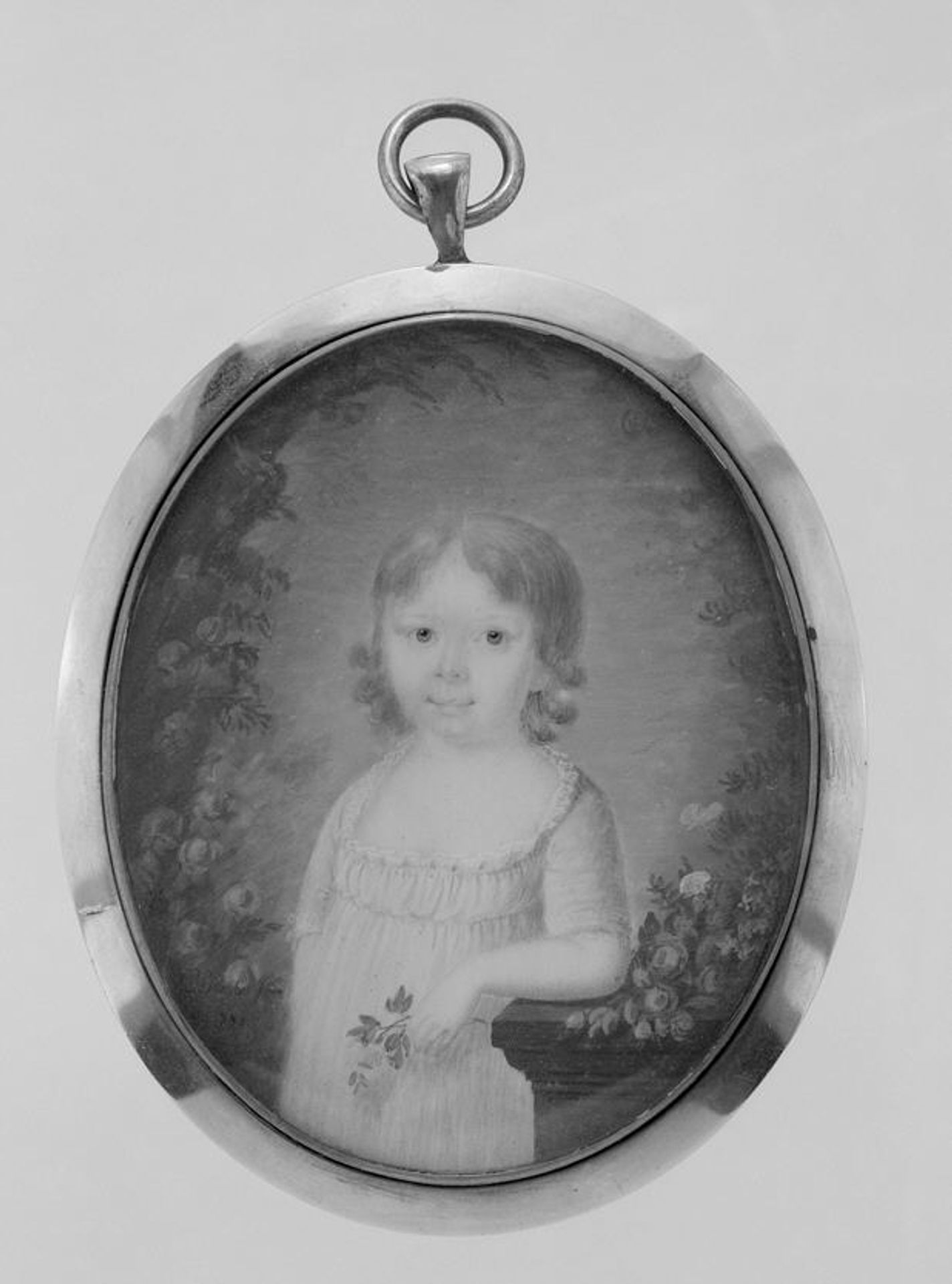
Portrait of a Girl

Philippe Abraham Peticolas
1760 - 1841
The Metropolitan Museum of Art
Metropolitan Museum of Art, New York, NYListen to curator's interpretation
Curatorial notes
Philippe Abraham Peticolas created this delicate portrait of a girl with watercolour on ivory. The oval format and the choice of monochrome immediately give us a sense of intimacy and restraint. Notice how Peticolas balances the composition. The girl is positioned slightly off-center, but is anchored by the dark foliage behind her, and the table to her side. The girl's pale dress contrasts with the dark tones of the natural backdrop, creating a focal point that draws our eye. The details are finely rendered, but it’s the tonal range that provides the form. Peticolas’s technique, which involves the juxtaposition of pale and dark shades, may reference the philosophical notions of harmony and opposition. Light and shade interact to create a sense of balance. The artwork is contained within a polished silver frame. Consider how the reflective surface of the silver might also mirror the viewer, creating an interplay between the observed and the observer. The very act of viewing becomes a part of the artwork itself.