About this artwork
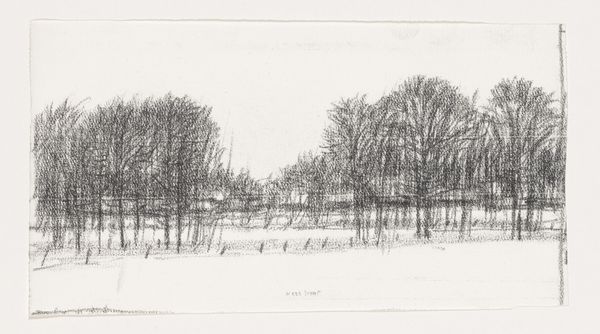
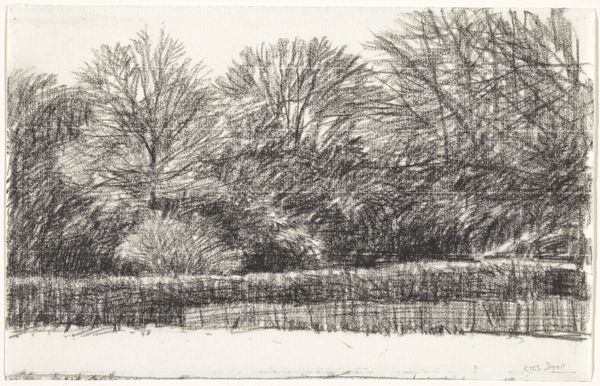
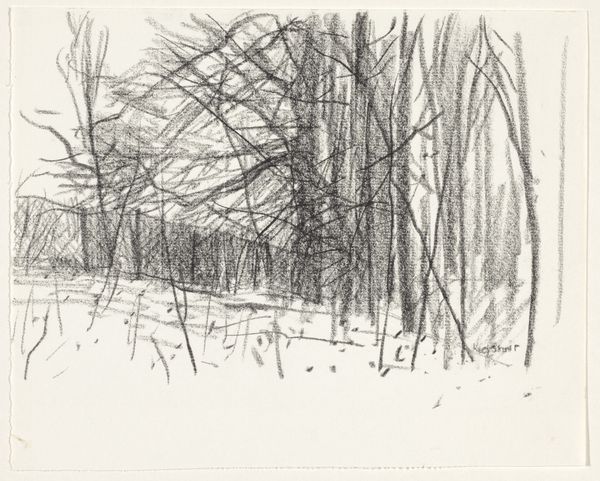
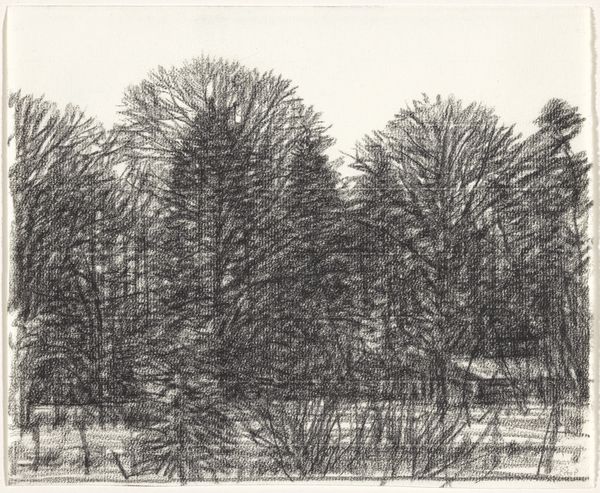
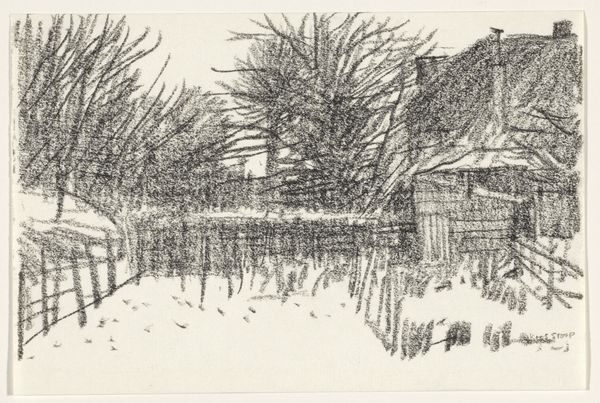
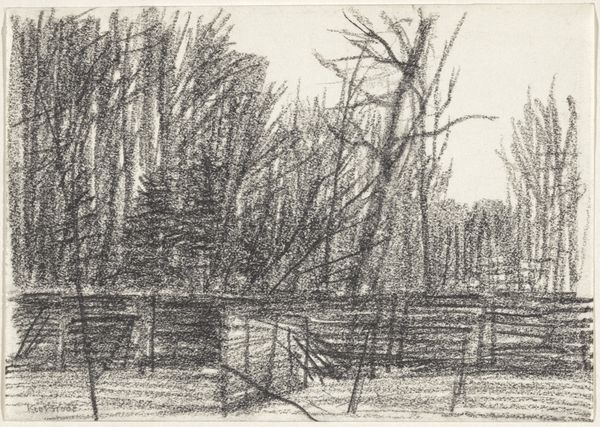
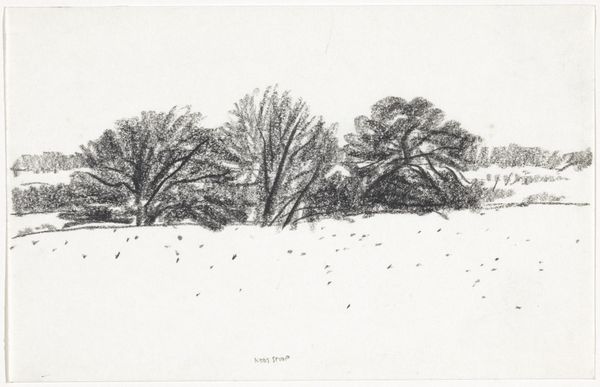
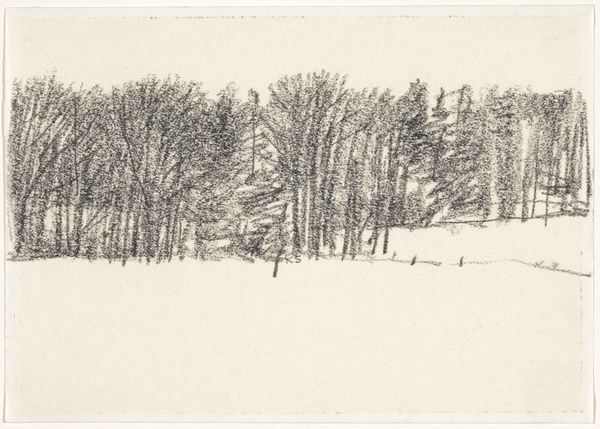
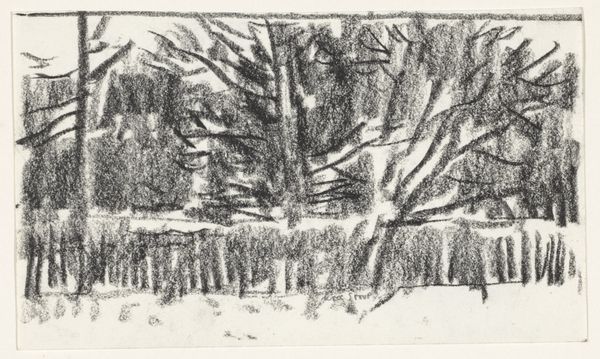
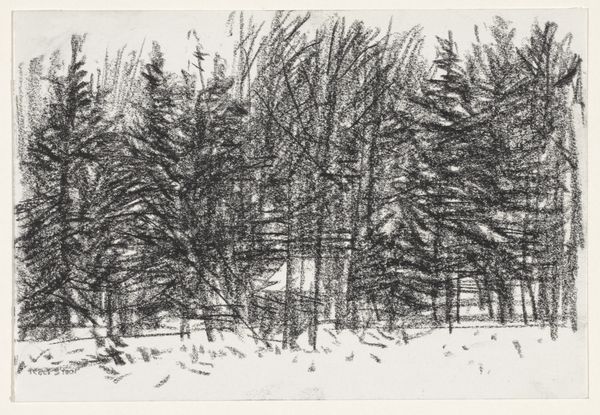
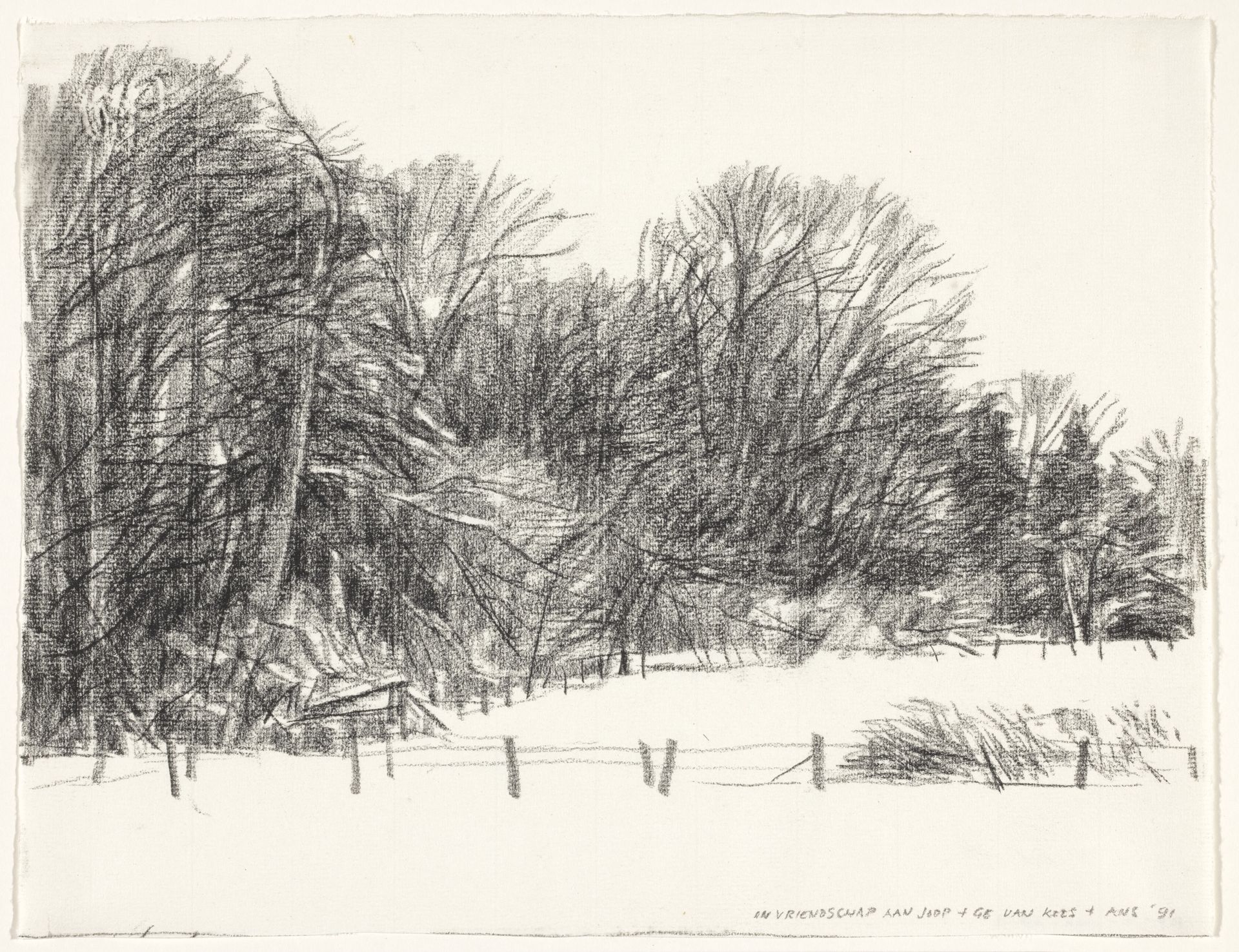
Editor: We are looking at "Bosrand met weiland met hek", or "Edge of the Forest with Meadow and Fence", a graphite drawing made by Kees Stoop in 1991. It has an unfinished quality to it that I find appealing, like a snapshot from a sketchbook. How does this drawing speak to you? Curator: What strikes me is the overt inscription along the bottom. “In Vriendschap aan Jaap…”, which translates to “In Friendship to Jaap.” The inscription elevates the drawing beyond a mere sketch and locates its value not just in aesthetic representation but within a specific social context. Stoop’s artistic practice appears deeply entwined with his personal relationships. What do you think that tells us about the function of art within his world? Editor: It suggests the drawing served as a form of personal exchange, a token of friendship rather than something purely for public consumption. Did that kind of exchange affect the reception of his works generally? Curator: Definitely. It affects our understanding. His landscapes, seemingly objective studies of the Dutch countryside, were embedded in a network of social exchange. We can assume this gave his work a unique intimacy, differentiating them from purely commercial landscapes which were intended for a broad market, not a specific person. Is there anything about the drawing’s style that confirms that for you? Editor: I think that heavy linework gives it a more casual, intimate feeling. Maybe that's a factor of it being in a sketchbook too, or just a consequence of a pencil sketch. It suggests the artist wasn’t aiming for pristine perfection. Curator: Precisely. This seemingly "unfinished" aesthetic underscores its function as a gift, a moment captured and shared. The inscription personalizes what could have been a universal landscape, giving it context in Stoop's immediate world. Editor: It's fascinating how knowing about the dedication shifts the whole perspective. Thanks for pointing that out! Curator: Indeed, considering art's entanglement with its social and political environment reveals its depth beyond the purely visual. It’s been insightful discussing this with you!

Artwork details
- Medium
- drawing, pencil, graphite
- Dimensions
- height 242 mm, width 316 mm
- Location
- Rijksmuseum
- Copyright
- Rijks Museum: Open Domain
Tags
drawing
pencil sketch
incomplete sketchy
landscape
linework heavy
pencil
line
graphite
sketchbook drawing
realism
Comments
No comments
About this artwork
Editor: We are looking at "Bosrand met weiland met hek", or "Edge of the Forest with Meadow and Fence", a graphite drawing made by Kees Stoop in 1991. It has an unfinished quality to it that I find appealing, like a snapshot from a sketchbook. How does this drawing speak to you? Curator: What strikes me is the overt inscription along the bottom. “In Vriendschap aan Jaap…”, which translates to “In Friendship to Jaap.” The inscription elevates the drawing beyond a mere sketch and locates its value not just in aesthetic representation but within a specific social context. Stoop’s artistic practice appears deeply entwined with his personal relationships. What do you think that tells us about the function of art within his world? Editor: It suggests the drawing served as a form of personal exchange, a token of friendship rather than something purely for public consumption. Did that kind of exchange affect the reception of his works generally? Curator: Definitely. It affects our understanding. His landscapes, seemingly objective studies of the Dutch countryside, were embedded in a network of social exchange. We can assume this gave his work a unique intimacy, differentiating them from purely commercial landscapes which were intended for a broad market, not a specific person. Is there anything about the drawing’s style that confirms that for you? Editor: I think that heavy linework gives it a more casual, intimate feeling. Maybe that's a factor of it being in a sketchbook too, or just a consequence of a pencil sketch. It suggests the artist wasn’t aiming for pristine perfection. Curator: Precisely. This seemingly "unfinished" aesthetic underscores its function as a gift, a moment captured and shared. The inscription personalizes what could have been a universal landscape, giving it context in Stoop's immediate world. Editor: It's fascinating how knowing about the dedication shifts the whole perspective. Thanks for pointing that out! Curator: Indeed, considering art's entanglement with its social and political environment reveals its depth beyond the purely visual. It’s been insightful discussing this with you!
Comments
No comments