About this artwork
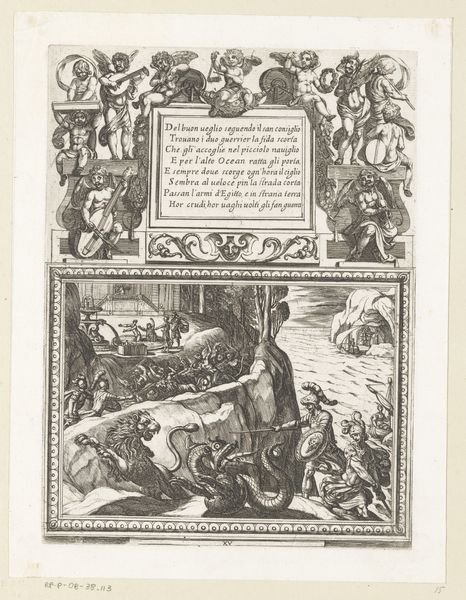
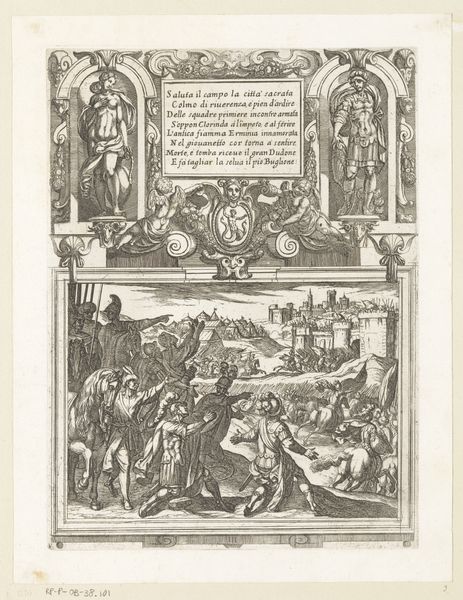
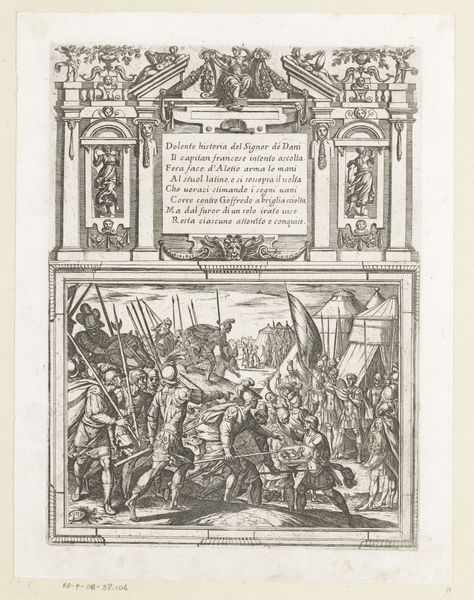
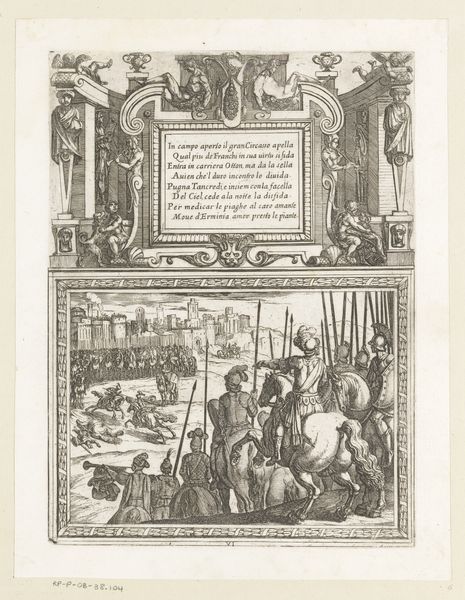
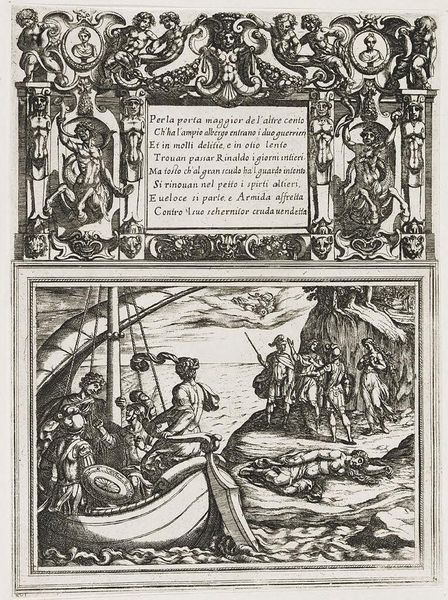
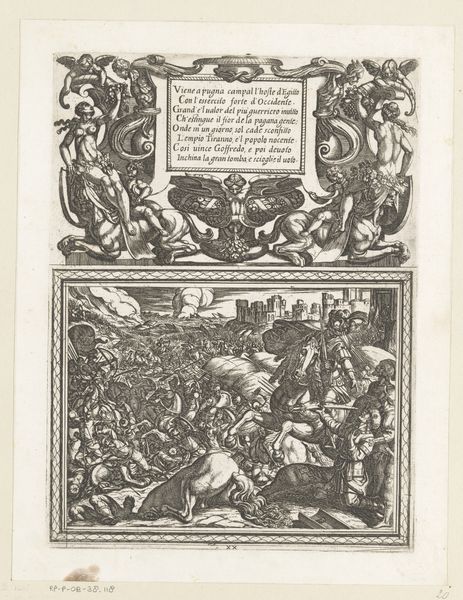
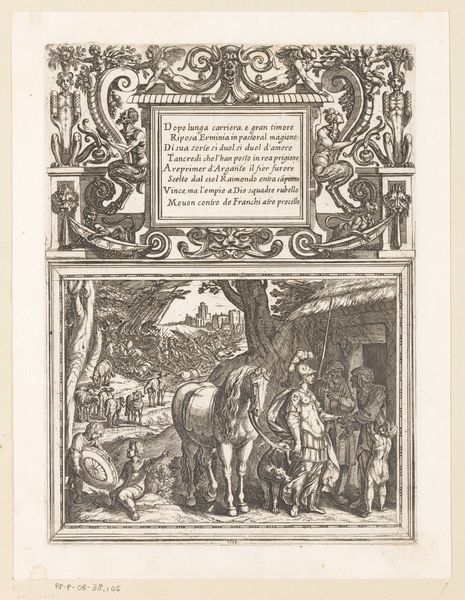
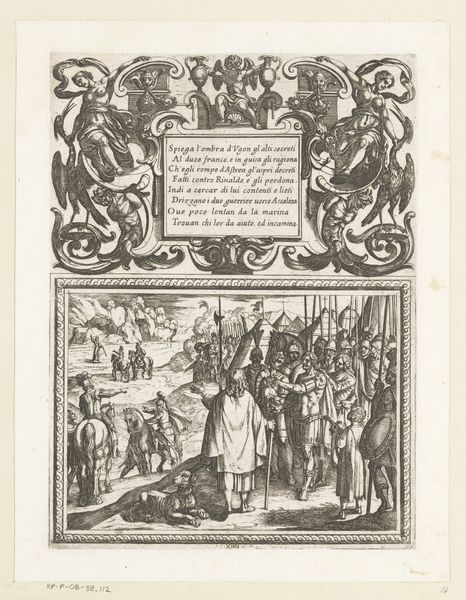
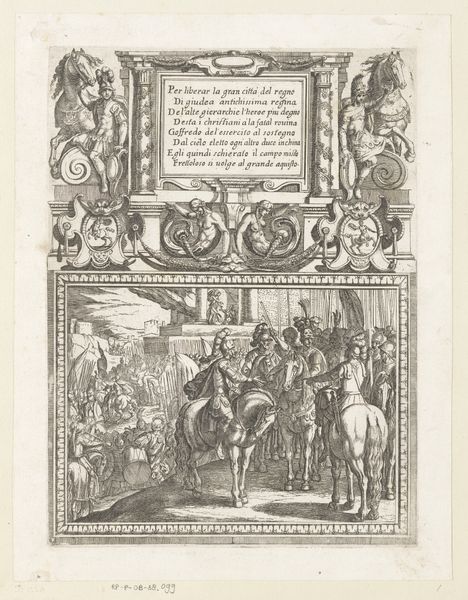
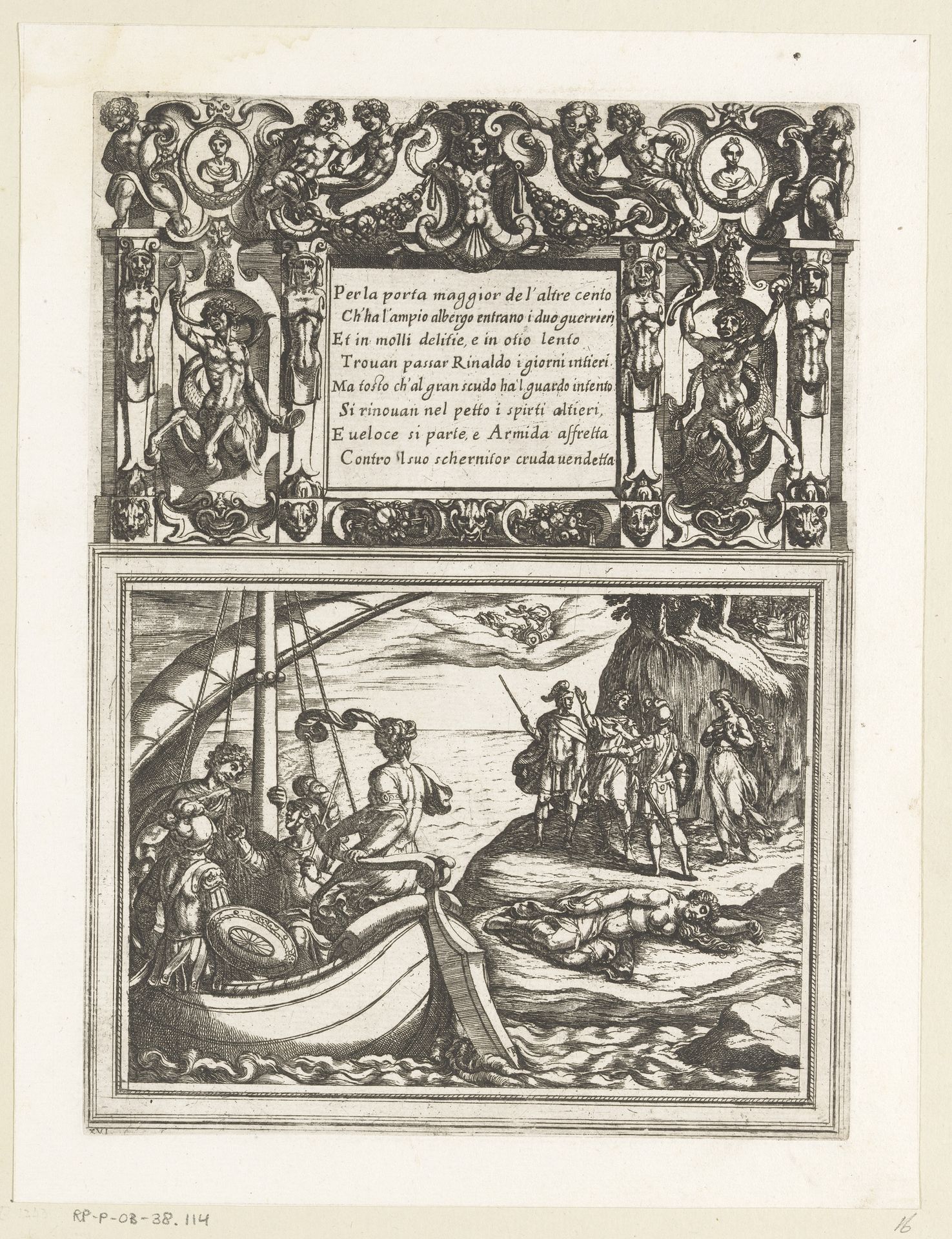
Antonio Tempesta created this etching, "Illustration for Canto XVI of Tasso's 'Jerusalem Delivered,'" sometime between 1575 and 1630. It reflects the cultural and social values of the late Renaissance, a period marked by religious conflict and the rise of absolutist power. In the print, we see a scene rife with tension: knights disembark from a ship, encountering a lifeless body on the shore. Tempesta visualizes Torquato Tasso's epic poem, framing the complex relationship between the warrior Rinaldo and the sorceress Armida. Their interactions oscillate between love, captivity, and revenge, embodying the gendered power dynamics of the era. Armida, though powerful, is ultimately portrayed as vengeful and scorned, confined to seeking "crude vendetta." Tempesta invites us to consider how societal expectations and biases shape our understanding of gender, power, and justice. What does it mean to depict Armida's desire for vengeance, and what does this tell us about the fears and expectations projected onto women during this period?
Illustratie bij Canto XVI van Tasso's 'Gerusalemme Liberata'
1565 - 1630

Antonio Tempesta
1555 - 1630Location
RijksmuseumArtwork details
- Medium
- print, engraving
- Dimensions
- height 275 mm, width 204 mm
- Location
- Rijksmuseum
- Copyright
- Rijks Museum: Open Domain
Tags
Comments
Share your thoughts
About this artwork
Antonio Tempesta created this etching, "Illustration for Canto XVI of Tasso's 'Jerusalem Delivered,'" sometime between 1575 and 1630. It reflects the cultural and social values of the late Renaissance, a period marked by religious conflict and the rise of absolutist power. In the print, we see a scene rife with tension: knights disembark from a ship, encountering a lifeless body on the shore. Tempesta visualizes Torquato Tasso's epic poem, framing the complex relationship between the warrior Rinaldo and the sorceress Armida. Their interactions oscillate between love, captivity, and revenge, embodying the gendered power dynamics of the era. Armida, though powerful, is ultimately portrayed as vengeful and scorned, confined to seeking "crude vendetta." Tempesta invites us to consider how societal expectations and biases shape our understanding of gender, power, and justice. What does it mean to depict Armida's desire for vengeance, and what does this tell us about the fears and expectations projected onto women during this period?
Comments
Share your thoughts