About this artwork
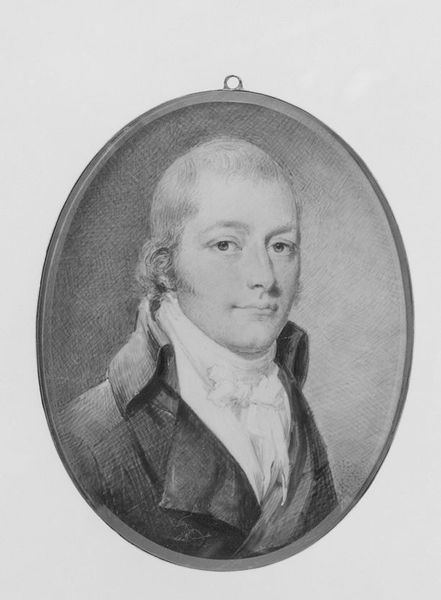
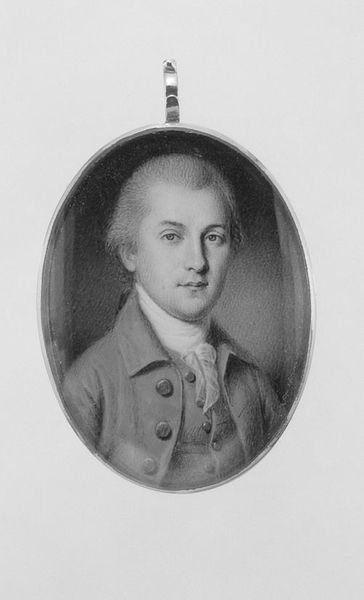
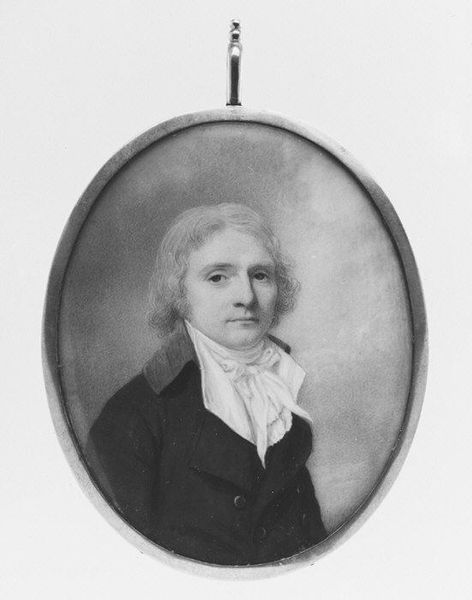
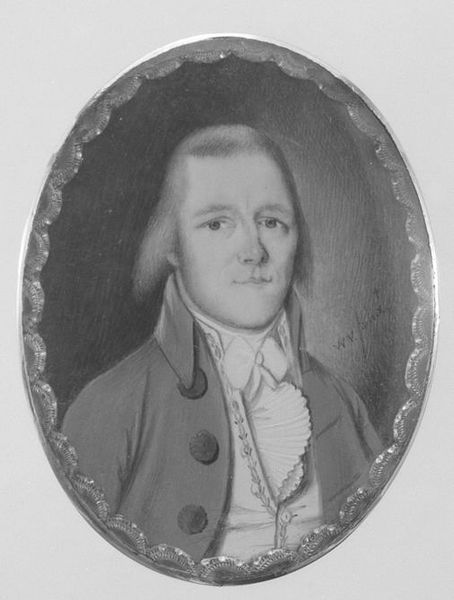
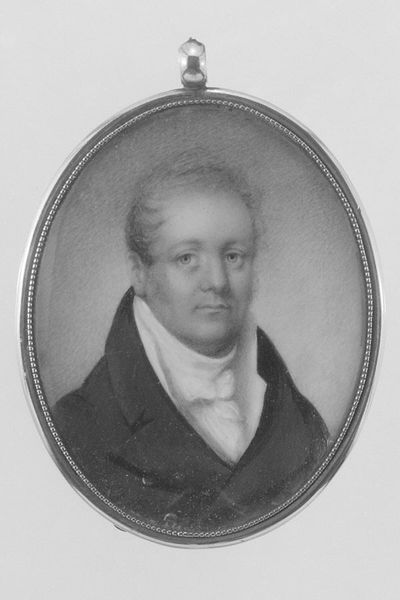
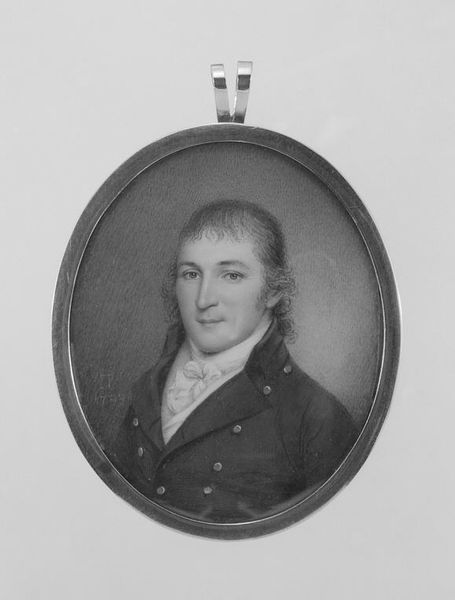
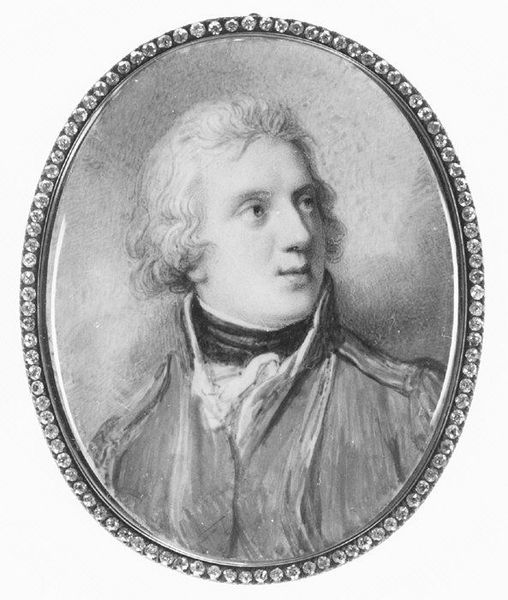
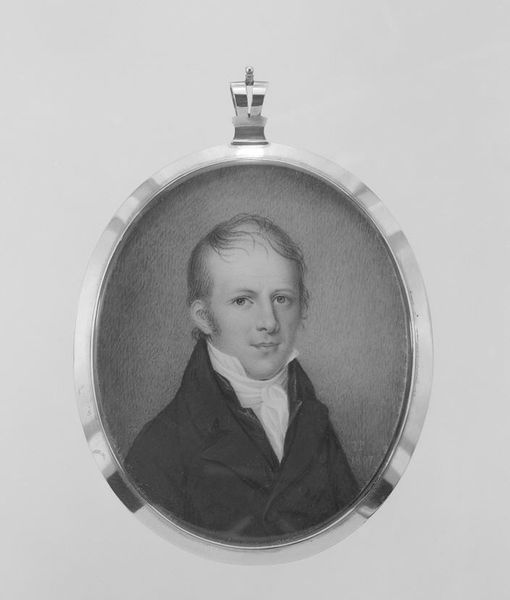
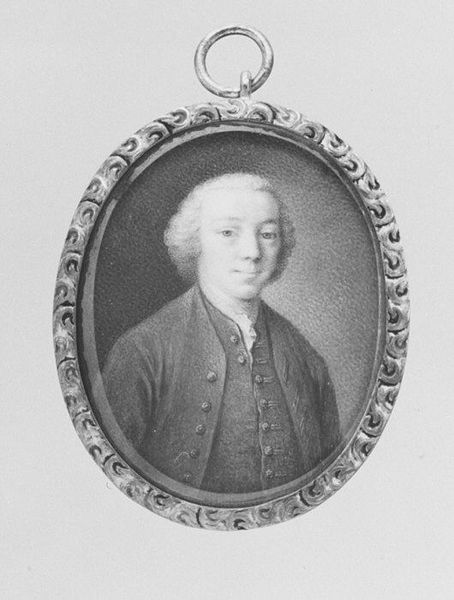
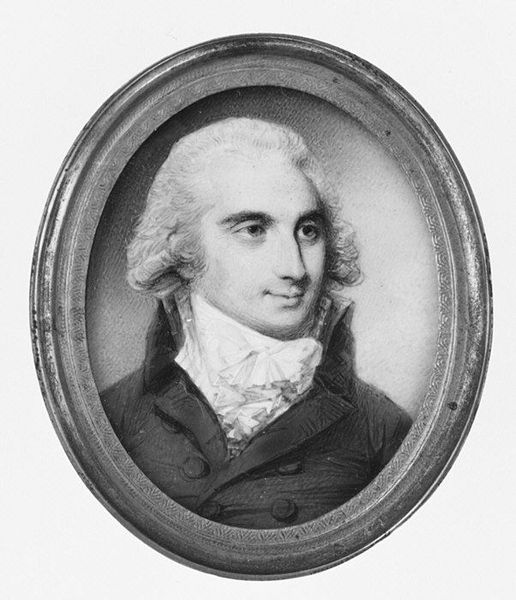
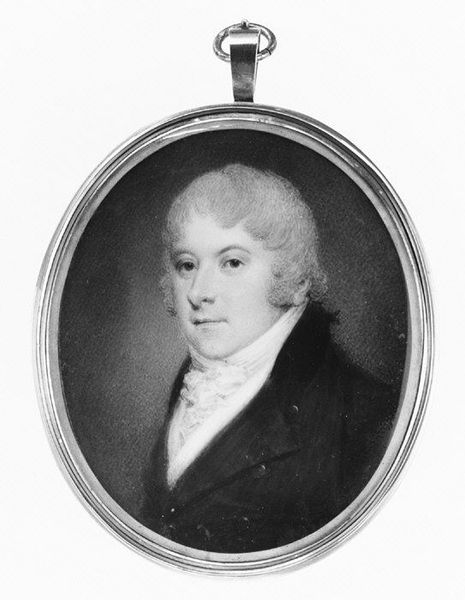
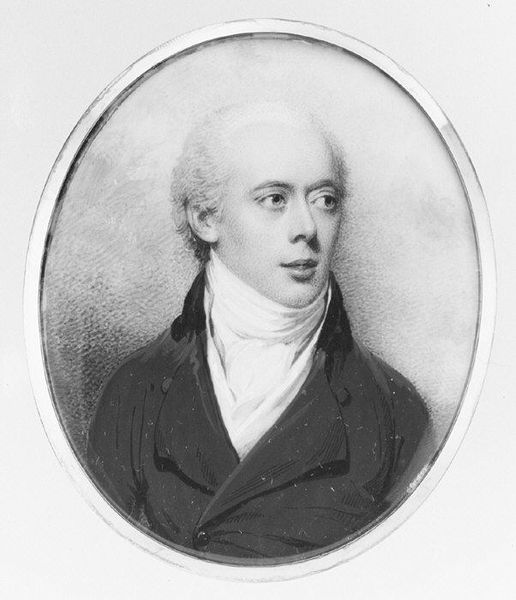
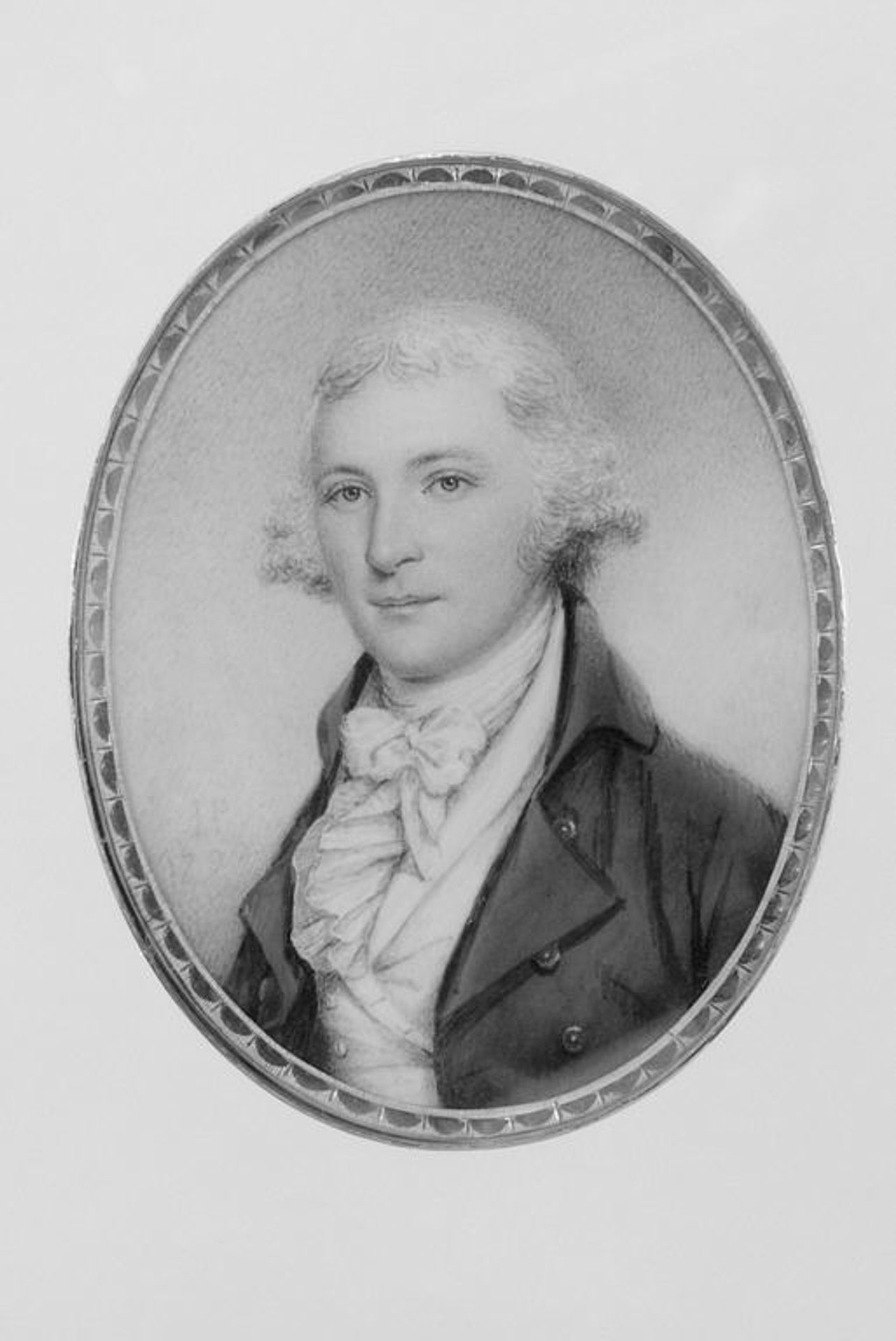
James Peale created this diminutive portrait of William Jonas Keen, using watercolor on ivory, a popular choice for its smooth surface. The tight oval format and meticulous detail invite close inspection, almost like a private encounter. Notice how Peale uses subtle washes of color to model Keen's face, contrasting the soft skin tones with the sharper, more defined lines of his jacket. The sitter's gaze is direct, yet there's a hint of softness, perhaps achieved through the delicate rendering of light and shadow around the eyes. The composition is simple but effective: the figure is centered, framed by the oval, which creates a sense of intimacy. The artist's attention to the textures of the ruffled cravat and powdered hair adds depth to the piece. Consider how this small-scale format demands a certain kind of engagement. It’s not a grand statement but a quiet, personal one, reflecting the values and aesthetics of its time, where portraiture served as both a record and an intimate object of memory.
William Jonas Keen
1796


Artwork details
- Medium
- drawing, pencil
- Dimensions
- 2 11/16 x 2 1/16 in. (6.8 x 5.2 cm)
- Location
- Metropolitan Museum of Art, New York, NY
- Copyright
- Public Domain
Tags
Comments
Share your thoughts
About this artwork
James Peale created this diminutive portrait of William Jonas Keen, using watercolor on ivory, a popular choice for its smooth surface. The tight oval format and meticulous detail invite close inspection, almost like a private encounter. Notice how Peale uses subtle washes of color to model Keen's face, contrasting the soft skin tones with the sharper, more defined lines of his jacket. The sitter's gaze is direct, yet there's a hint of softness, perhaps achieved through the delicate rendering of light and shadow around the eyes. The composition is simple but effective: the figure is centered, framed by the oval, which creates a sense of intimacy. The artist's attention to the textures of the ruffled cravat and powdered hair adds depth to the piece. Consider how this small-scale format demands a certain kind of engagement. It’s not a grand statement but a quiet, personal one, reflecting the values and aesthetics of its time, where portraiture served as both a record and an intimate object of memory.
Comments
Share your thoughts