About this artwork
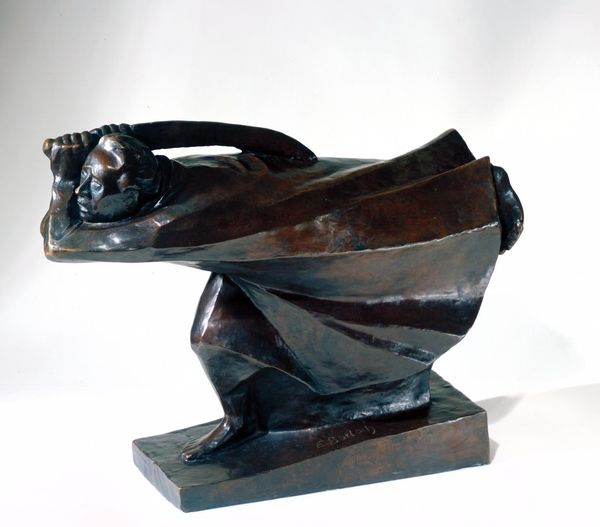
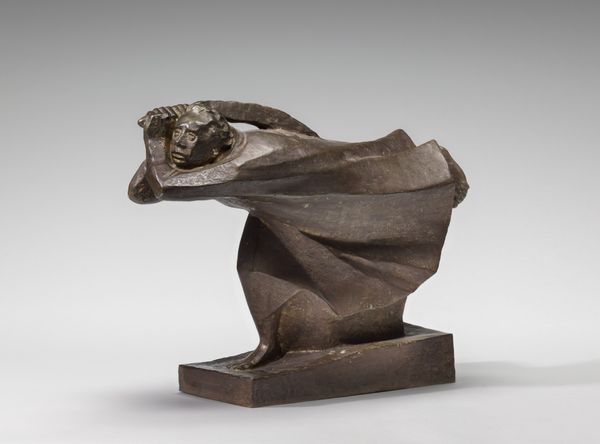
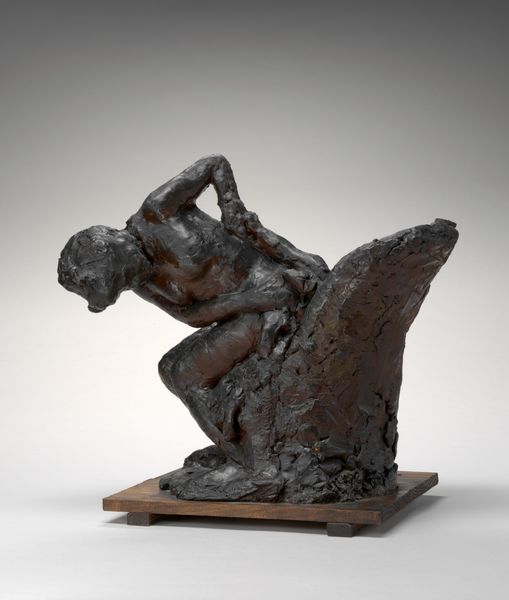
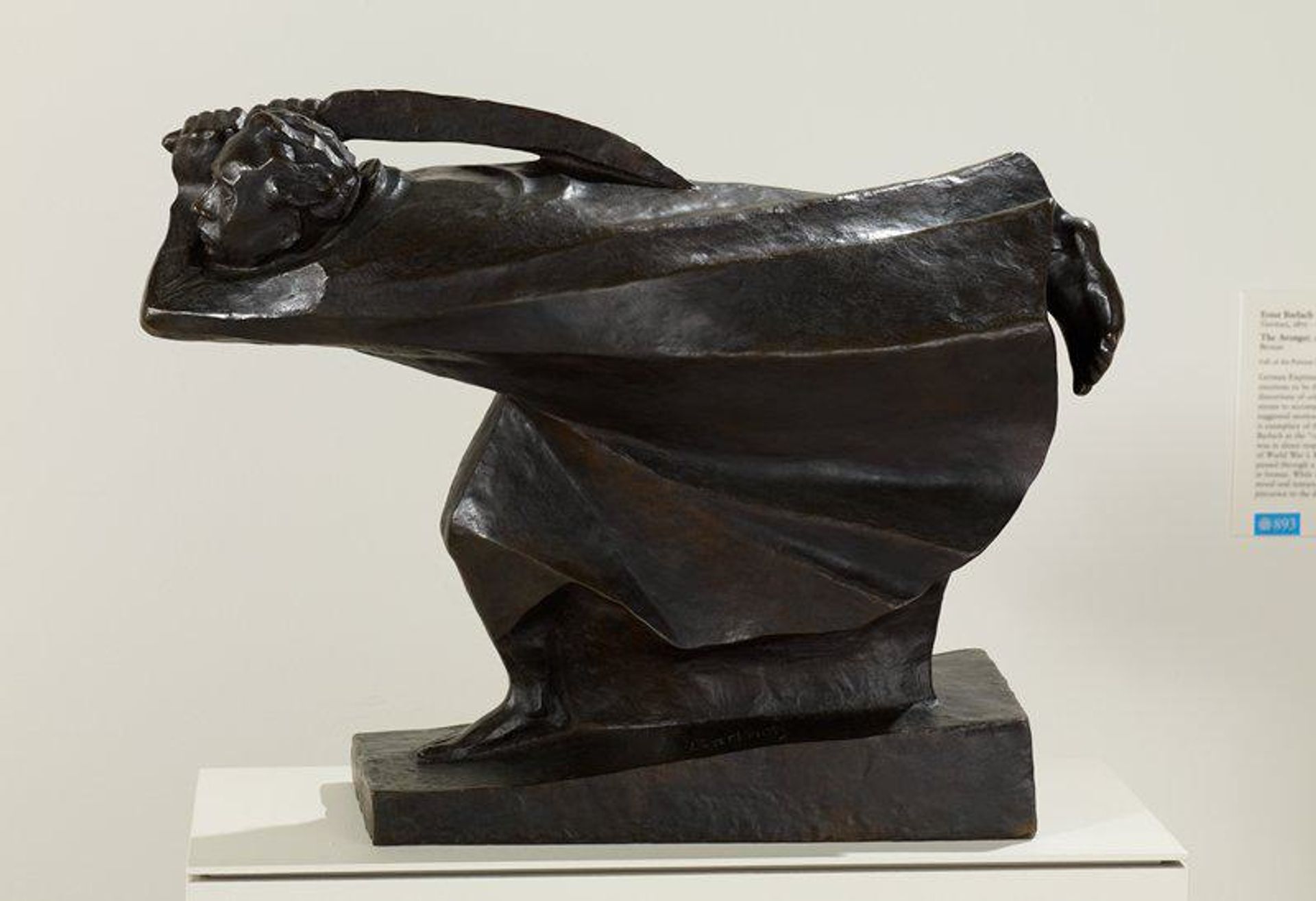
Ernst Barlach’s bronze sculpture, The Avenger, at the Minneapolis Institute of Art is a marvel of process-oriented artmaking. The dark patina of the bronze gives it a weighty, almost solemn presence, and the way Barlach worked the surface adds so much to its emotional depth. The texture of the piece is just incredible, you can almost feel the artist's hands shaping the metal. Look at how the folds of the figure’s garments are so deeply carved, creating these strong lines that give the sculpture a sense of movement and tension. There’s a rawness to the surface, like it’s been through a lot, which totally fits with the idea of someone seeking revenge. It reminds me a little of Käthe Kollwitz’s sculptures, with their similar focus on human suffering and emotional intensity. But Barlach's work has this added layer of dynamic energy. Art is about conversations, right? Each piece building on what came before, pushing the boundaries of expression. This sculpture is an ongoing exploration of what it means to be human, to feel pain, and to seek justice.
The Avenger
c. 1914s


Artwork details
- Medium
- bronze, sculpture
- Dimensions
- 17 x 23 1/4 in. (43.2 x 59.1 cm)
- Location
- Minneapolis Institute of Art
- Copyright
- No Copyright - United States
Tags
Comments

German Expressionists believed communication of the emotions to be the primary purpose of art and employed distortions of color, shape, surface, and space as the means to accomplish this goal. The angular form, suggested motion, and passionate gesture of The Avenger is exemplary of the Expressionist vision. Dubbed by Barlach as the "crystallized essence of War," the sculpture was in direct response to the vengefulness and devastation of World War I. Based on lithographs of 1914, the image passed through a number of stages before it was realized in bronze. While indebted to medieval wood statuary in mood and texture, Barlach's work was also a significant precursor to the development of kinetic sculpture.
About this artwork
Ernst Barlach’s bronze sculpture, The Avenger, at the Minneapolis Institute of Art is a marvel of process-oriented artmaking. The dark patina of the bronze gives it a weighty, almost solemn presence, and the way Barlach worked the surface adds so much to its emotional depth. The texture of the piece is just incredible, you can almost feel the artist's hands shaping the metal. Look at how the folds of the figure’s garments are so deeply carved, creating these strong lines that give the sculpture a sense of movement and tension. There’s a rawness to the surface, like it’s been through a lot, which totally fits with the idea of someone seeking revenge. It reminds me a little of Käthe Kollwitz’s sculptures, with their similar focus on human suffering and emotional intensity. But Barlach's work has this added layer of dynamic energy. Art is about conversations, right? Each piece building on what came before, pushing the boundaries of expression. This sculpture is an ongoing exploration of what it means to be human, to feel pain, and to seek justice.
Comments
German Expressionists believed communication of the emotions to be the primary purpose of art and employed distortions of color, shape, surface, and space as the means to accomplish this goal. The angular form, suggested motion, and passionate gesture of The Avenger is exemplary of the Expressionist vision. Dubbed by Barlach as the "crystallized essence of War," the sculpture was in direct response to the vengefulness and devastation of World War I. Based on lithographs of 1914, the image passed through a number of stages before it was realized in bronze. While indebted to medieval wood statuary in mood and texture, Barlach's work was also a significant precursor to the development of kinetic sculpture.