About this artwork
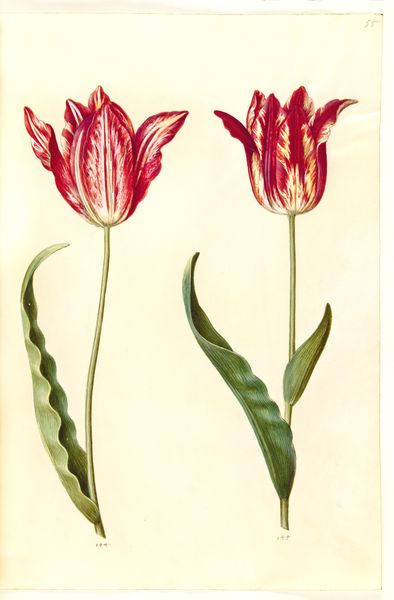
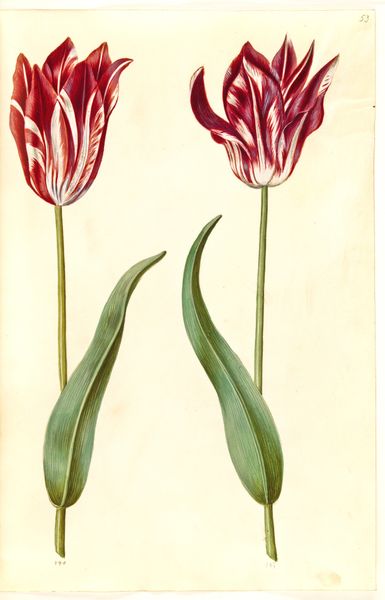
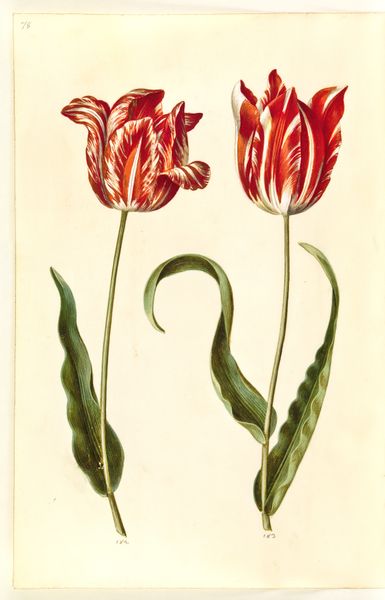
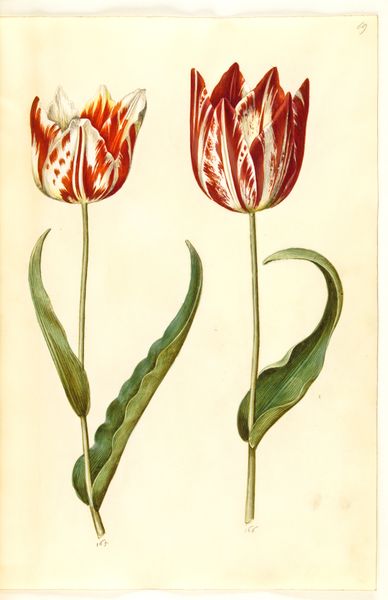
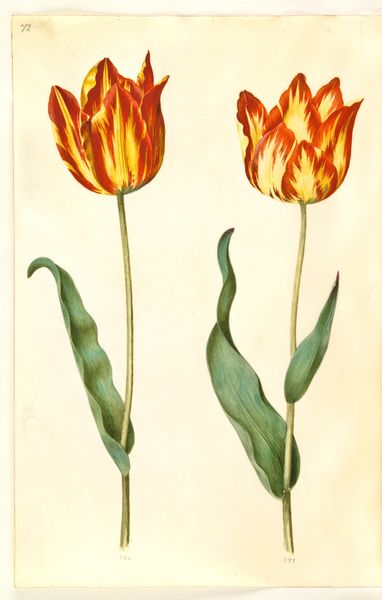
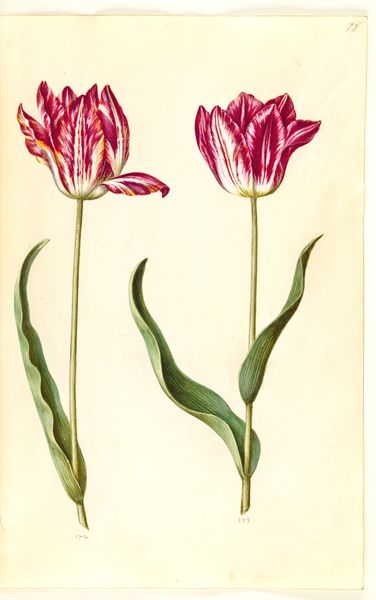
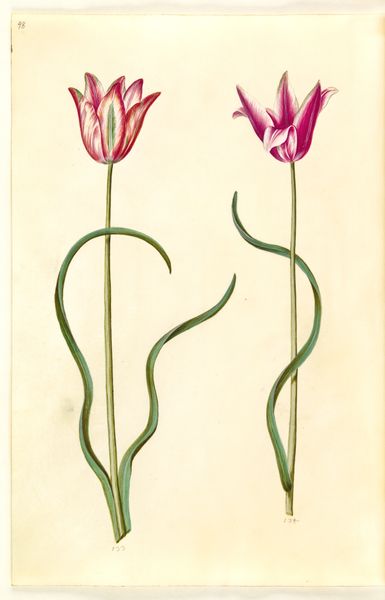
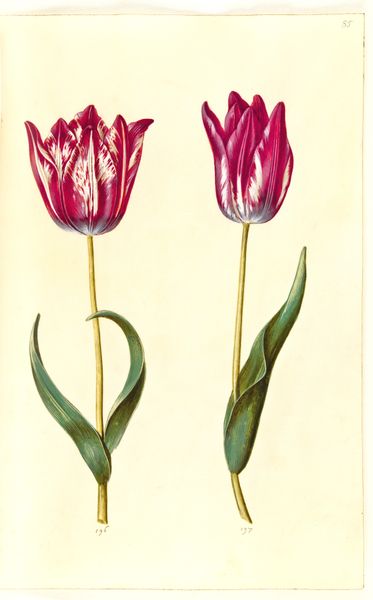
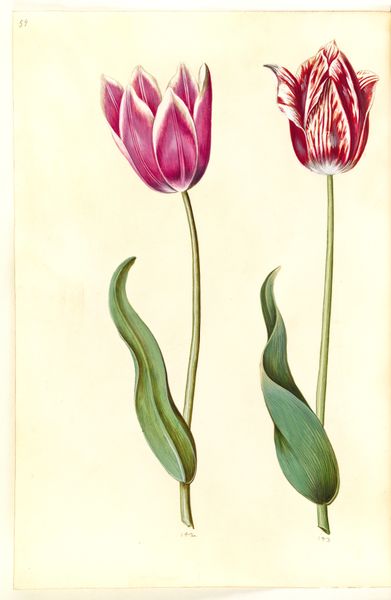
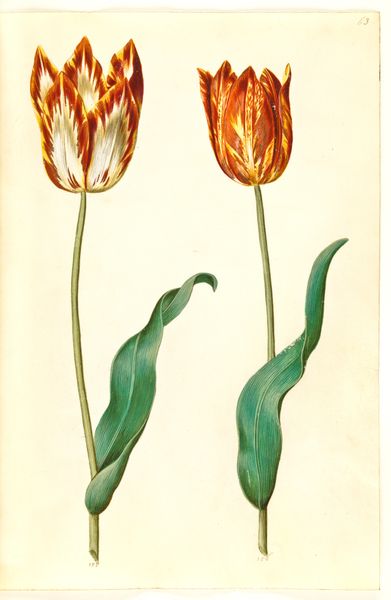
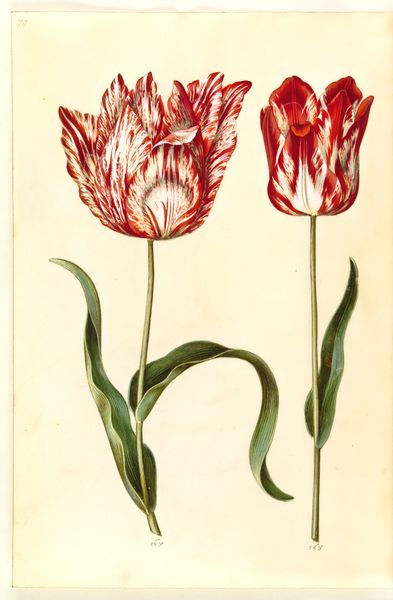
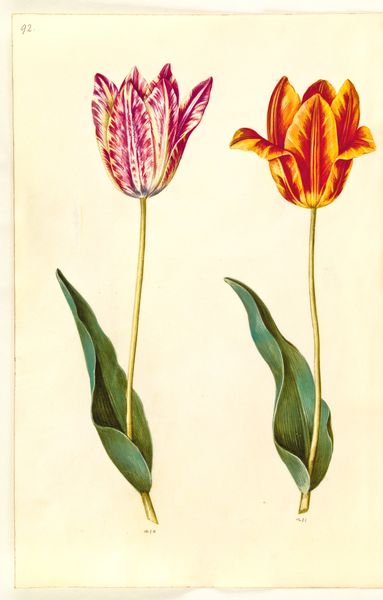
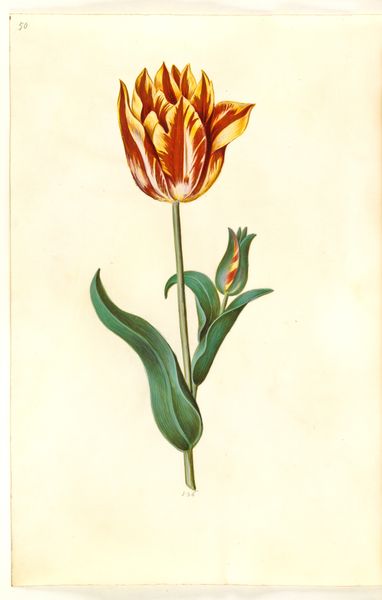
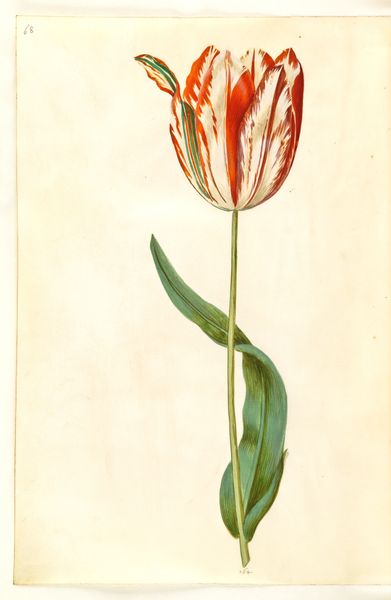
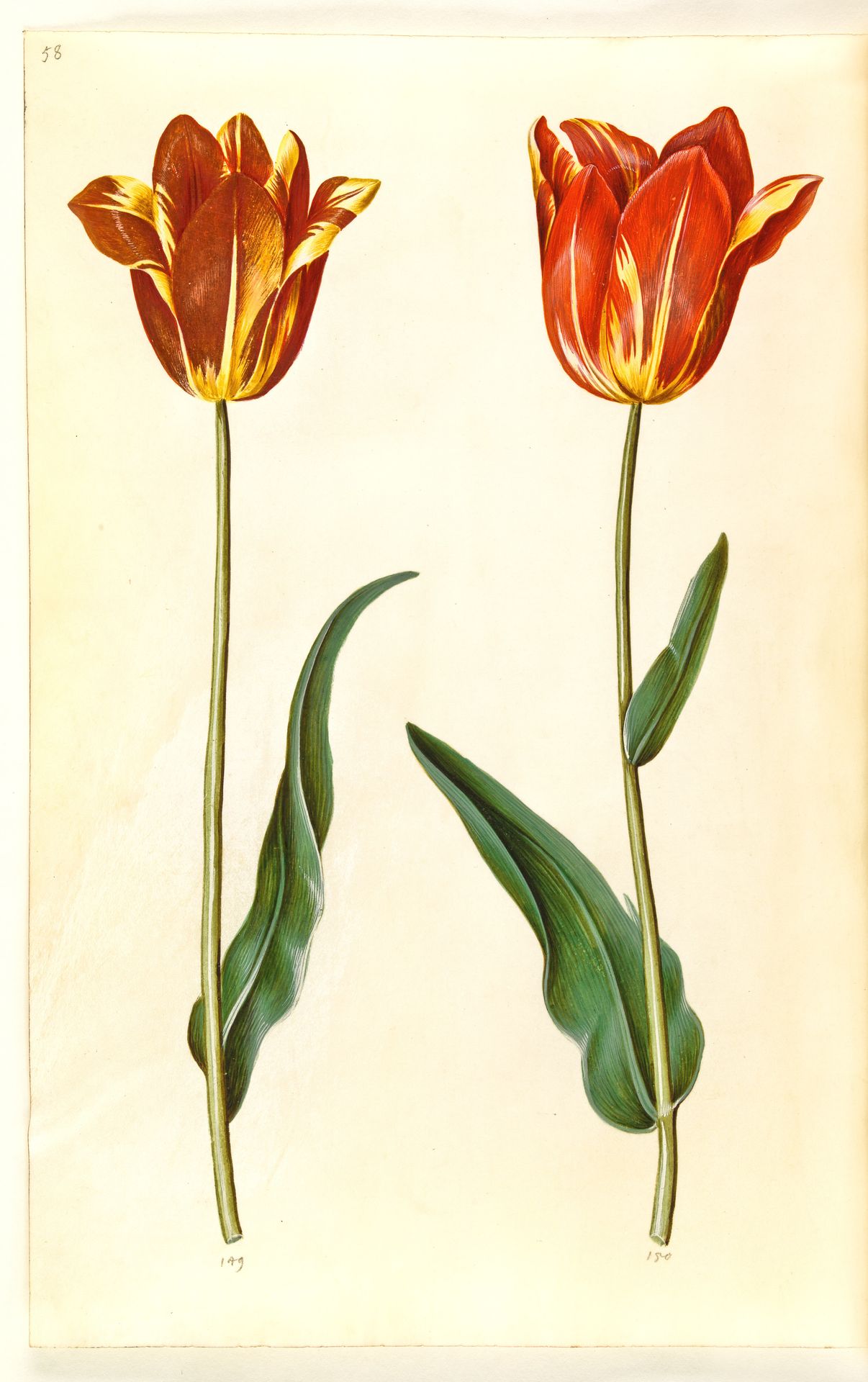
Hans Simon Holtzbecker created this watercolor and gouache work, Tulipa gesneriana, in 17th century Hamburg. The tulip, originating in Turkey, became a status symbol in the Netherlands during this period, a phenomenon known as "Tulip Mania." Holtzbecker's image, with its precise botanical detail, reflects a scientific interest in the natural world, but it can also be understood within the context of the cultural and economic significance of tulips at that time. This cultural context, in which flowers attained high symbolic value and market value, is an important part of the picture. To fully understand the cultural importance of this image, we might consult historical documents that reflect the social and institutional context of artistic production in Hamburg, and that show the economic significance of flower collecting and trade.
Tulipa gesneriana (have-tulipan)
1635 - 1664


Artwork details
- Medium
- drawing, gouache
- Dimensions
- 375 mm (height) x 265 mm (width) x 85 mm (depth) (monteringsmaal), 358 mm (height) x 250 mm (width) (bladmaal)
- Location
- SMK - Statens Museum for Kunst
Tags
Comments
Share your thoughts
About this artwork
Hans Simon Holtzbecker created this watercolor and gouache work, Tulipa gesneriana, in 17th century Hamburg. The tulip, originating in Turkey, became a status symbol in the Netherlands during this period, a phenomenon known as "Tulip Mania." Holtzbecker's image, with its precise botanical detail, reflects a scientific interest in the natural world, but it can also be understood within the context of the cultural and economic significance of tulips at that time. This cultural context, in which flowers attained high symbolic value and market value, is an important part of the picture. To fully understand the cultural importance of this image, we might consult historical documents that reflect the social and institutional context of artistic production in Hamburg, and that show the economic significance of flower collecting and trade.
Comments
Share your thoughts