1876
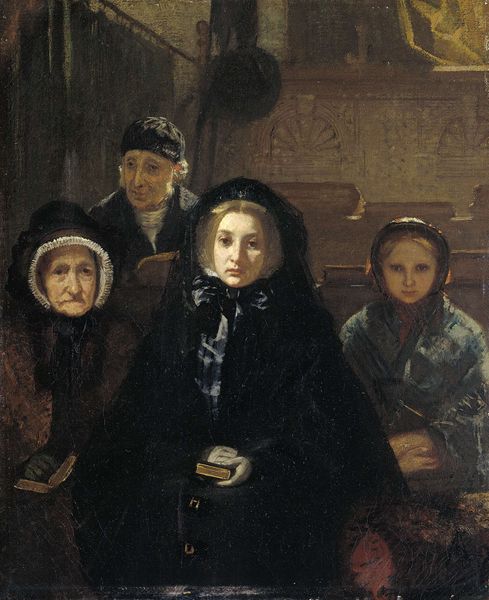
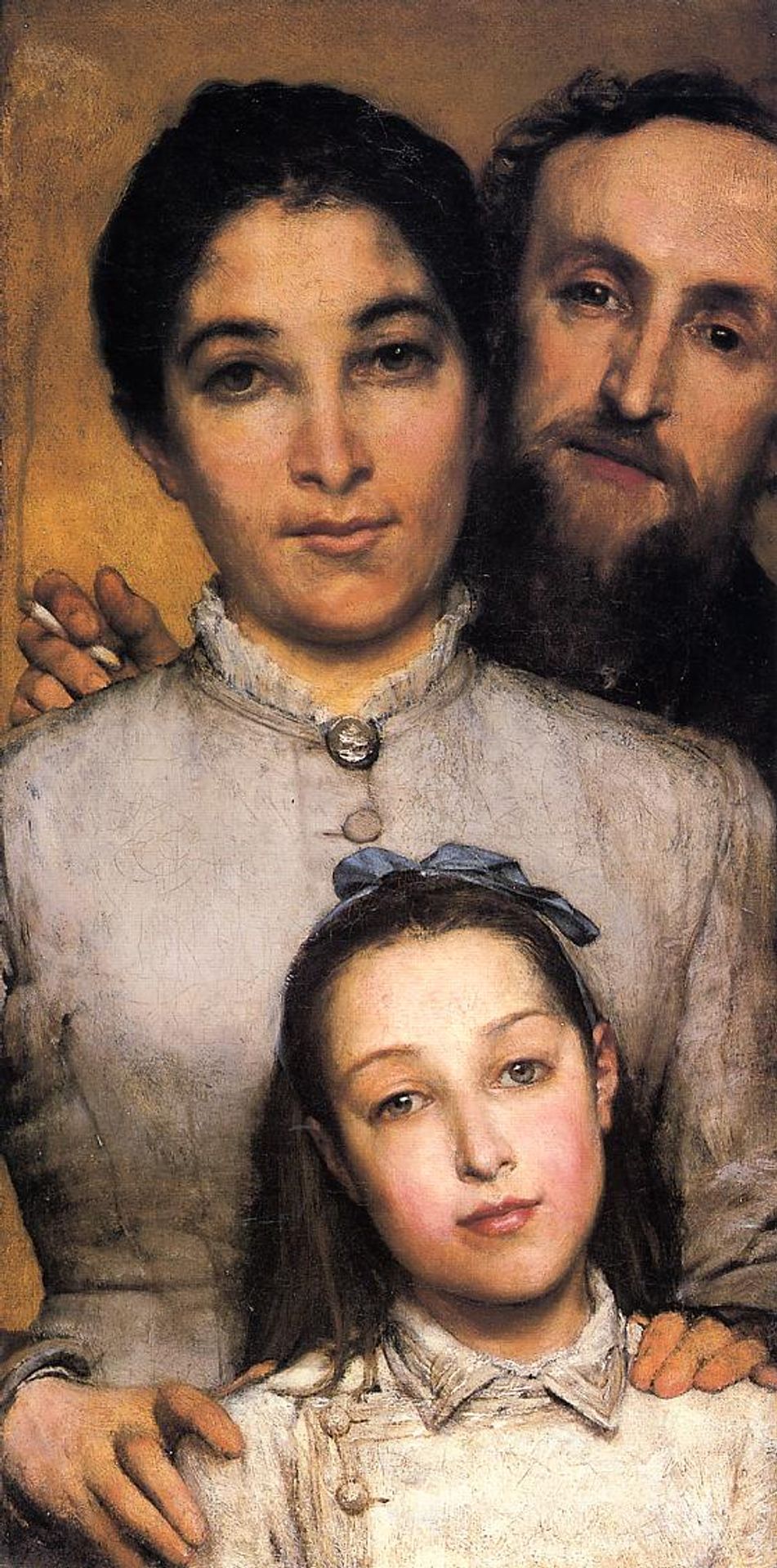
Portrait of Aime Jules Dalou, his Wife and Daughter

Listen to curator's interpretation
Curatorial notes
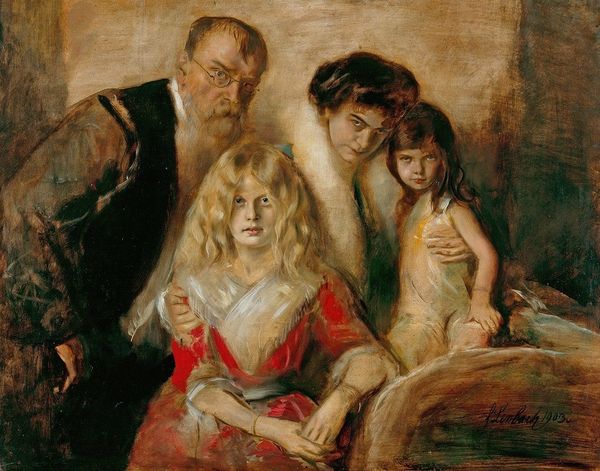
Editor: Here we have Lawrence Alma-Tadema’s painting, "Portrait of Aime Jules Dalou, his Wife and Daughter," from 1876. It's rendered in oil paint and has an intimate feel, like a personal memento. I am intrigued by the positioning of the family members; it's an unusual arrangement. What symbols and stories do you find embedded in this image? Curator: It's true, the arrangement strikes us as unusual now, yet consider this in relation to notions of artistic brotherhood and domesticity that were burgeoning during the Romantic period. Dalou, himself a sculptor, is literally and figuratively behind his wife, perhaps implying his support. His gaze is serious; consider the power dynamics communicated through pose and gesture. The cigarette he's holding almost seems a marker of status. Do you see a continuity with Renaissance depictions of the nuclear family? Editor: I can see the parallel, but there is something more immediate and less formal here than a typical Renaissance painting, like the subjects were captured candidly. Curator: Precisely. Alma-Tadema invites us to examine the iconography of modern family life. Note the little girl: her direct gaze engages us. Her bow and rosy cheeks project both innocence and self-awareness, signaling a transitional moment. Also, reflect upon the choice of muted tones. What effect do they have? Editor: It makes the portrait feel more honest, perhaps, less idealized. Like they're inviting you into a quiet, private moment, away from the stage of the world. I hadn't noticed how carefully each person’s gaze was arranged! Curator: Gaze, indeed, becomes another layer of symbolic language. Look closer: What do you think this work tells us about the shifting cultural values and roles of the family in late 19th-century Europe? What emotions and stories does this imagery evoke in us today? Editor: This has really given me a new perspective, particularly regarding how artists embed meaning through seemingly small details like the subject's gaze and stance. Curator: Indeed. By unraveling these visual codes, we find echoes of our own cultural values and assumptions about love, family, and self.