About this artwork
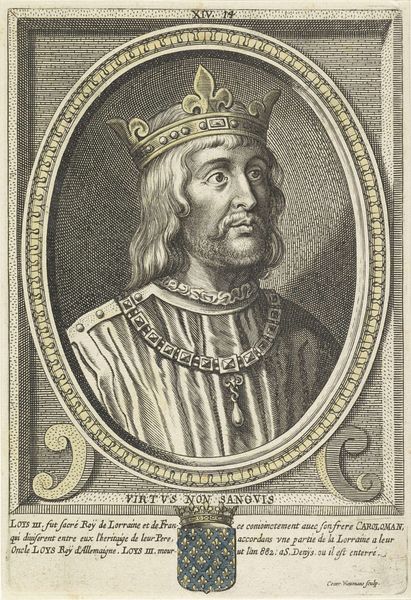
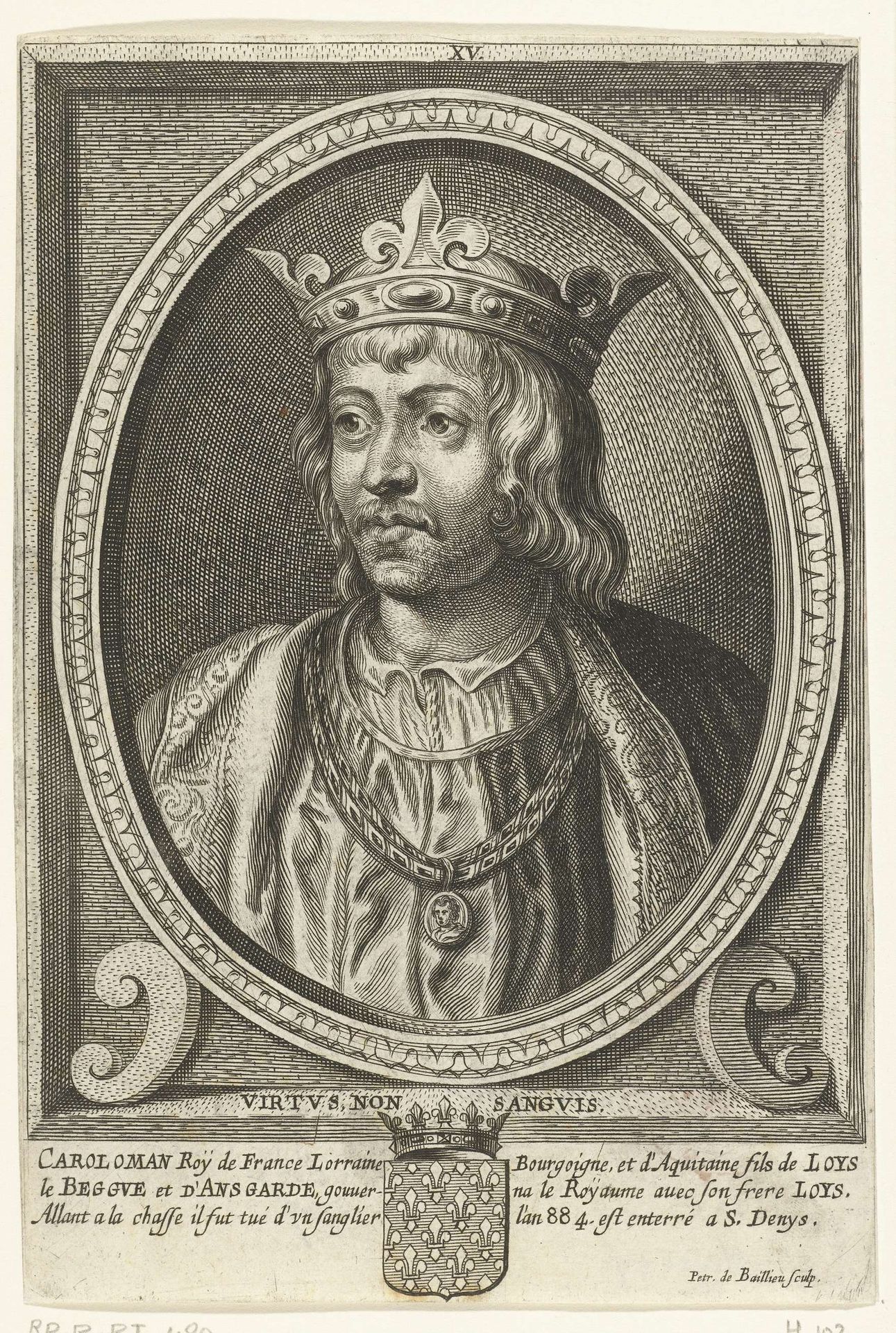
Pieter de Bailliu created this print of King Carloman II of West Francia, which now resides in the Rijksmuseum. The print not only depicts Carloman, but also actively constructs an image of kingship during a period of profound social and political change. Notice the inscription "Virtus Non Sanguis," or virtue, not blood. It suggests that Carloman’s right to rule comes from his actions rather than his lineage. This concept would have resonated in a 17th-century Europe grappling with questions of power and authority, influenced by the Protestant Reformation and the rise of new social classes. Portraits of rulers have always been tools to communicate power. De Bailliu’s print participates in this complex dance between the representation of a historical figure and the values of a changing society. How do we reconcile historical depictions with evolving notions of leadership and virtue?
Portret van koning Karloman II van West-Francië
1623 - 1661

Pieter de Bailliu
1613Location
RijksmuseumArtwork details
- Medium
- print, engraving
- Dimensions
- height 176 mm, width 119 mm
- Location
- Rijksmuseum
- Copyright
- Rijks Museum: Open Domain
Tags
Comments
Share your thoughts
About this artwork
Pieter de Bailliu created this print of King Carloman II of West Francia, which now resides in the Rijksmuseum. The print not only depicts Carloman, but also actively constructs an image of kingship during a period of profound social and political change. Notice the inscription "Virtus Non Sanguis," or virtue, not blood. It suggests that Carloman’s right to rule comes from his actions rather than his lineage. This concept would have resonated in a 17th-century Europe grappling with questions of power and authority, influenced by the Protestant Reformation and the rise of new social classes. Portraits of rulers have always been tools to communicate power. De Bailliu’s print participates in this complex dance between the representation of a historical figure and the values of a changing society. How do we reconcile historical depictions with evolving notions of leadership and virtue?
Comments
Share your thoughts