About this artwork
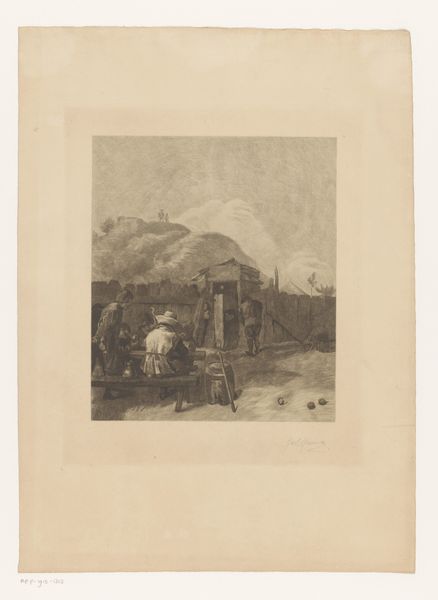
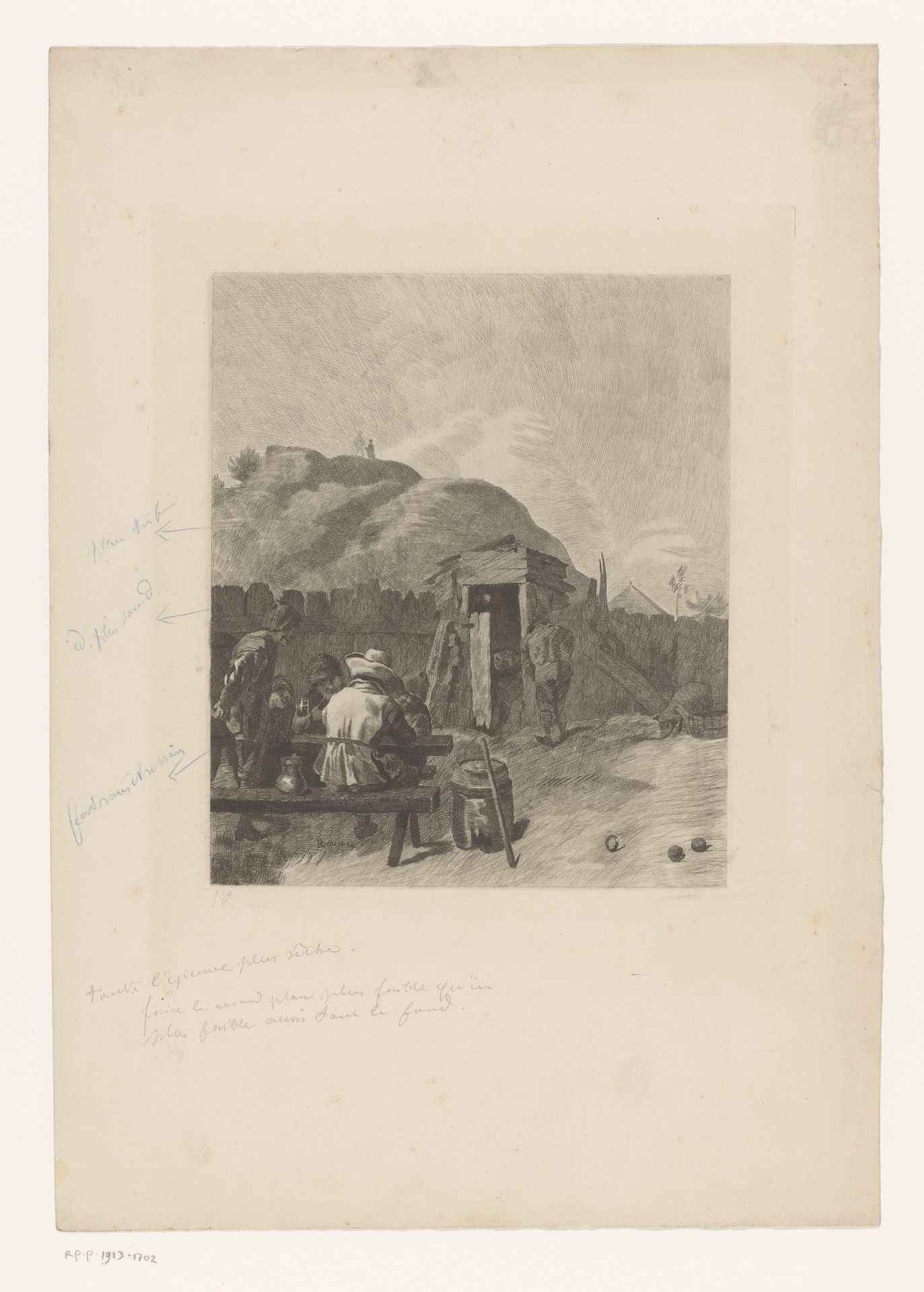
Karl Meunier made this scene of card players outdoors near a table with a hill in the background in the late 19th century, using graphite on paper. The artist coaxes a full range of tones from this humble medium. Shading and hatching create a detailed composition. We can almost feel the rough texture of the wooden bench, the coarse garments of the card players, and the parched ground. The use of graphite has its own history. Before graphite pencils, artists often used silverpoint, a far more demanding medium. With graphite, the artist can capture the ordinary conditions of labor. The focus is on the communal leisure of working-class people. The artist acknowledges not a grand historical subject but a simple gathering. He invites us to appreciate the value of everyday life through his artistry. In the end, this unassuming drawing underscores the power of materials, making, and social context in shaping our understanding of art. It shows us how close art can be to life.
Kaartspelers buiten bij een tafel met heuvel op de achtergrond
1874 - 1894

Artwork details
- Medium
- drawing, graphite
- Dimensions
- height 300 mm, width 245 mm
- Copyright
- Rijks Museum: Open Domain
Tags
Comments
Share your thoughts
About this artwork
Karl Meunier made this scene of card players outdoors near a table with a hill in the background in the late 19th century, using graphite on paper. The artist coaxes a full range of tones from this humble medium. Shading and hatching create a detailed composition. We can almost feel the rough texture of the wooden bench, the coarse garments of the card players, and the parched ground. The use of graphite has its own history. Before graphite pencils, artists often used silverpoint, a far more demanding medium. With graphite, the artist can capture the ordinary conditions of labor. The focus is on the communal leisure of working-class people. The artist acknowledges not a grand historical subject but a simple gathering. He invites us to appreciate the value of everyday life through his artistry. In the end, this unassuming drawing underscores the power of materials, making, and social context in shaping our understanding of art. It shows us how close art can be to life.
Comments
Share your thoughts