

About this artwork
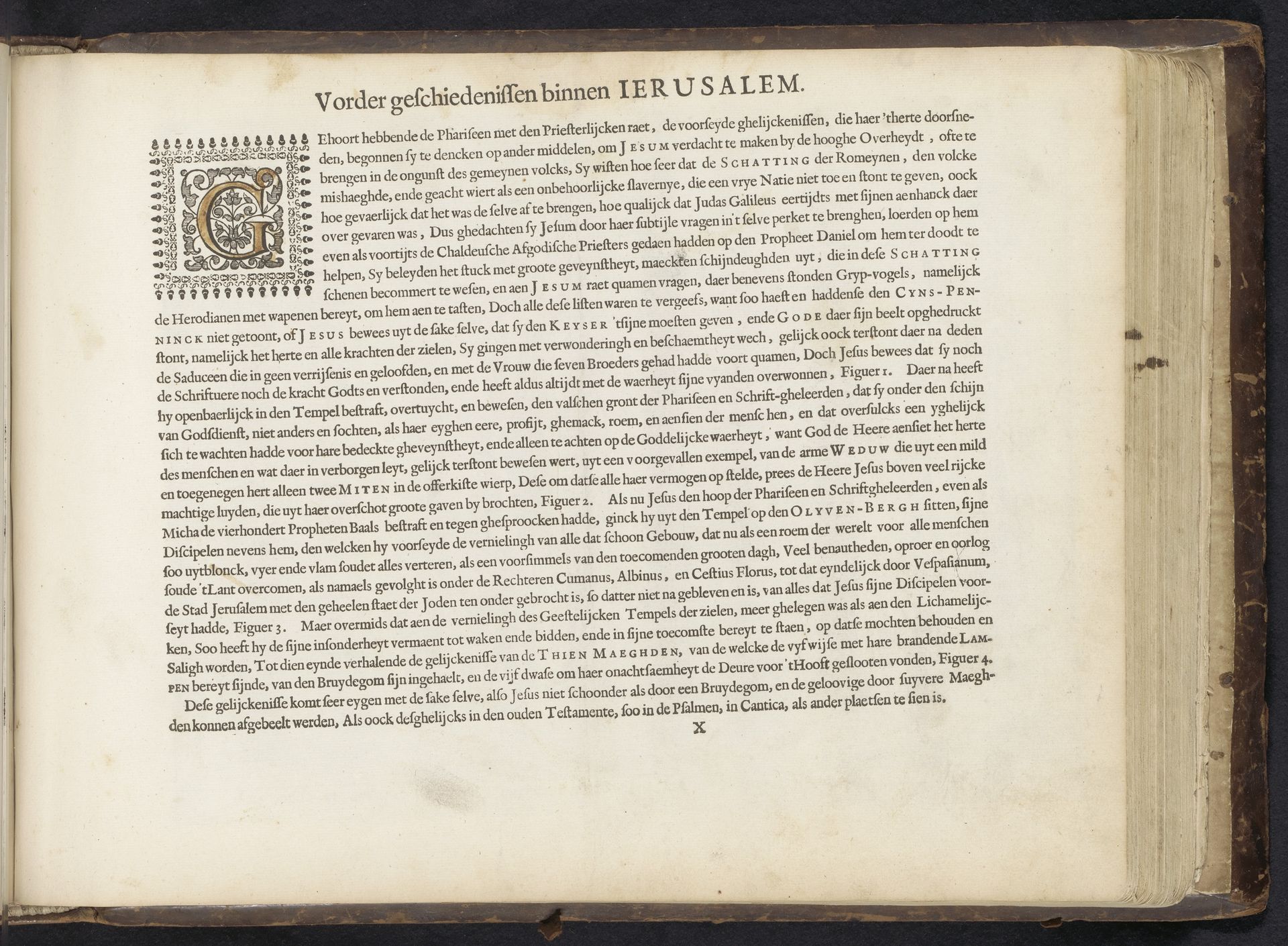
This page comes from Jan Philipsz Schabaelje’s illustrated book, *Vorder geschiedenissen binnen Ierusalem*, printed around the mid-17th century. As a printed page, its materials are simple – paper and ink. But the process of its making is more complex. Consider the labor involved in producing each element: the paper-making, typesetting, printing, and hand-drawn illustration on the letter ‘G’ at the top of the page. The entire book would have been a collaborative endeavor, involving specialized workshops. In terms of social context, printed books democratized knowledge, but were still relatively expensive and required literacy. So, while this book made religious teachings more accessible than ever before, it was still primarily enjoyed by the middle and upper classes. By attending to its making and its place in the world, we can appreciate the intricate web of skills, materials, and social forces that converged to bring this page into being.
Vorder geschiedenissen binnen Ierusalem 1646

Jan Philipsz Schabaelje
1592 - 1656Location
RijksmuseumArtwork details
- Medium
- print, textile, engraving
- Dimensions
- height 257 mm, width 340 mm
- Location
- Rijksmuseum
- Copyright
- Rijks Museum: Open Domain
Tags
baroque
textile
engraving
Comments
No comments
About this artwork
This page comes from Jan Philipsz Schabaelje’s illustrated book, *Vorder geschiedenissen binnen Ierusalem*, printed around the mid-17th century. As a printed page, its materials are simple – paper and ink. But the process of its making is more complex. Consider the labor involved in producing each element: the paper-making, typesetting, printing, and hand-drawn illustration on the letter ‘G’ at the top of the page. The entire book would have been a collaborative endeavor, involving specialized workshops. In terms of social context, printed books democratized knowledge, but were still relatively expensive and required literacy. So, while this book made religious teachings more accessible than ever before, it was still primarily enjoyed by the middle and upper classes. By attending to its making and its place in the world, we can appreciate the intricate web of skills, materials, and social forces that converged to bring this page into being.
Comments
No comments