1810 - 1820
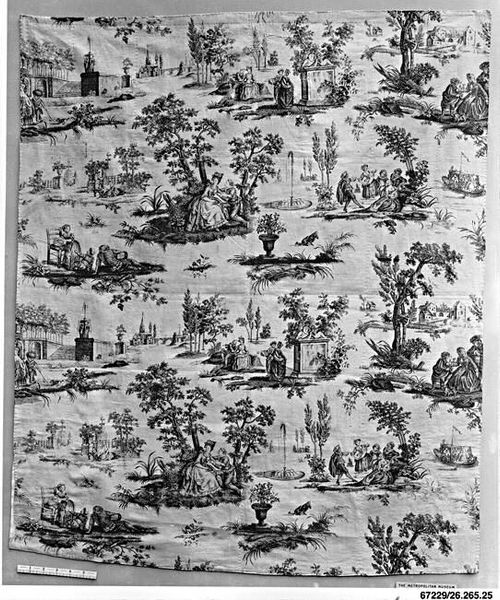
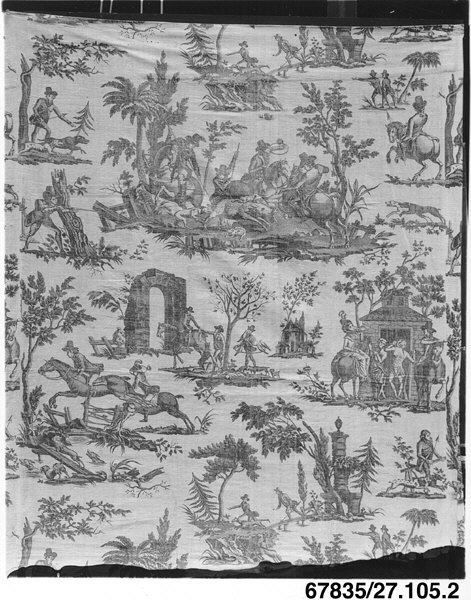
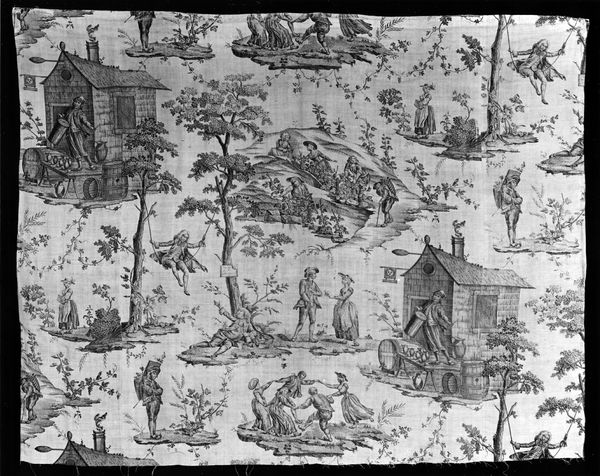
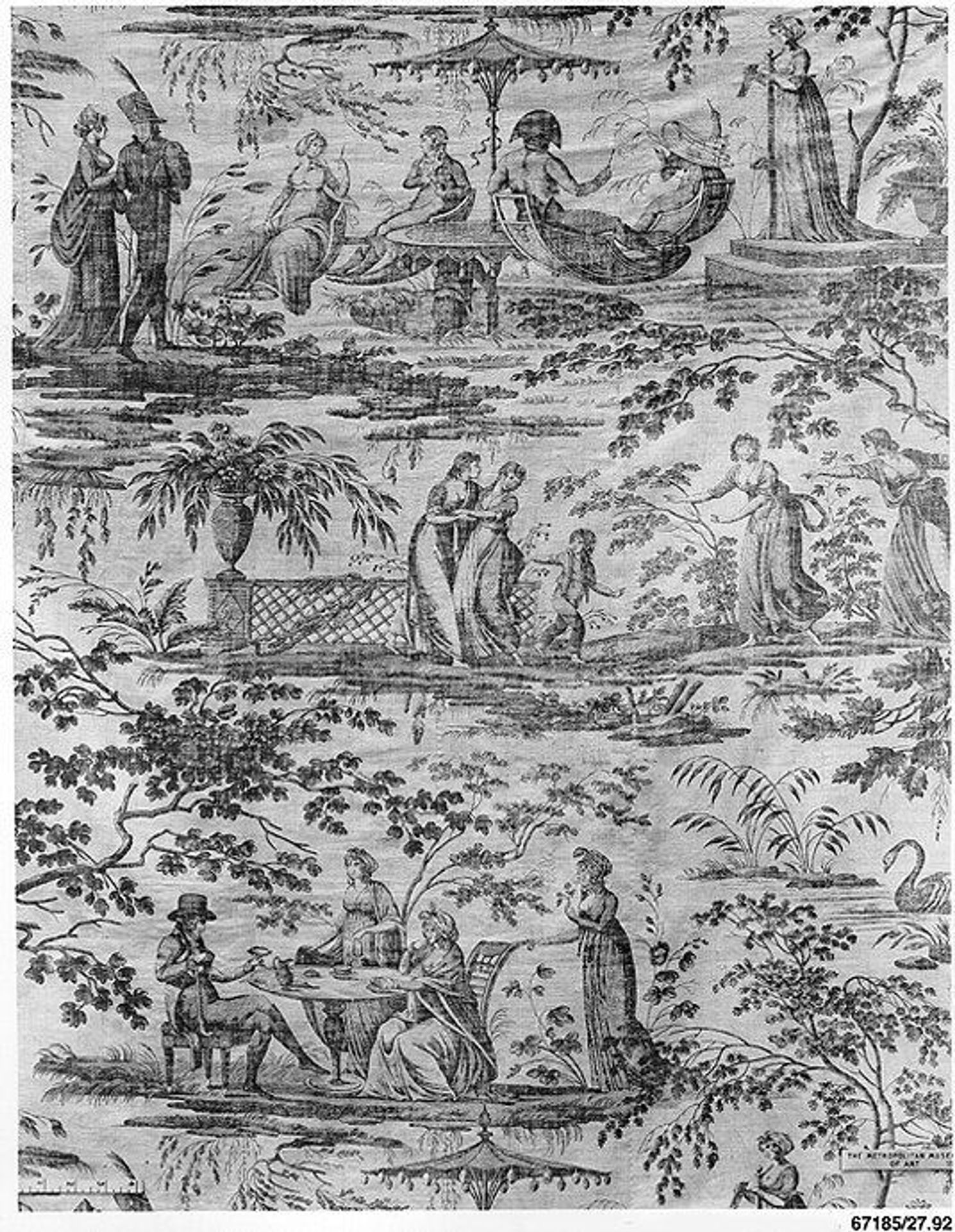
Le jeu de bague

Favre, Petitpierre et Cie
@favrepetitpierreetcie
The Metropolitan Museum of Art
Metropolitan Museum of Art, New York, NYListen to curator's interpretation
Curatorial notes
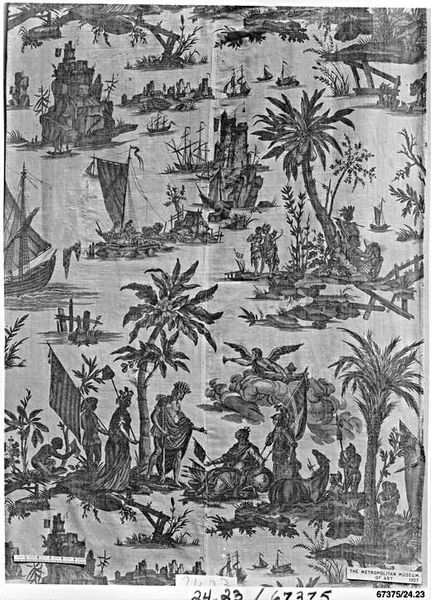
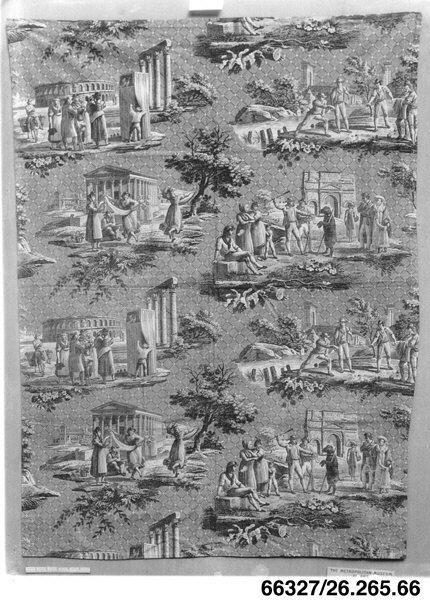
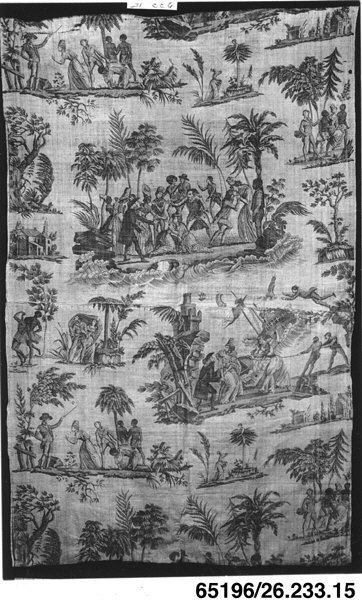
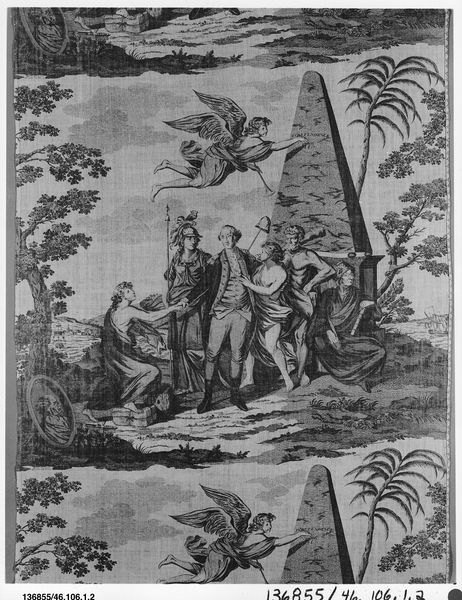
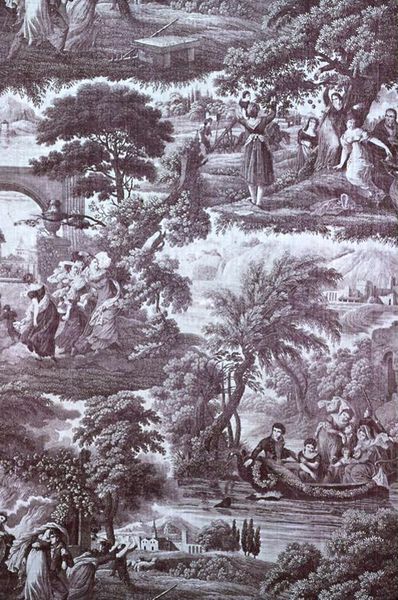
Favre, Petitpierre et Cie created "Le jeu de bague" out of cotton, using a labor-intensive printing process. This wasn't some avant-garde gesture, but a commercial strategy. Cotton was the textile of the Industrial Revolution, connecting plantations, mills, and markets in a web of global capitalism. Notice how the print mimics an elaborate engraving. This was a deliberate choice, aimed to imbue a relatively inexpensive fabric with an air of luxury and sophistication. The scenes of leisure and dalliance are meticulously rendered, creating a convincing illusion of depth and detail. But let's not forget the human labor involved. Each color would require a separate block or roller, carefully aligned and applied. This textile speaks to the social hierarchies of its time, both in its imagery and its mode of production. By understanding these material and social dimensions, we can fully appreciate its complex meaning.