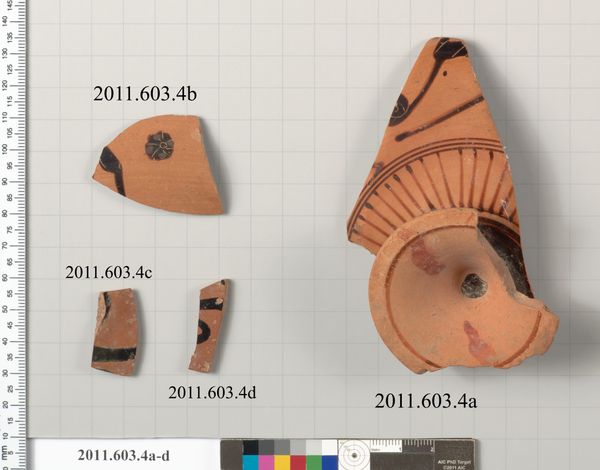
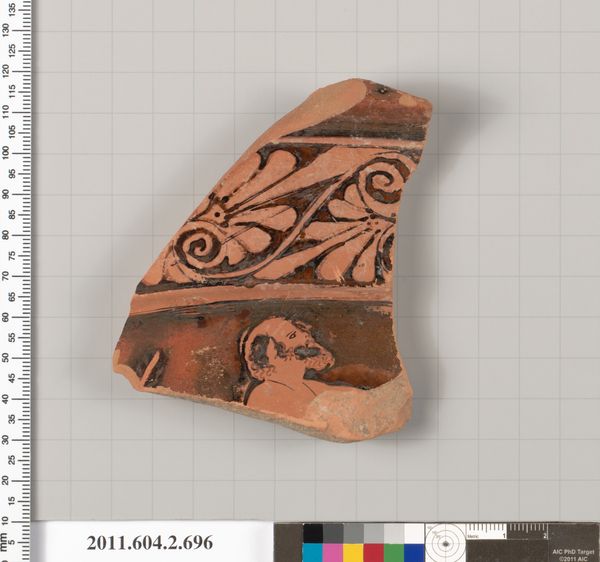
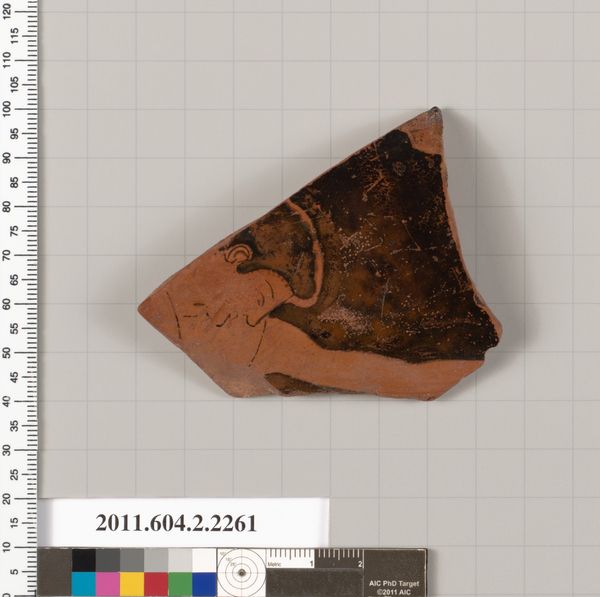
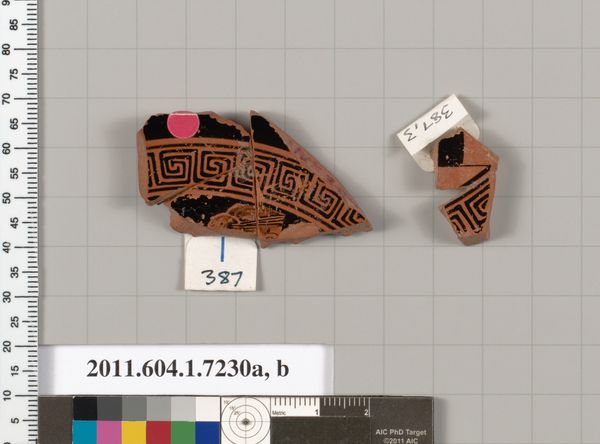
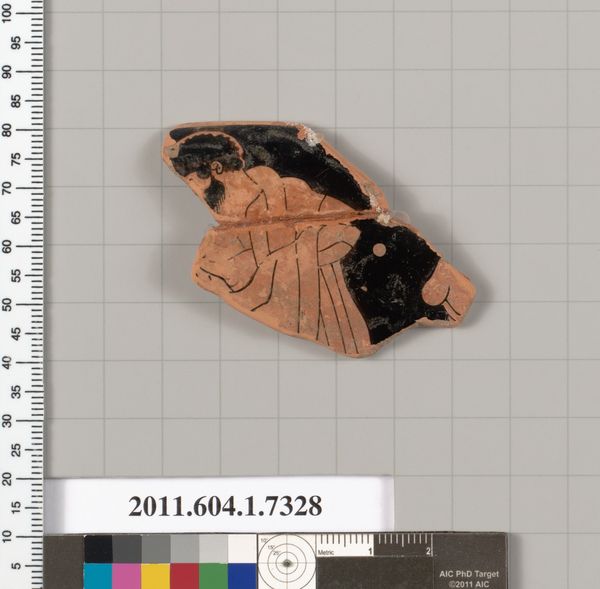
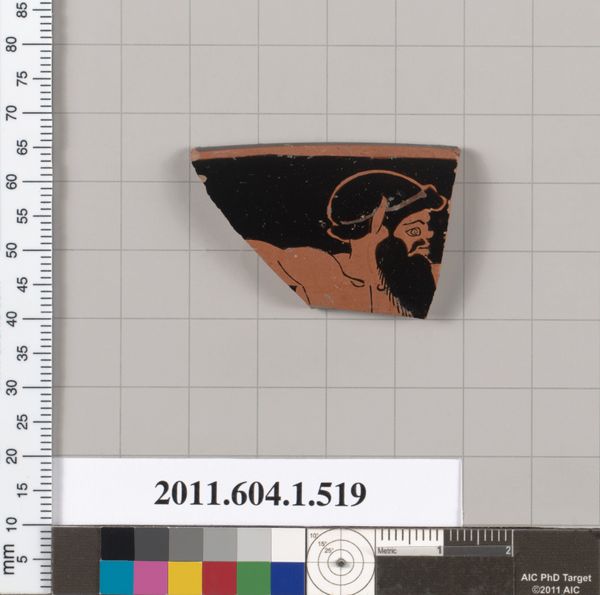
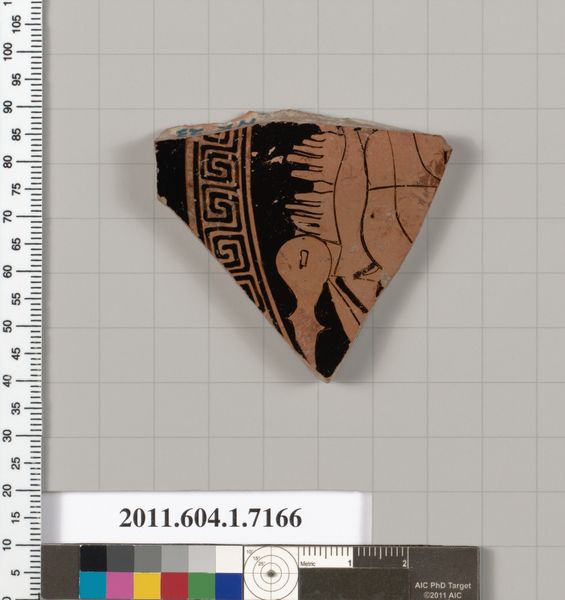
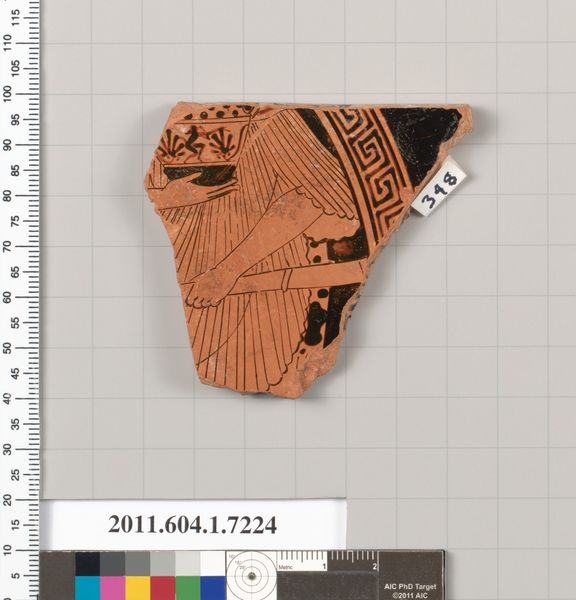
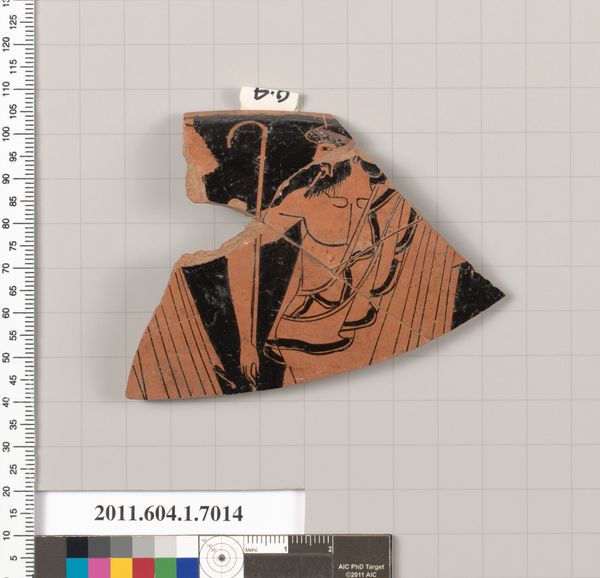
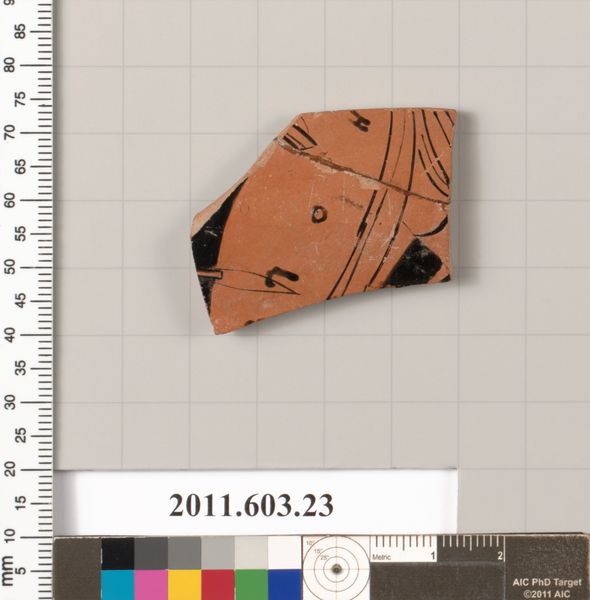
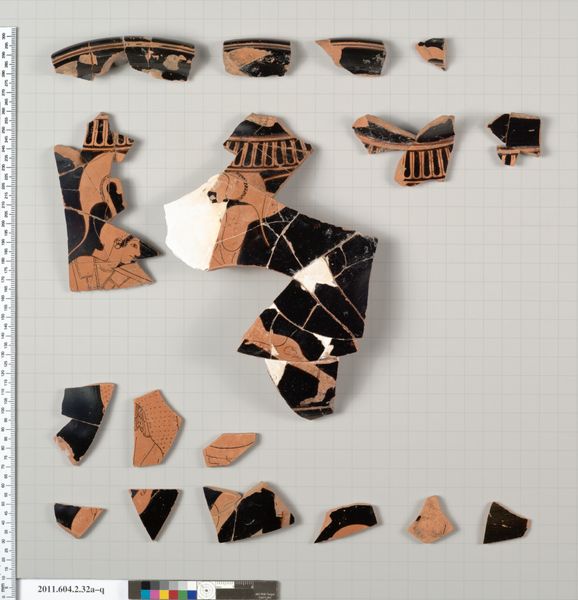
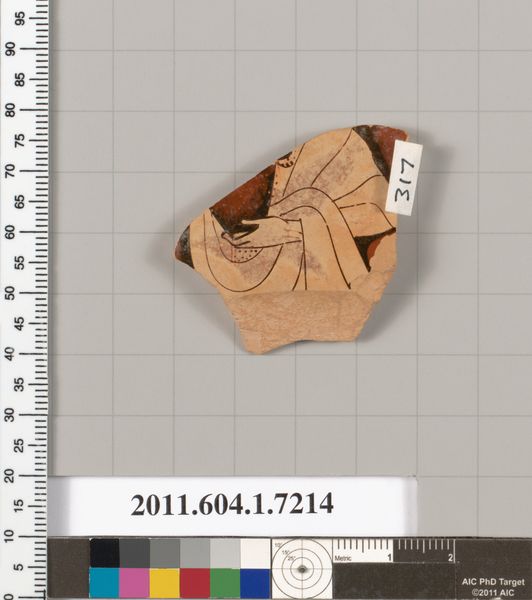
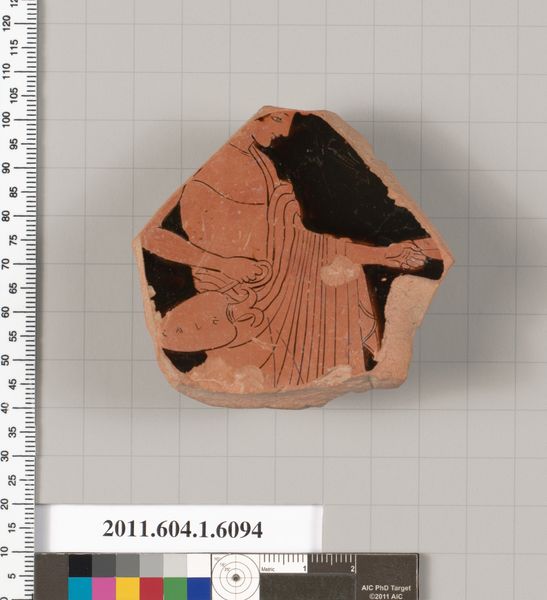
Terracotta fragments of a kylix: Komast cup (drinking cup) 650 BC
0:00
0:00


drawing, ceramic
#
drawing
#
greek-and-roman-art
#
ceramic
#
vase
#
figuration
#
geometric
#
ancient-mediterranean
Copyright: Public Domain
Editor: This is "Terracotta fragments of a kylix: Komast cup (drinking cup)" from 650 BC. It's ancient Greek ceramic, currently held at the Met. Seeing these broken pieces, it makes me think about how much context has been lost. What can you tell me about these fragments? Curator: Well, immediately, it's interesting to see these pieces divorced from their original function and setting. As fragments, they almost become documents of survival and rediscovery. They offer glimpses into the ancient symposium – drinking parties for elite men – and tell us much about ancient Greek social rituals and the role of ceramics in their practices. How do you think museums and collections shape how we engage with such pieces? Editor: That's a good point. The museum setting definitely elevates them from functional objects to historical artifacts. It makes me think more about the social context that you mention. Is there anything significant about the imagery on the fragments? Curator: Absolutely. Look at the stylized figures engaged in what appears to be dancing or revelry, the ‘Komasts’. This visual imagery was very common and clearly approved, hinting to its acceptance, perhaps even encouragement, within its target societal class. Do you see anything within the formal elements of the piece that support this suggestion? Editor: I see, so you mean how the circular designs and the repeated motifs seem to echo a sense of organized, rhythmic activity. Curator: Exactly. Now, consider the political undertones. Who was permitted into those gatherings? Who was not? What kind of stories did these symposiums cultivate or discourage? And, reflecting back on the present, what purpose do you think possessing fragments from elite ancient greek life serve for museums, its owners, or viewers? Editor: I never thought of it that way. Thinking about who was included versus excluded adds a whole layer. Now the museum display feels a bit more complicated! I have lots to unpack. Curator: Museums inherently display political intentions via acquisitions. Perhaps my reflections, along with yours, provides some material with which to further reflect on and better assess them.
Comments
No comments
Be the first to comment and join the conversation on the ultimate creative platform.
 Collect
 React
React Comment
More like this