About this artwork
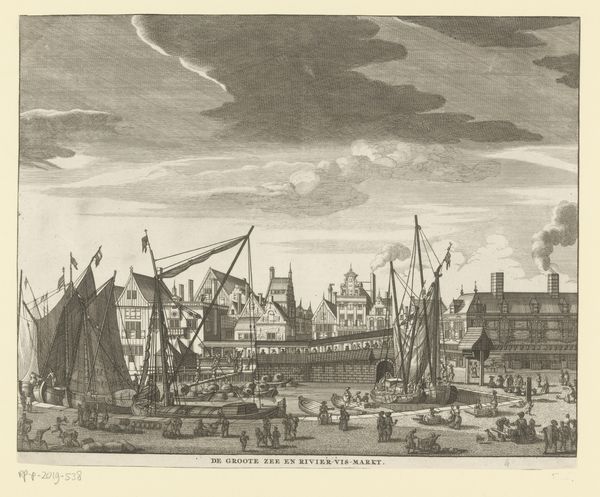
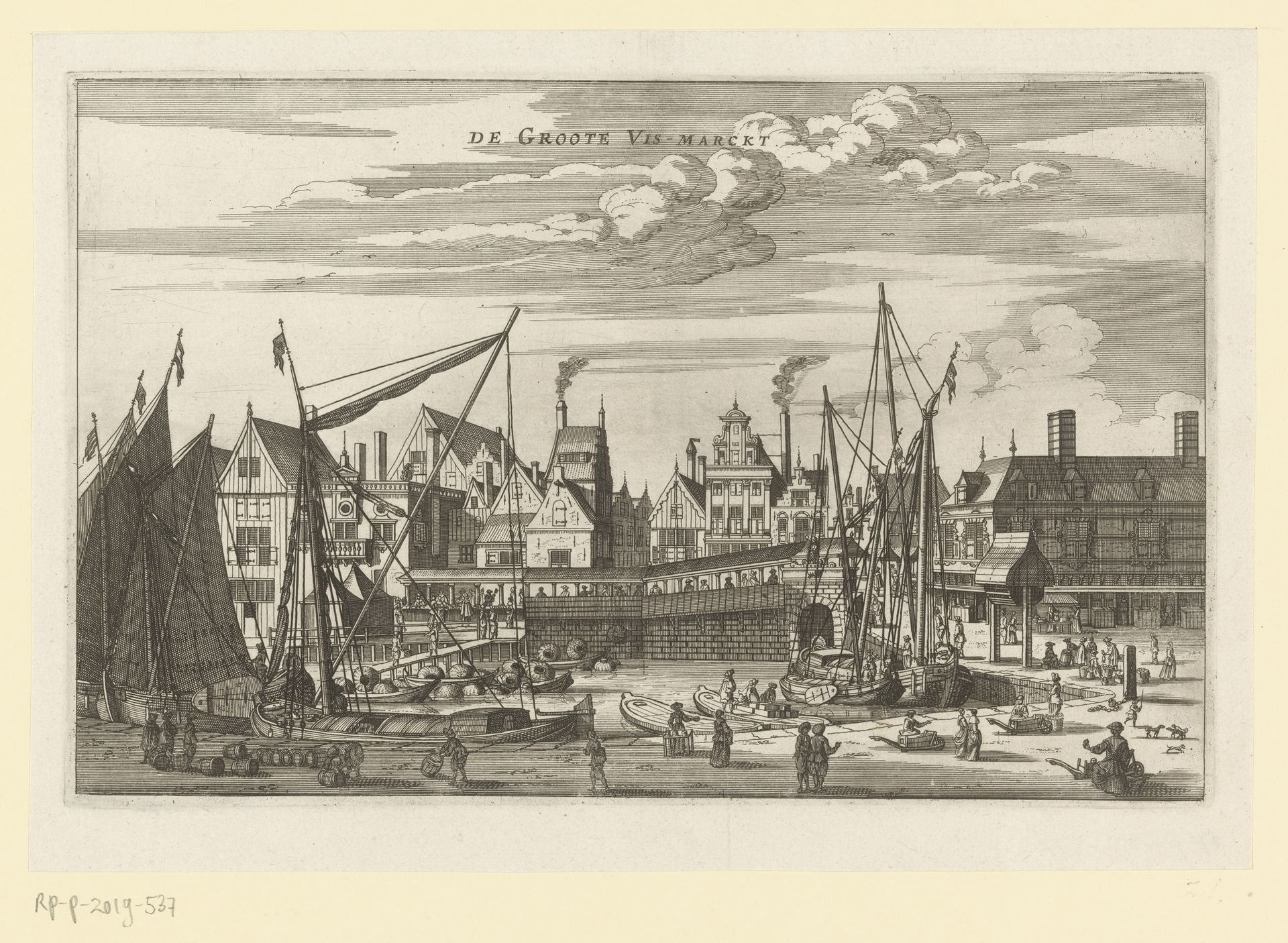
Jacob van Meurs created this print of the fish market at Damsluis in Amsterdam sometime in the 17th century, using the technique of etching. The dense network of lines that define the image, from the boats to the architecture, comes from drawing into a wax ground on a metal plate, then bathing it in acid. It’s a print, and the medium itself speaks to the commercial activity of the scene: printmaking was essential to early modern capitalism. Notice the incredible detail and the fineness of the lines, which creates tone as well as contour. It speaks to the labor involved, and the high level of skill that was brought to bear. The original drawing becomes subject to a chemical process, and then a mechanical one – the repeated printing of the image. Considering this artwork, it's important to consider that Van Meurs was himself a publisher. His activity reminds us that the worlds of art and commerce have always been deeply intertwined.
Gezicht op de Vismarkt bij de Damsluis op de Dam te Amsterdam 1663

Jacob van Meurs
1620 - 1680Location
RijksmuseumArtwork details
- Medium
- print, etching
- Dimensions
- height 187 mm, width 294 mm
- Location
- Rijksmuseum
- Copyright
- Rijks Museum: Open Domain
Tags
baroque
dutch-golden-age
etching
landscape
cityscape
genre-painting
Comments
No comments
About this artwork
Jacob van Meurs created this print of the fish market at Damsluis in Amsterdam sometime in the 17th century, using the technique of etching. The dense network of lines that define the image, from the boats to the architecture, comes from drawing into a wax ground on a metal plate, then bathing it in acid. It’s a print, and the medium itself speaks to the commercial activity of the scene: printmaking was essential to early modern capitalism. Notice the incredible detail and the fineness of the lines, which creates tone as well as contour. It speaks to the labor involved, and the high level of skill that was brought to bear. The original drawing becomes subject to a chemical process, and then a mechanical one – the repeated printing of the image. Considering this artwork, it's important to consider that Van Meurs was himself a publisher. His activity reminds us that the worlds of art and commerce have always been deeply intertwined.
Comments
No comments