About this artwork
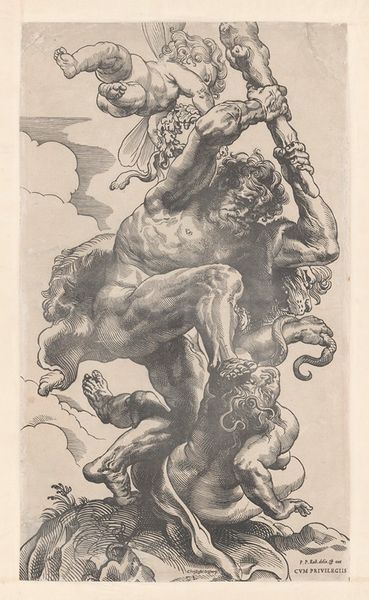
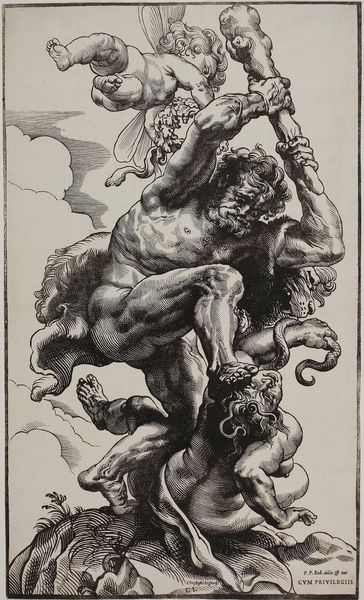
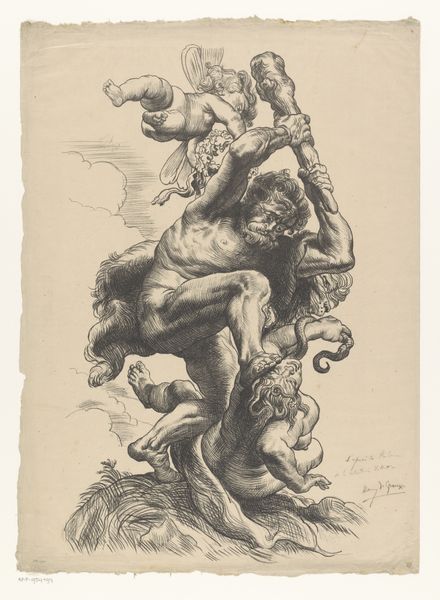
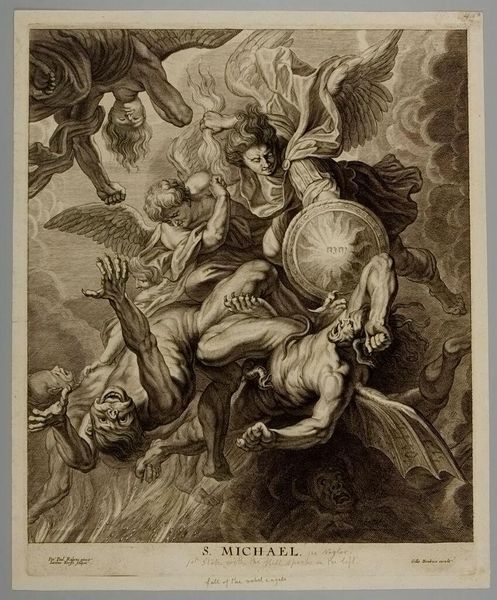
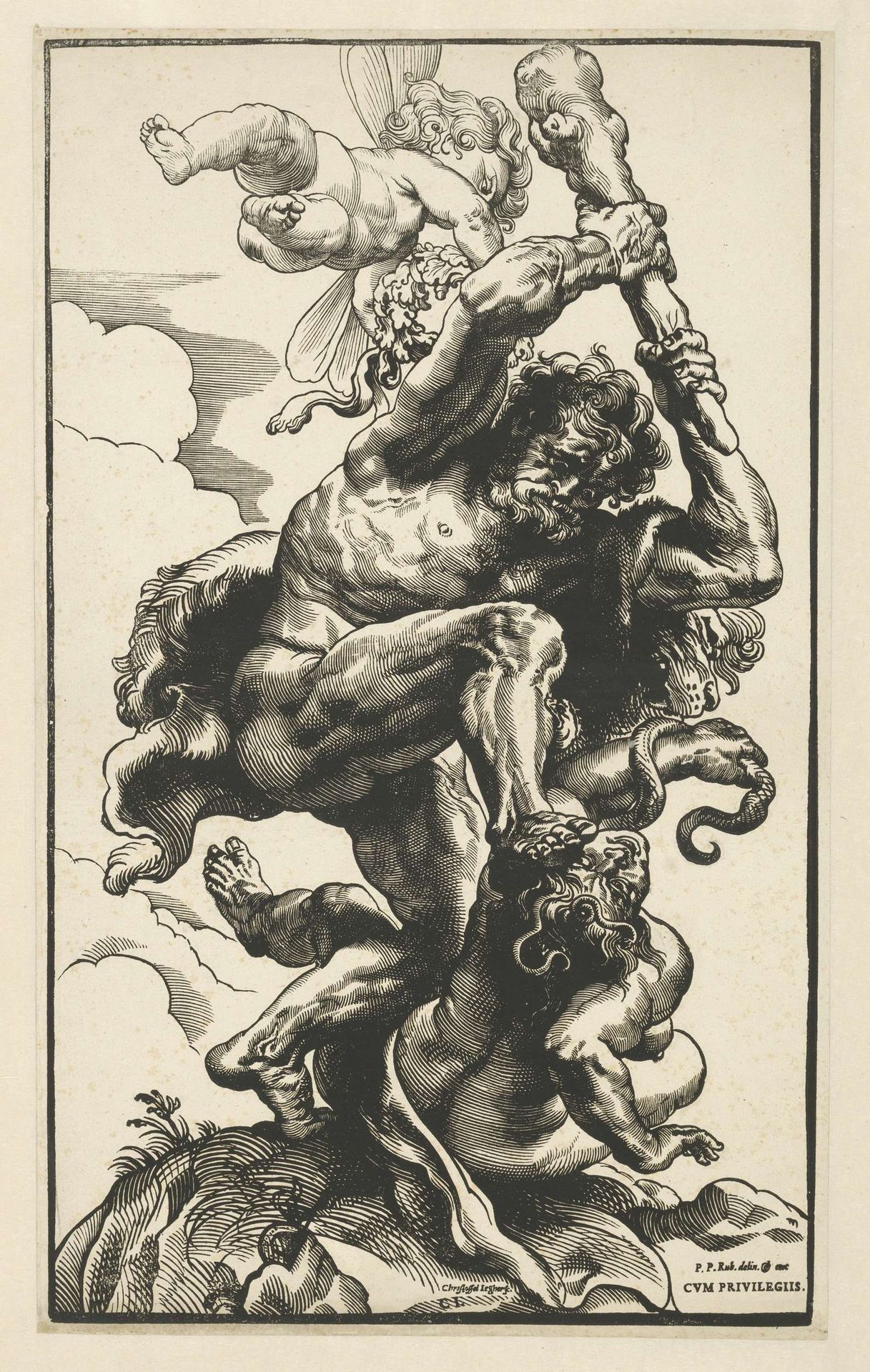
Christoffel Jegher created this dramatic print, "Hercules Overwinning de Tweedracht en de Nijd," using wood engraving. The composition immediately strikes one as a dynamic vortex of bodies swirling upwards. The figures—Hercules, cherubs, and defeated personifications of discord—are rendered with a muscularity emphasized by stark contrasts of light and shadow. This chiaroscuro technique amplifies the sense of struggle and triumph. Jegher masterfully uses line to define form, creating a powerful sense of depth and movement in what is, after all, a flat, two-dimensional surface. Considering structuralism, we might see this print as a visual binary. Hercules, the symbol of order and virtue, is pitted against the chaotic figures representing discord. The upward movement suggests a transcendence, a victory of order over disorder. Jegher's engraving thus uses classical motifs to explore themes of morality and social harmony, echoing the philosophical concerns of his time.

Artwork details
- Dimensions
- height 612 mm, width 371 mm
- Copyright
- Rijks Museum: Open Domain
Tags
Comments
Share your thoughts
About this artwork
Christoffel Jegher created this dramatic print, "Hercules Overwinning de Tweedracht en de Nijd," using wood engraving. The composition immediately strikes one as a dynamic vortex of bodies swirling upwards. The figures—Hercules, cherubs, and defeated personifications of discord—are rendered with a muscularity emphasized by stark contrasts of light and shadow. This chiaroscuro technique amplifies the sense of struggle and triumph. Jegher masterfully uses line to define form, creating a powerful sense of depth and movement in what is, after all, a flat, two-dimensional surface. Considering structuralism, we might see this print as a visual binary. Hercules, the symbol of order and virtue, is pitted against the chaotic figures representing discord. The upward movement suggests a transcendence, a victory of order over disorder. Jegher's engraving thus uses classical motifs to explore themes of morality and social harmony, echoing the philosophical concerns of his time.
Comments
Share your thoughts