About this artwork
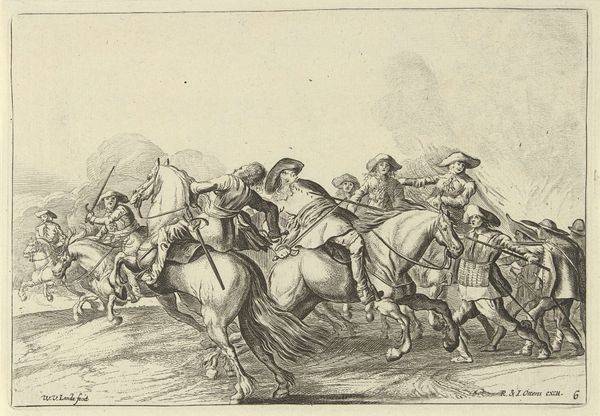
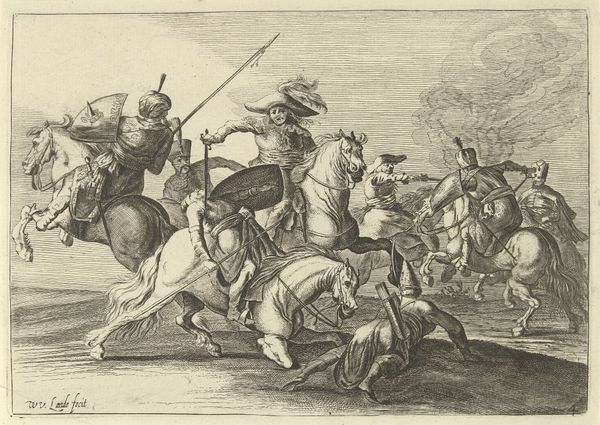
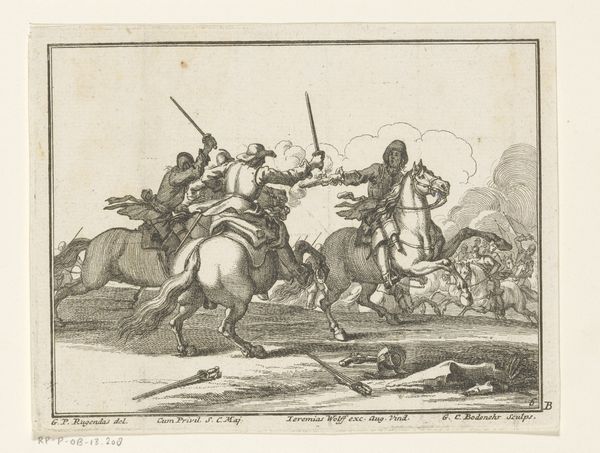
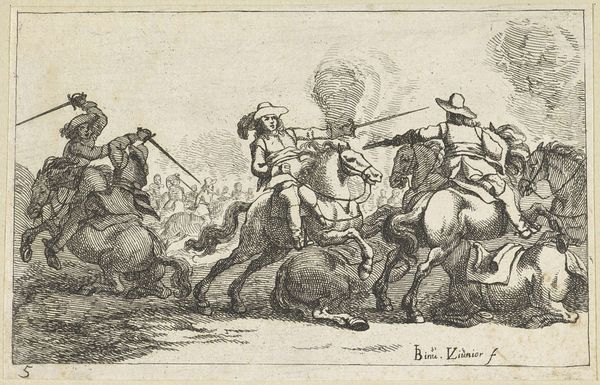
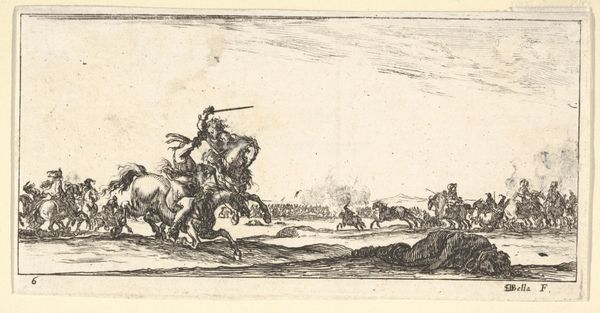
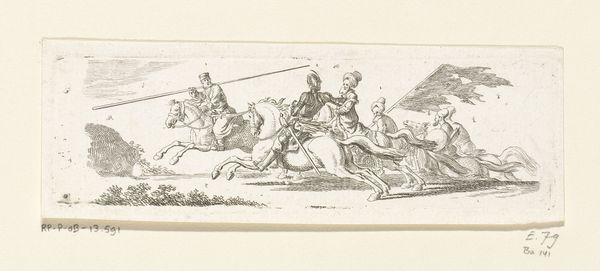
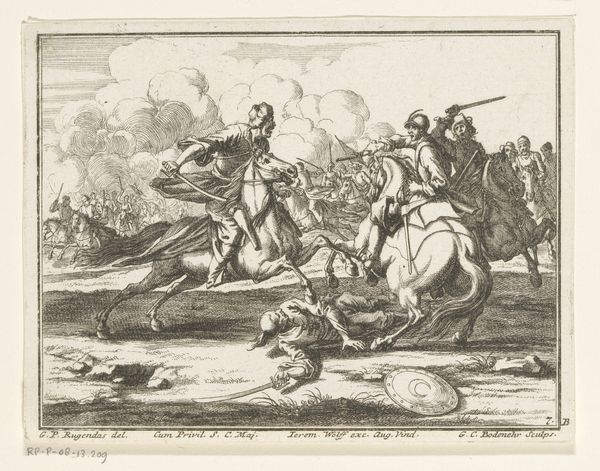
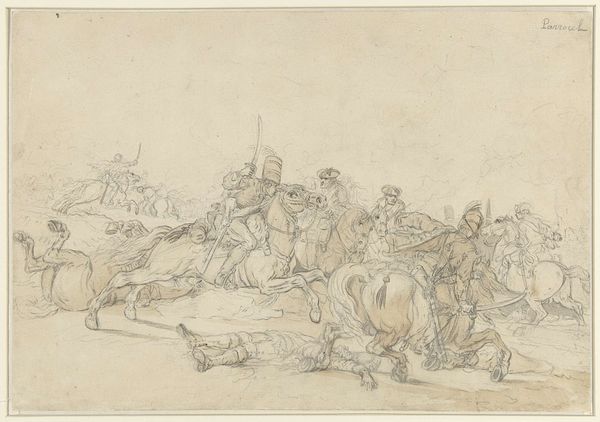
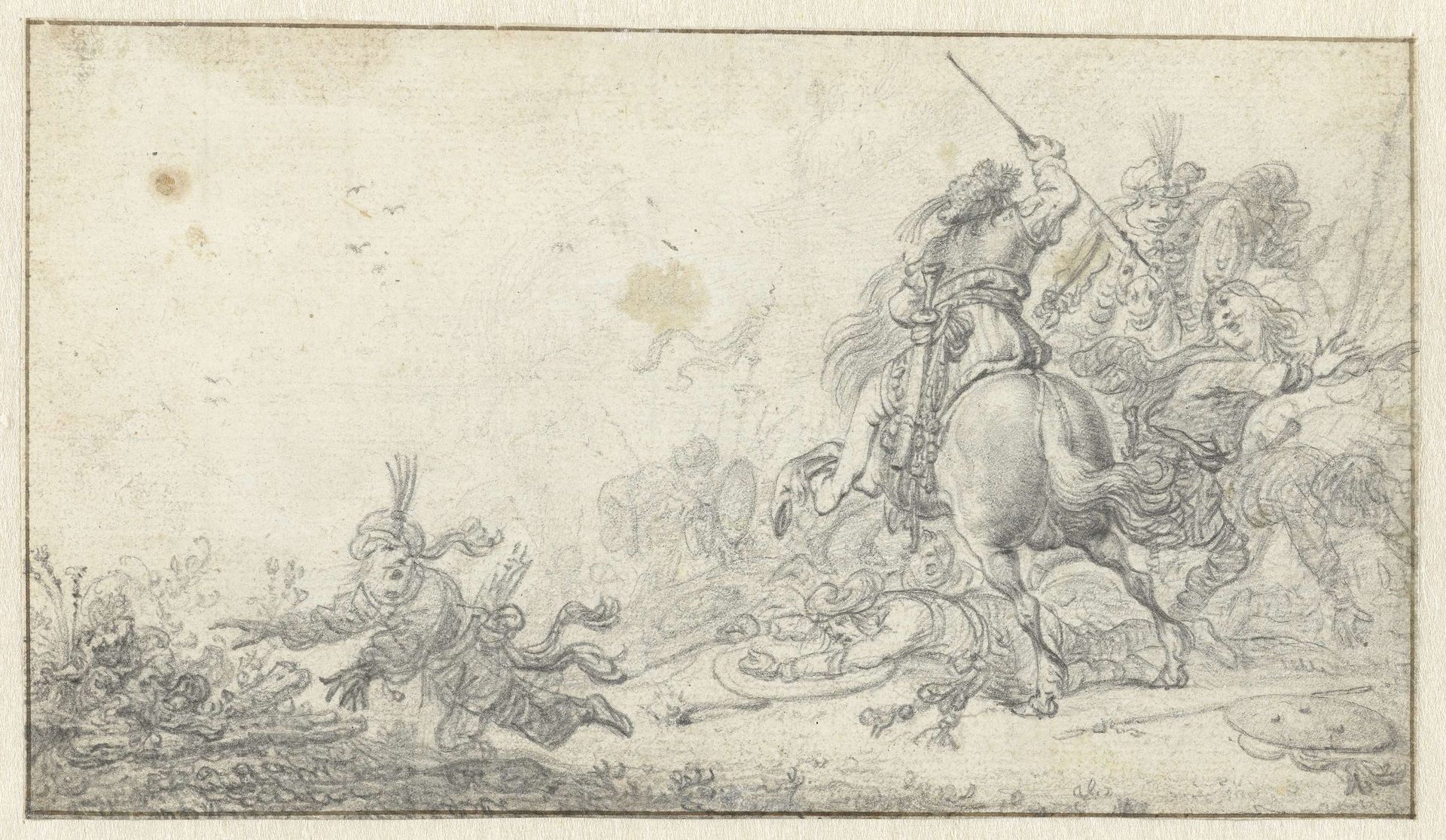
Curator: Here we have "Ruitergevecht" or "Cavalry Battle" by Pieter Cornelisz. Verbeeck, dating from somewhere between 1635 and 1645. It's a drawing, primarily in pencil. Editor: Oh, a real whirlwind of a thing, isn't it? So much swirling action. It's like a frantic dream, or a fleeting memory of battle – you can almost hear the clatter of hooves and the shouts! Curator: Yes, precisely! Look closely and you'll notice the incredible detail, considering it is just a pencil sketch. Think of the labor involved, replicating this intensity! And what this represents - war seen as nearly a production or manufacturing of human bodies! Editor: But beyond the carnage, there’s also this almost playful energy, you know? It feels immediate, like he captured a fleeting, very brutal moment from life directly onto paper! Those rearing horses... they practically leap off the page! I can just imagine him sketching this rapidly in his studio, thinking about form as feeling! Curator: Indeed. The very rapidness indicates not necessarily a sketch, per se, but perhaps also functions as its own autonomous product: a statement on the theater of violence itself as something that could just as easily happen quickly as lastingly. Editor: I like the "theater of violence" description, since violence becomes a spectacle too – and how do you produce that?! There is a funny dynamism here, almost campy with drama. He wasn't glorifying war. Curator: Of course, and if we return to his specific *processes*, Verbeeck likely would've been familiar with various drawing techniques used to prepare for larger paintings. The lines are suggestive... almost mass-produced, themselves! Editor: Right, like early war propaganda, simplified to reach wider audiences with that almost cartoony edge. This sketch gives us just a little peak to ruminate. So fascinating and unsettling to ponder at the same time. Curator: I concur. Thinking of the artist's approach, from selecting tools, to considering the political background is... well, critical, of course! Thank you.

Artwork details
- Medium
- drawing, pencil
- Dimensions
- height 90 mm, width 160 mm
- Copyright
- Rijks Museum: Open Domain
Tags
Comments
Share your thoughts
About this artwork
Curator: Here we have "Ruitergevecht" or "Cavalry Battle" by Pieter Cornelisz. Verbeeck, dating from somewhere between 1635 and 1645. It's a drawing, primarily in pencil. Editor: Oh, a real whirlwind of a thing, isn't it? So much swirling action. It's like a frantic dream, or a fleeting memory of battle – you can almost hear the clatter of hooves and the shouts! Curator: Yes, precisely! Look closely and you'll notice the incredible detail, considering it is just a pencil sketch. Think of the labor involved, replicating this intensity! And what this represents - war seen as nearly a production or manufacturing of human bodies! Editor: But beyond the carnage, there’s also this almost playful energy, you know? It feels immediate, like he captured a fleeting, very brutal moment from life directly onto paper! Those rearing horses... they practically leap off the page! I can just imagine him sketching this rapidly in his studio, thinking about form as feeling! Curator: Indeed. The very rapidness indicates not necessarily a sketch, per se, but perhaps also functions as its own autonomous product: a statement on the theater of violence itself as something that could just as easily happen quickly as lastingly. Editor: I like the "theater of violence" description, since violence becomes a spectacle too – and how do you produce that?! There is a funny dynamism here, almost campy with drama. He wasn't glorifying war. Curator: Of course, and if we return to his specific *processes*, Verbeeck likely would've been familiar with various drawing techniques used to prepare for larger paintings. The lines are suggestive... almost mass-produced, themselves! Editor: Right, like early war propaganda, simplified to reach wider audiences with that almost cartoony edge. This sketch gives us just a little peak to ruminate. So fascinating and unsettling to ponder at the same time. Curator: I concur. Thinking of the artist's approach, from selecting tools, to considering the political background is... well, critical, of course! Thank you.
Comments
Share your thoughts