About this artwork
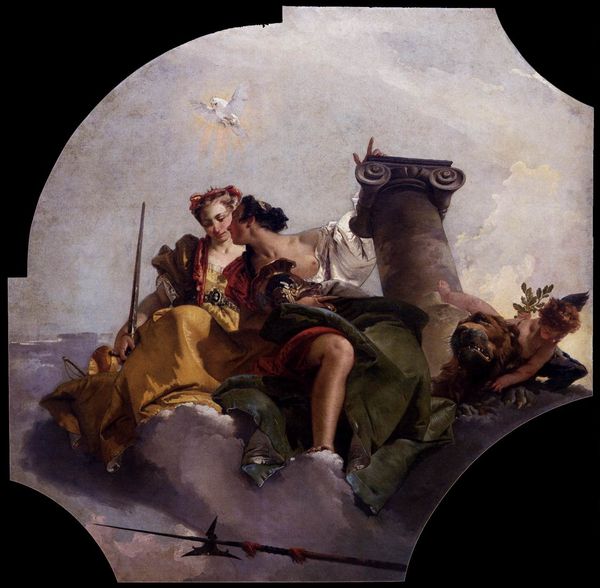
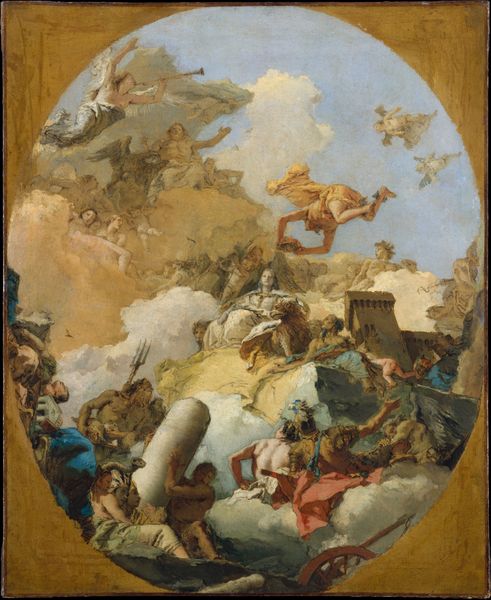
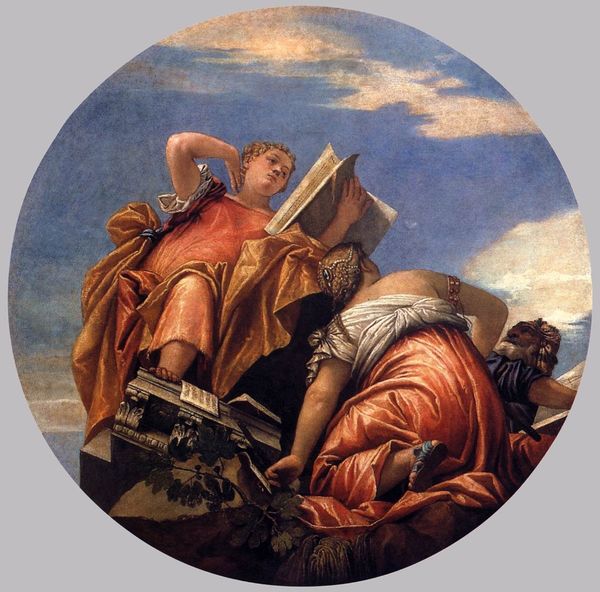
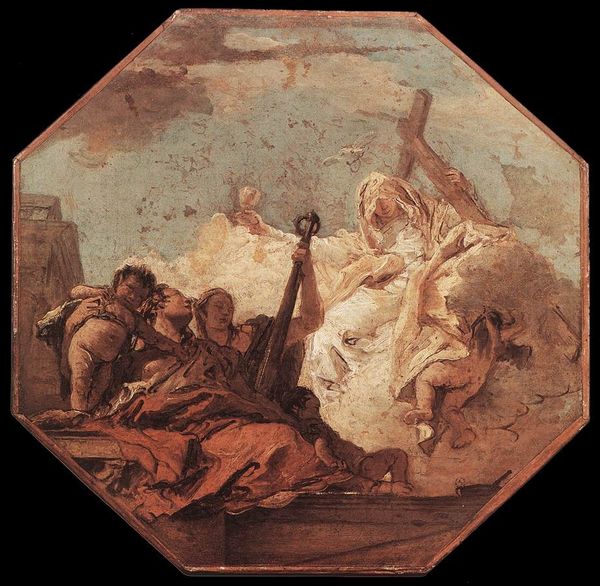
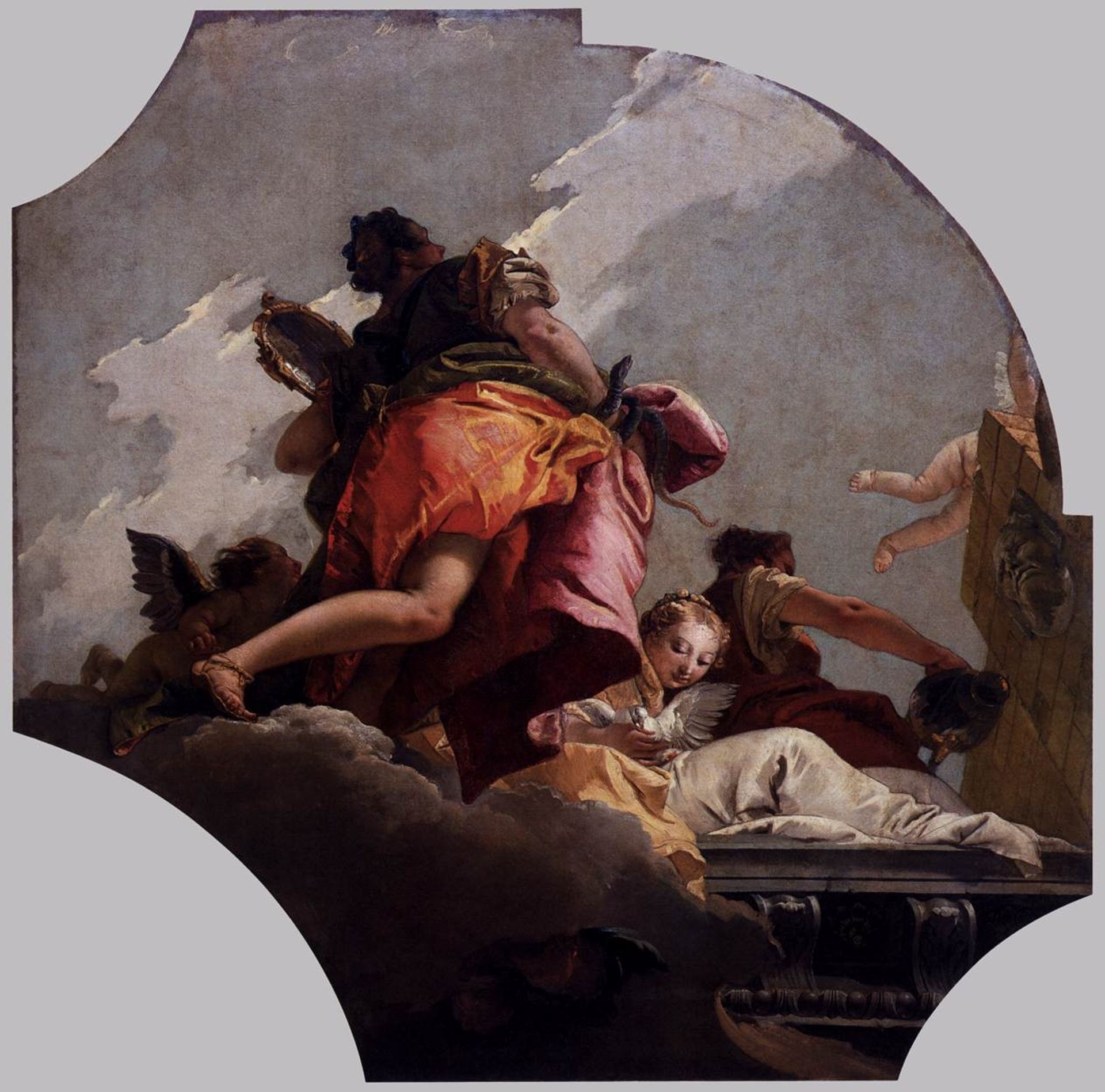
Giovanni Battista Tiepolo painted 'Prudence, Sincerity, and Temperance' using oil on canvas. At the forefront, Prudence holds a mirror, a classical symbol for self-awareness and wisdom, urging us to reflect on our actions. This motif echoes across centuries, seen in Roman sculptures and Renaissance paintings, where mirrors served not just as tools for vanity, but as emblems of introspection and foresight. Yet, its meaning has subtly shifted. What was once purely about divine wisdom evolved to include personal and moral judgment. Consider the Gorgon Medusa's head, reflected on Athena's shield, a mirror of terror that paralyzes, hinting at our subconscious fears. Here, Tiepolo evokes something deeper—an emotional understanding that prudence isn't just about rational thought, but about acknowledging our innermost selves. It is this cyclical return of symbols that allows us to see anew, and reinterpret the old.

Artwork details
- Medium
- painting, oil-paint
- Dimensions
- 235 x 240 cm
- Copyright
- Public domain
Tags
allegories
allegory
baroque
painting
oil-paint
figuration
history-painting
Comments
No comments
About this artwork
Giovanni Battista Tiepolo painted 'Prudence, Sincerity, and Temperance' using oil on canvas. At the forefront, Prudence holds a mirror, a classical symbol for self-awareness and wisdom, urging us to reflect on our actions. This motif echoes across centuries, seen in Roman sculptures and Renaissance paintings, where mirrors served not just as tools for vanity, but as emblems of introspection and foresight. Yet, its meaning has subtly shifted. What was once purely about divine wisdom evolved to include personal and moral judgment. Consider the Gorgon Medusa's head, reflected on Athena's shield, a mirror of terror that paralyzes, hinting at our subconscious fears. Here, Tiepolo evokes something deeper—an emotional understanding that prudence isn't just about rational thought, but about acknowledging our innermost selves. It is this cyclical return of symbols that allows us to see anew, and reinterpret the old.
Comments
No comments