About this artwork
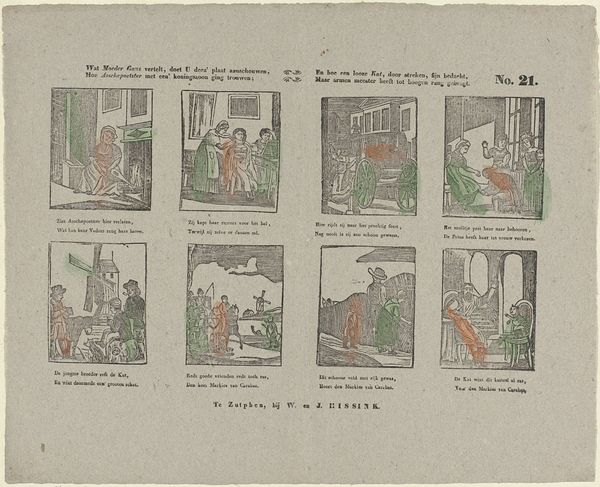
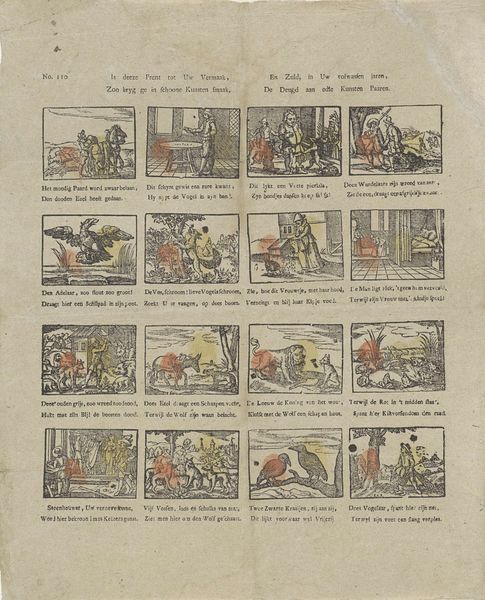
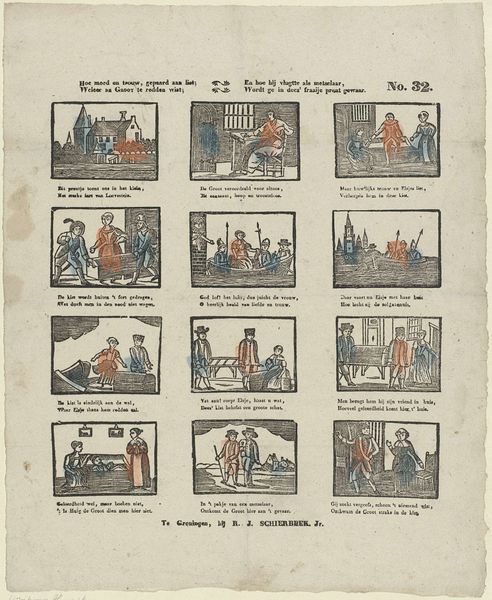
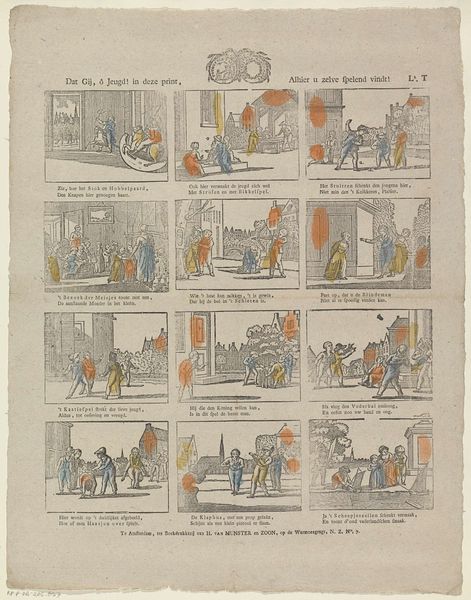
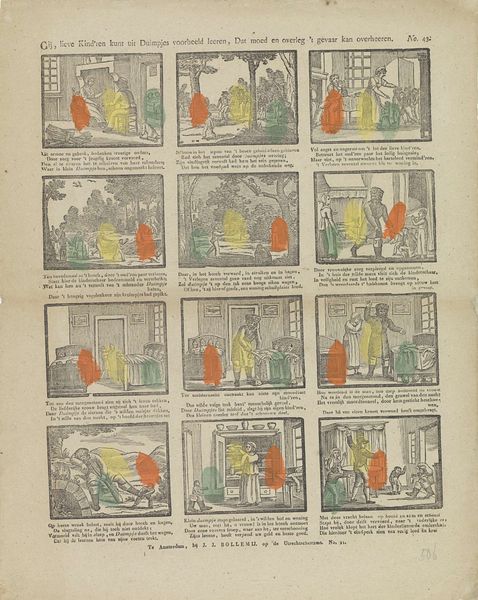
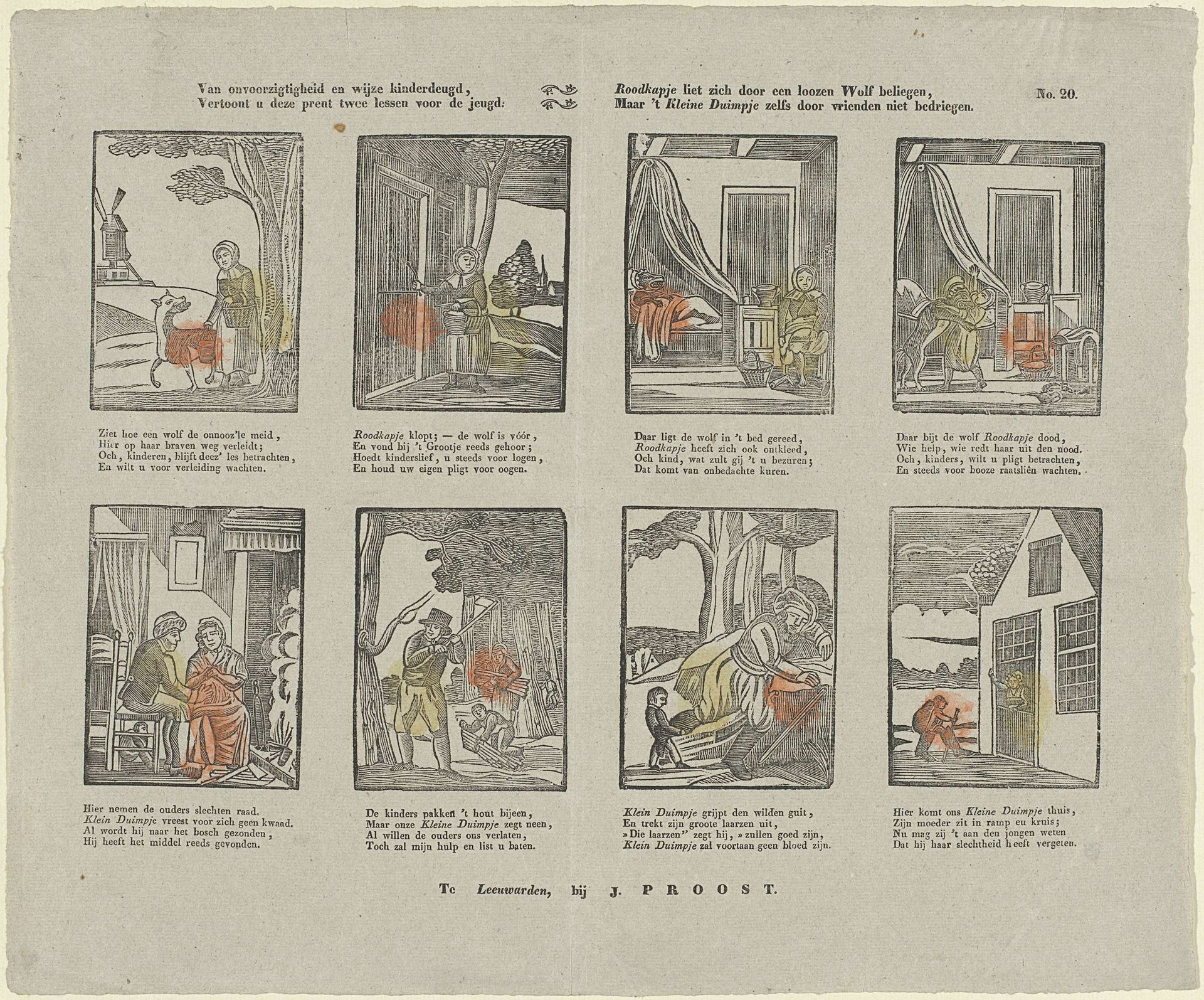
This print, made by Johannes Proost, presents us with two moral lessons for the youth, weaving together the tales of Little Red Riding Hood and Little Thumb. The dominant symbol here is the wolf, an ancient figure lurking in our collective unconscious. The wolf’s deceit echoes through time, reappearing in various guises—from the seductive serpent in the Garden of Eden to the cunning fox in Aesop’s fables. It represents primal desires and hidden dangers. The colour red that is splashed around the image to mark the important characters reminds us of blood and the passions running through these stories. Consider how the gesture of Little Red Riding Hood approaching the wolf mirrors Eve’s acceptance of the apple. Both acts symbolize a surrender to temptation, tapping into our primal fears and desires. The persistence of these archetypes across cultures and centuries speaks to the enduring power of the subconscious. It highlights how certain images continue to resonate, carrying emotional and psychological weight from one era to the next. Ultimately, the wolf and the colour red demonstrate the cyclical nature of symbols, continually resurfacing and evolving.
Van onvoorzigtigheid en wijze kinderdeugd, / Vertoont u deze prent twee lessen voor de jeugd. / Roodkapje liet zich door een loozen wolf beliegen, / Maar 't Kleine Duimpje zelfs door vrienden niet bedriegen
1832 - 1850

Artwork details
- Medium
- print, engraving
- Dimensions
- height 327 mm, width 396 mm
- Copyright
- Rijks Museum: Open Domain
Tags
Comments
Share your thoughts
About this artwork
This print, made by Johannes Proost, presents us with two moral lessons for the youth, weaving together the tales of Little Red Riding Hood and Little Thumb. The dominant symbol here is the wolf, an ancient figure lurking in our collective unconscious. The wolf’s deceit echoes through time, reappearing in various guises—from the seductive serpent in the Garden of Eden to the cunning fox in Aesop’s fables. It represents primal desires and hidden dangers. The colour red that is splashed around the image to mark the important characters reminds us of blood and the passions running through these stories. Consider how the gesture of Little Red Riding Hood approaching the wolf mirrors Eve’s acceptance of the apple. Both acts symbolize a surrender to temptation, tapping into our primal fears and desires. The persistence of these archetypes across cultures and centuries speaks to the enduring power of the subconscious. It highlights how certain images continue to resonate, carrying emotional and psychological weight from one era to the next. Ultimately, the wolf and the colour red demonstrate the cyclical nature of symbols, continually resurfacing and evolving.
Comments
Share your thoughts