About this artwork
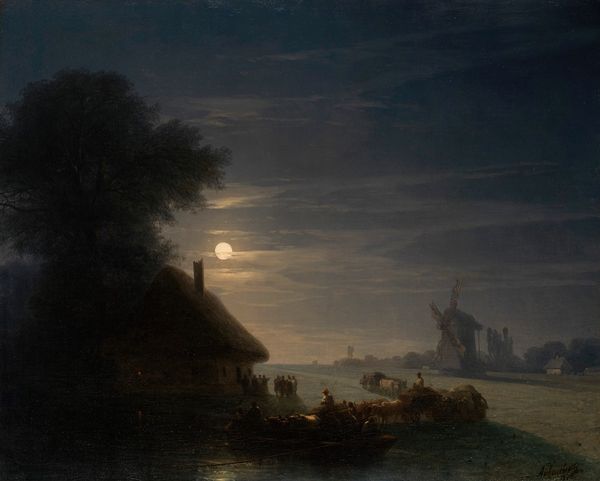
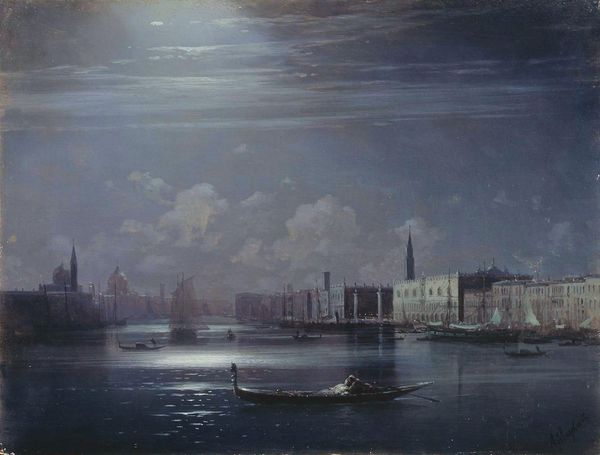
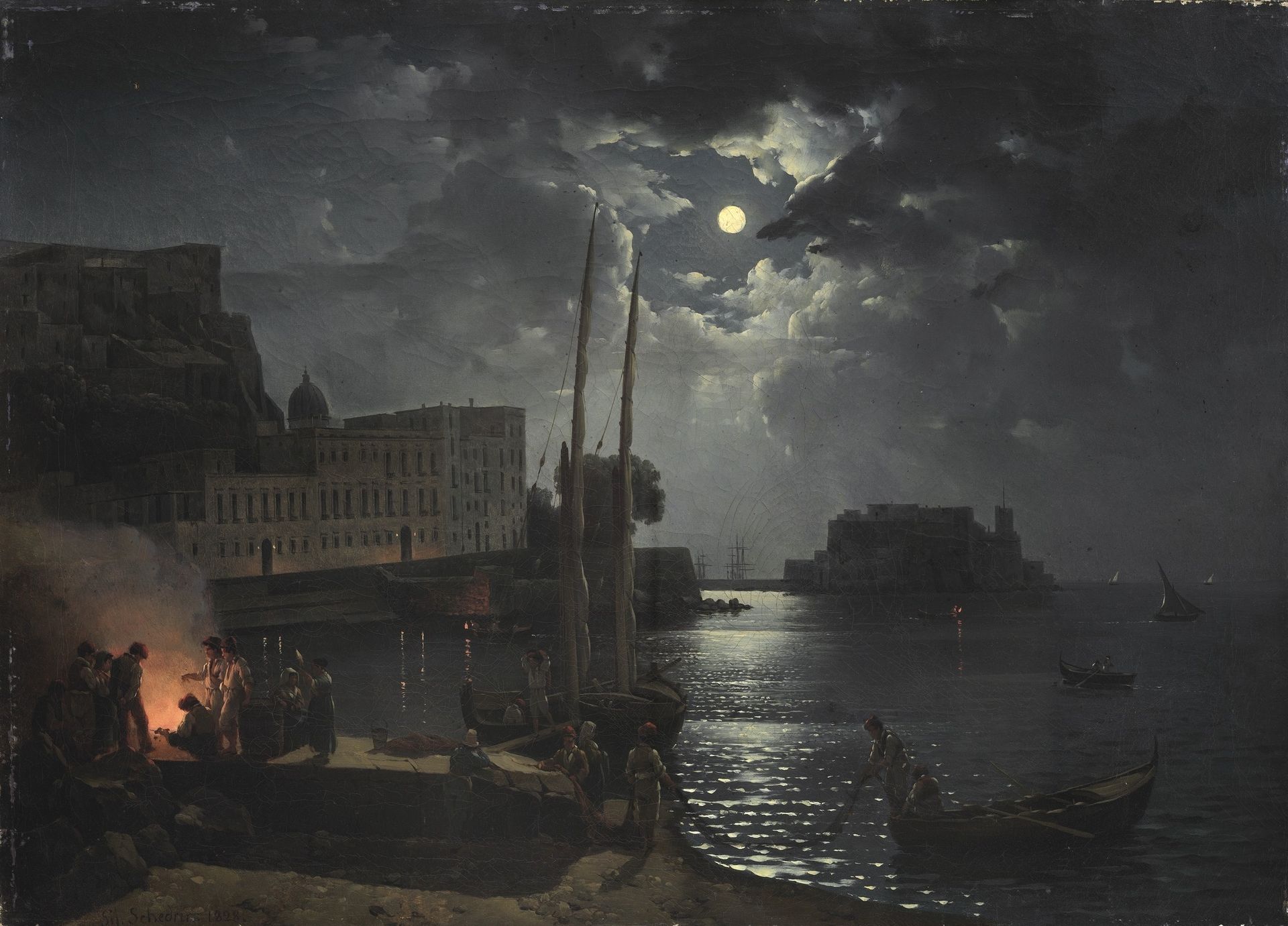
Sylvester Shchedrin painted this moonlit view of Naples in oil on canvas. The shimmering light, the ancient architecture, and the bay occupied by modest fishermen create an image of Italy as a place of both sublime beauty and everyday toil. This image speaks to the rise of Romanticism in the early nineteenth century, which rejected the aristocratic artifice of the previous century. Shchedrin made this painting while a pensioner of the Academy of Arts in St. Petersburg. That institution sent promising artists abroad so that they might master the classical tradition. Instead, Shchedrin turned to *plein air* painting, depicting the world as he experienced it. We can see in this image a move towards a more democratic art, one that valued direct experience over established hierarchies. Art historians look to the records of institutions such as the Academy to find out more about how artists like Shchedrin were supported, and sometimes constrained, in their work.
Moonlit night in Naples
1828


Artwork details
- Medium
- painting, oil-paint
- Dimensions
- 43 x 60.3 cm
- Location
- Tretyakov Gallery, Moscow, Russia
- Copyright
- Public domain
Tags
Comments
Share your thoughts
About this artwork
Sylvester Shchedrin painted this moonlit view of Naples in oil on canvas. The shimmering light, the ancient architecture, and the bay occupied by modest fishermen create an image of Italy as a place of both sublime beauty and everyday toil. This image speaks to the rise of Romanticism in the early nineteenth century, which rejected the aristocratic artifice of the previous century. Shchedrin made this painting while a pensioner of the Academy of Arts in St. Petersburg. That institution sent promising artists abroad so that they might master the classical tradition. Instead, Shchedrin turned to *plein air* painting, depicting the world as he experienced it. We can see in this image a move towards a more democratic art, one that valued direct experience over established hierarchies. Art historians look to the records of institutions such as the Academy to find out more about how artists like Shchedrin were supported, and sometimes constrained, in their work.
Comments
Share your thoughts