About this artwork
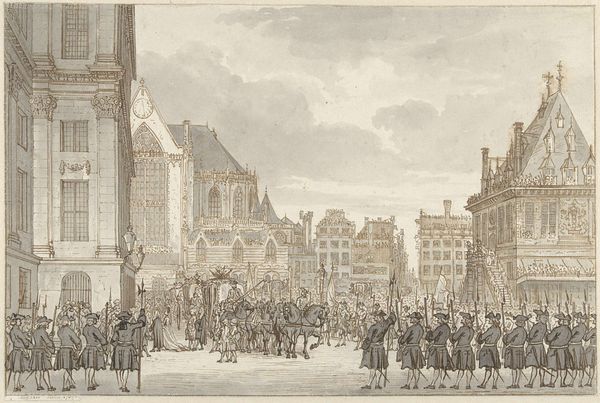
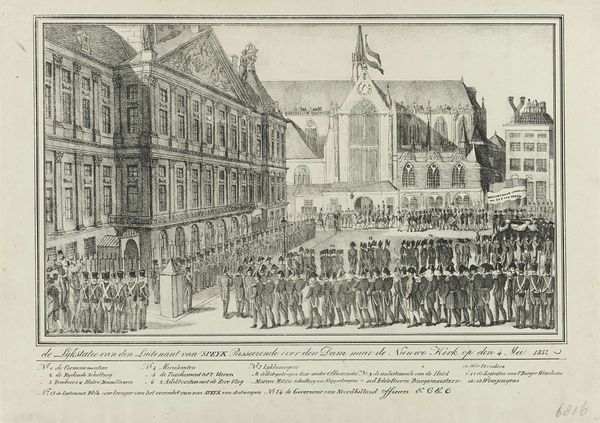
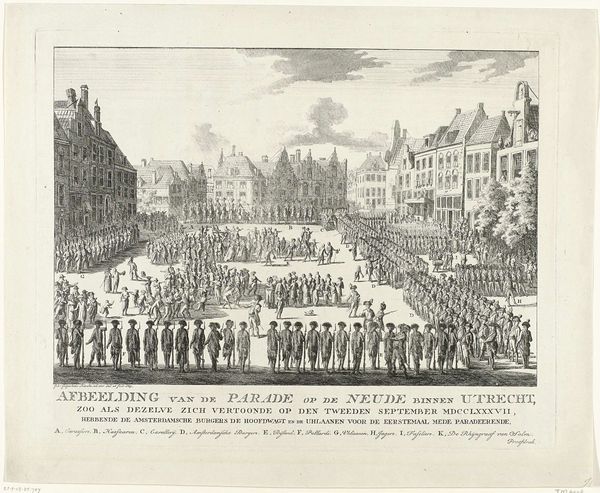
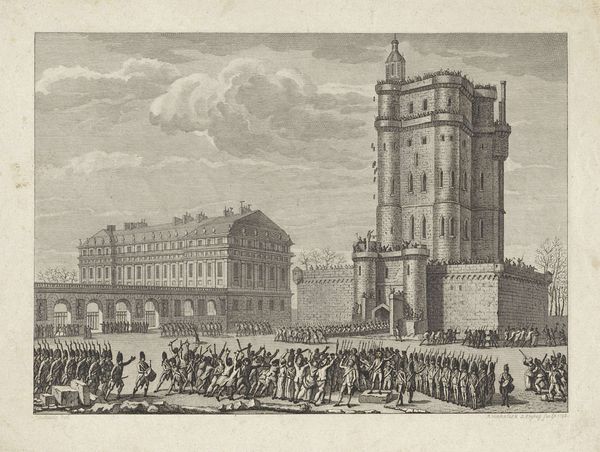
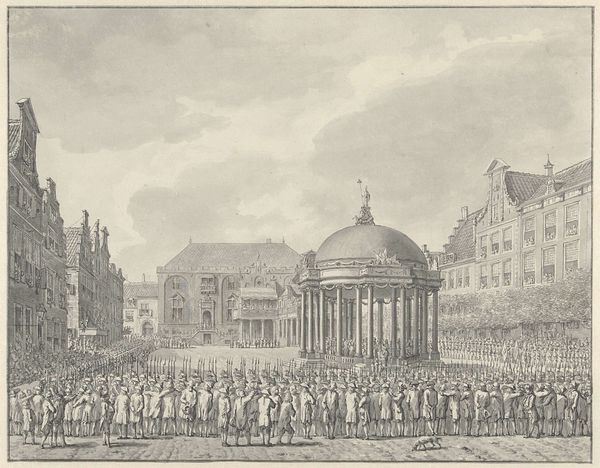
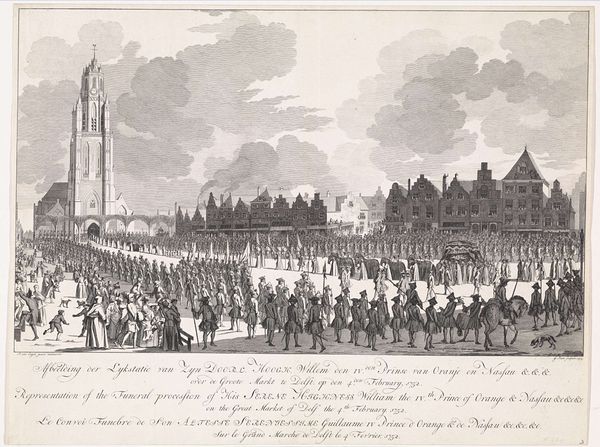
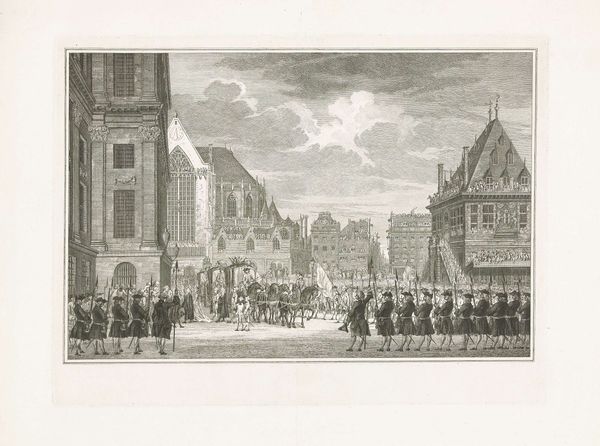
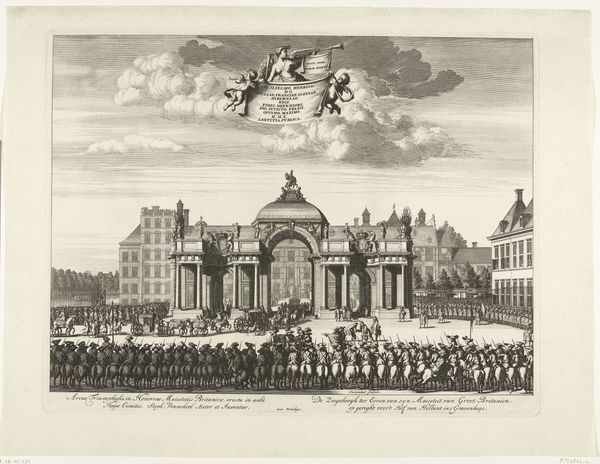
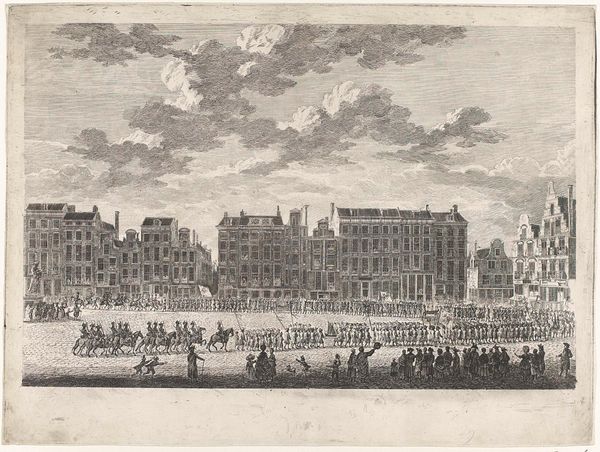
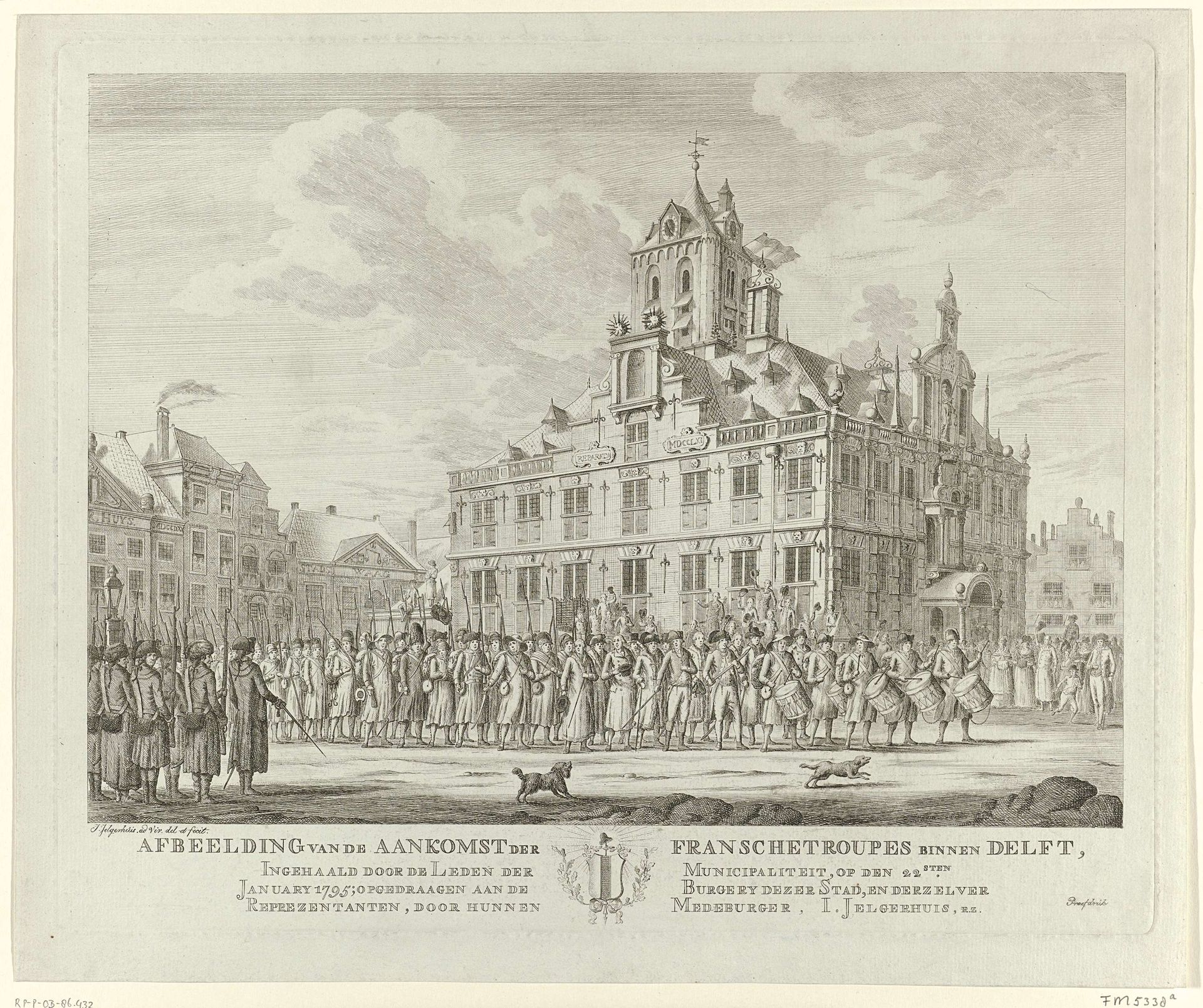
Johannes Jelgerhuis created this print titled 'Arrival of French Troops in Delft, 1795.' It’s a visual document, a kind of propaganda even, capturing a key moment in Dutch history during a period of massive social and political upheaval. The print commemorates the arrival of French revolutionary forces in Delft, signaling the end of the old order and the establishment of the Batavian Republic, a sister republic of France. Jelgerhuis, born in 1770, would have been a young man during these events, and his perspective is shaped by the revolutionary fervor of the time. It's fascinating to consider how the arrival of foreign troops was perceived by the Dutch population, and how Jelgerhuis frames this event. The print shows a neat, orderly procession, suggesting a peaceful transition of power. But what about those who resisted the revolution? Whose stories are not being told here? Consider how the artist uses the visual language of order and harmony to legitimize a moment of radical change, and how it reflects the complex interplay of power, identity, and historical narrative.
Aankomst van Franse troepen te Delft, 1795
1795

Johannes Jelgerhuis
1770 - 1836Location
RijksmuseumArtwork details
- Medium
- print, engraving
- Dimensions
- height 336 mm, width 415 mm
- Location
- Rijksmuseum
- Copyright
- Rijks Museum: Open Domain
Tags
neoclacissism
cityscape
history-painting
engraving
Comments
Be the first to share your thoughts about this work.
About this artwork
Johannes Jelgerhuis created this print titled 'Arrival of French Troops in Delft, 1795.' It’s a visual document, a kind of propaganda even, capturing a key moment in Dutch history during a period of massive social and political upheaval. The print commemorates the arrival of French revolutionary forces in Delft, signaling the end of the old order and the establishment of the Batavian Republic, a sister republic of France. Jelgerhuis, born in 1770, would have been a young man during these events, and his perspective is shaped by the revolutionary fervor of the time. It's fascinating to consider how the arrival of foreign troops was perceived by the Dutch population, and how Jelgerhuis frames this event. The print shows a neat, orderly procession, suggesting a peaceful transition of power. But what about those who resisted the revolution? Whose stories are not being told here? Consider how the artist uses the visual language of order and harmony to legitimize a moment of radical change, and how it reflects the complex interplay of power, identity, and historical narrative.
Comments
Be the first to share your thoughts about this work.