![Untitled [reclining woman resting on right arm] by Richard Diebenkorn](https://d2w8kbdekdi1gv.cloudfront.net/eyJidWNrZXQiOiAiYXJ0ZXJhLWltYWdlcy1idWNrZXQiLCAia2V5IjogImFydHdvcmtzLzg5NDIwNjNiLTVkZjQtNDk5MS1hMzM3LTI2M2M5NjVjMGJhNS84OTQyMDYzYi01ZGY0LTQ5OTEtYTMzNy0yNjNjOTY1YzBiYTVfZnVsbC5qcGciLCAiZWRpdHMiOiB7InJlc2l6ZSI6IHsid2lkdGgiOiAxOTIwLCAiaGVpZ2h0IjogMTkyMCwgImZpdCI6ICJpbnNpZGUifX19)
About this artwork
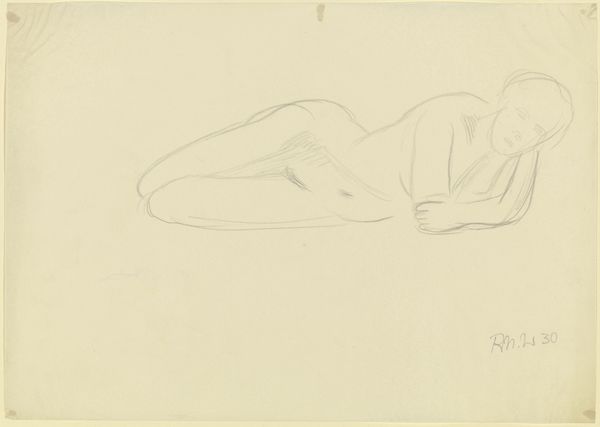
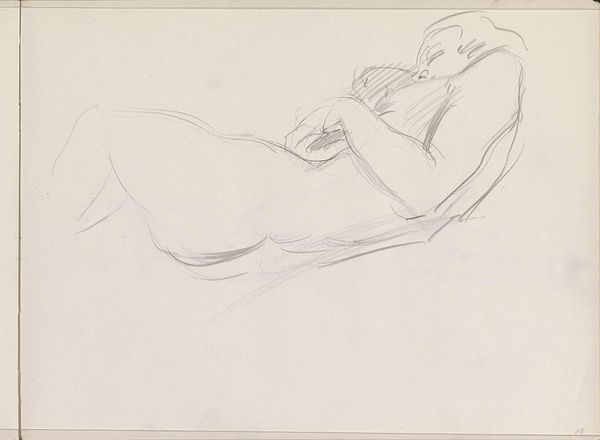
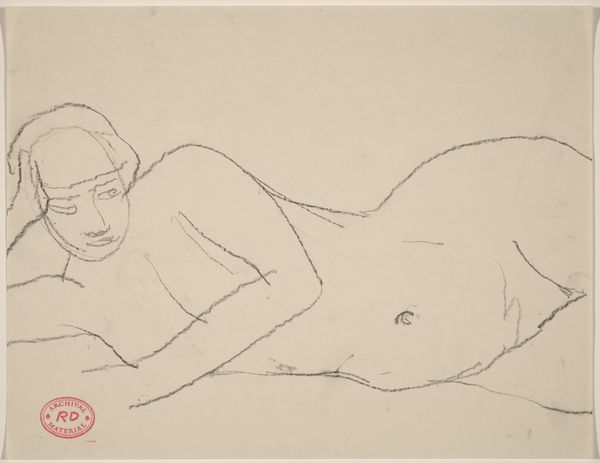
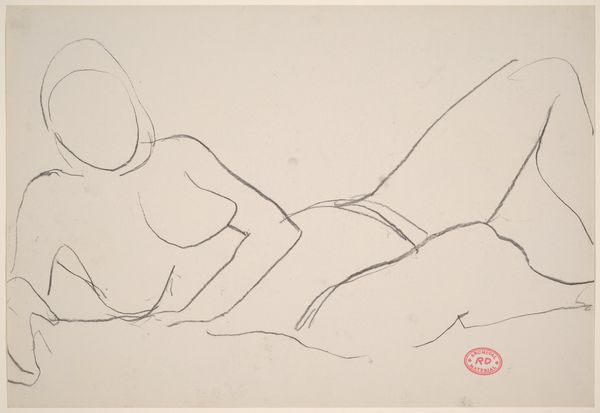
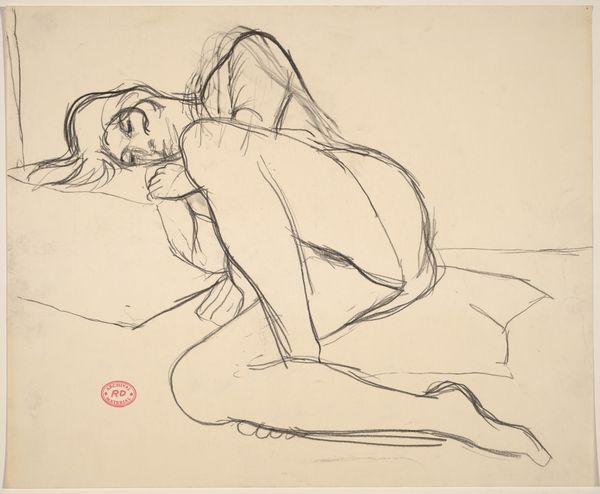
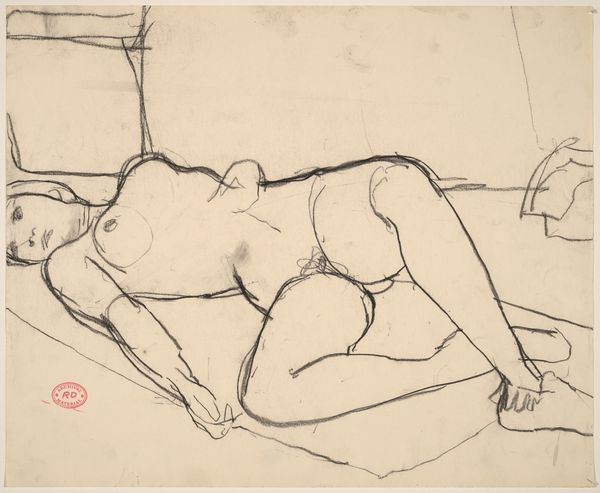
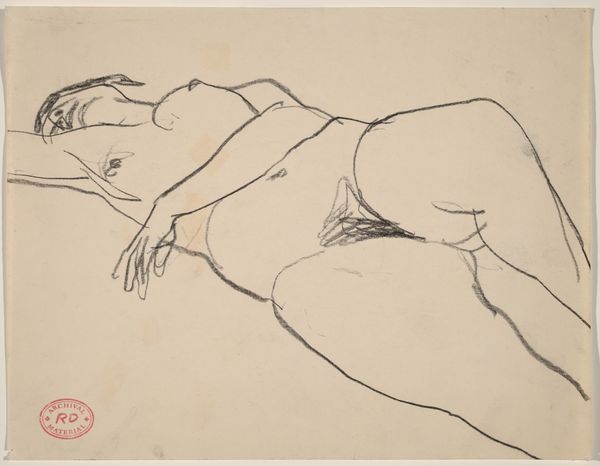
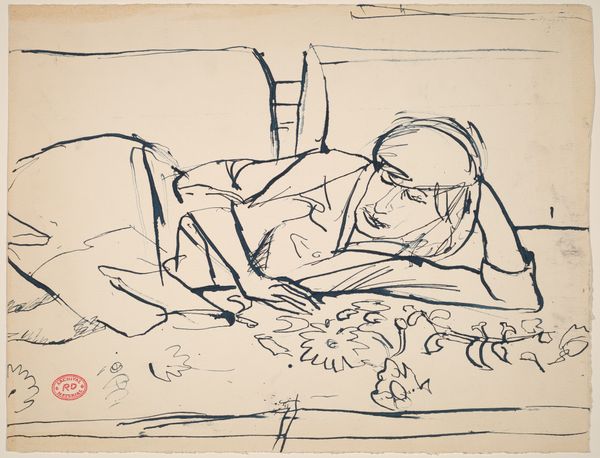
Curator: Well, here we have Richard Diebenkorn's "Untitled [reclining woman resting on right arm]", a pencil drawing, likely created sometime between 1955 and 1967. It’s just... raw, wouldn't you say? Editor: Yes, and it’s giving me major "afternoon slump" vibes. She looks completely unbothered, like she's fully surrendered to the weight of existence. Is it modern ennui distilled into a pencil sketch? Curator: Perhaps. It strikes me how economical Diebenkorn's lines are here. With a kind of airy confidence, it's just the faintest gesture toward form and shape. It is a finished drawing, or is it an ephemeral thing, existing halfway to something else? Editor: Exactly! I see it more as an exploration of form rather than a definitive statement. It feels intimate. Like we're peering into Diebenkorn’s sketchbook and seeing the genesis of a future painting perhaps. Think about the post-war environment, that generation’s push against definition... it speaks to that, I think. Curator: It is definitely tempting to see this through the lens of the social changes. Still, as a drawing, I find it wonderfully unresolved. Those almost cartoonish flower shapes beneath the figure... Are they comforting? Do they offset the figure's own exhaustion, her vulnerability? Editor: The flowers add to that sense of intimacy, as if she's in a private world, oblivious to our gaze and certainly free of ours. Curator: There’s something quietly radical in its simplicity, in the confidence it takes to leave so much unsaid. The sparseness is key. If the image were rendered with a little bit more detail, if the forms were shaded or smoothed, that feeling of intimacy would be dispelled, that sense of capturing a private moment would be lost. Editor: I agree. It is a delicate balance, like walking a tightrope between abstraction and representation, and daring us to see the world with the same openness that the artist sees it. Curator: Well put. Ultimately, this small sketch offers a great view into Diebenkorn's evolving approach. Editor: Indeed. And hopefully prompts viewers to reconsider their expectations of "finish" and the power of suggestion in art.
Untitled [reclining woman resting on right arm]
1955 - 1967


Artwork details
- Medium
- drawing, pencil
- Dimensions
- overall: 31.8 x 43.2 cm (12 1/2 x 17 in.)
- Copyright
- National Gallery of Art: CC0 1.0
Tags
drawing
landscape
figuration
bay-area-figurative-movement
pencil drawing
pencil
nude
modernism
Comments
Be the first to share your thoughts about this work.
About this artwork
Curator: Well, here we have Richard Diebenkorn's "Untitled [reclining woman resting on right arm]", a pencil drawing, likely created sometime between 1955 and 1967. It’s just... raw, wouldn't you say? Editor: Yes, and it’s giving me major "afternoon slump" vibes. She looks completely unbothered, like she's fully surrendered to the weight of existence. Is it modern ennui distilled into a pencil sketch? Curator: Perhaps. It strikes me how economical Diebenkorn's lines are here. With a kind of airy confidence, it's just the faintest gesture toward form and shape. It is a finished drawing, or is it an ephemeral thing, existing halfway to something else? Editor: Exactly! I see it more as an exploration of form rather than a definitive statement. It feels intimate. Like we're peering into Diebenkorn’s sketchbook and seeing the genesis of a future painting perhaps. Think about the post-war environment, that generation’s push against definition... it speaks to that, I think. Curator: It is definitely tempting to see this through the lens of the social changes. Still, as a drawing, I find it wonderfully unresolved. Those almost cartoonish flower shapes beneath the figure... Are they comforting? Do they offset the figure's own exhaustion, her vulnerability? Editor: The flowers add to that sense of intimacy, as if she's in a private world, oblivious to our gaze and certainly free of ours. Curator: There’s something quietly radical in its simplicity, in the confidence it takes to leave so much unsaid. The sparseness is key. If the image were rendered with a little bit more detail, if the forms were shaded or smoothed, that feeling of intimacy would be dispelled, that sense of capturing a private moment would be lost. Editor: I agree. It is a delicate balance, like walking a tightrope between abstraction and representation, and daring us to see the world with the same openness that the artist sees it. Curator: Well put. Ultimately, this small sketch offers a great view into Diebenkorn's evolving approach. Editor: Indeed. And hopefully prompts viewers to reconsider their expectations of "finish" and the power of suggestion in art.
Comments
Be the first to share your thoughts about this work.