About this artwork
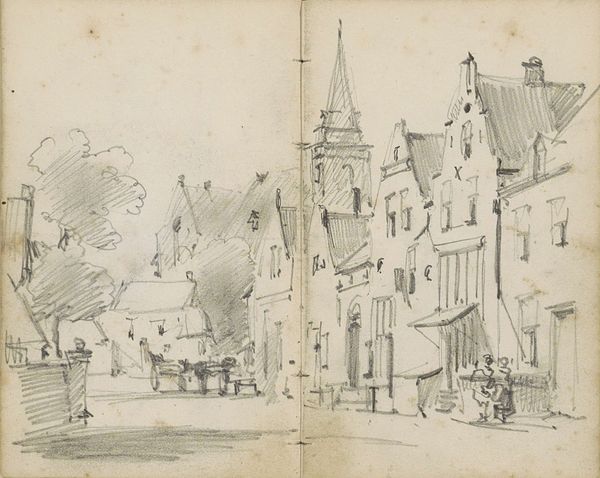
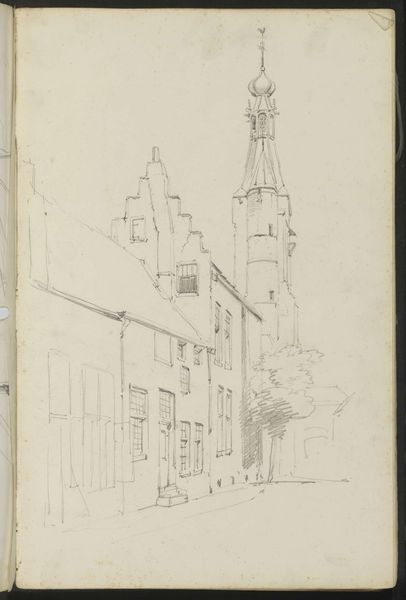
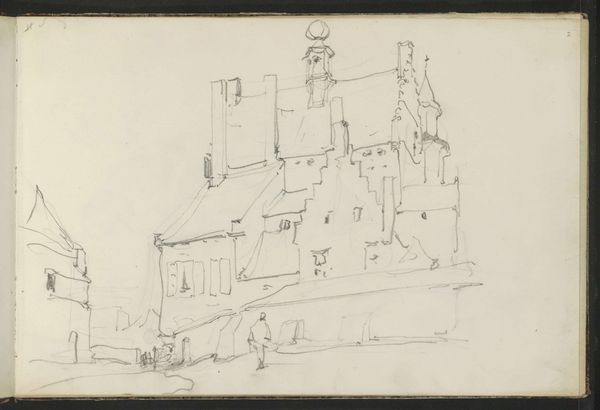
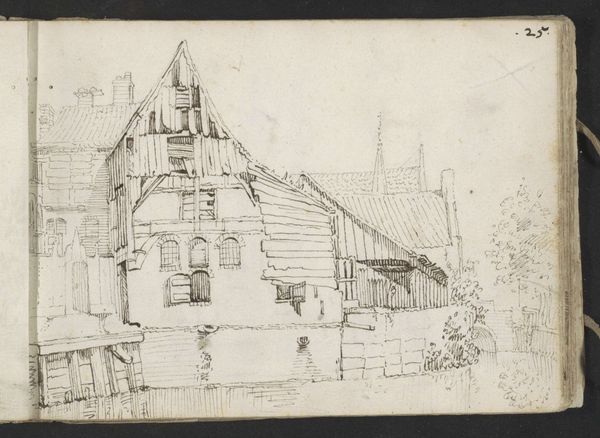
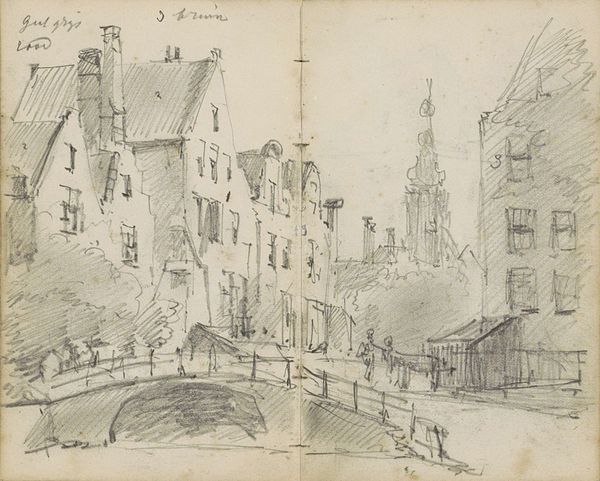
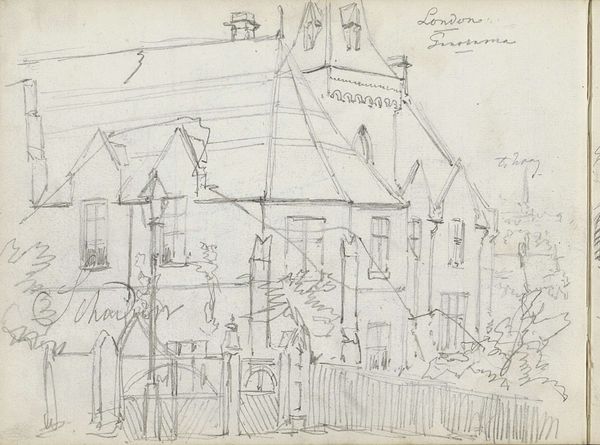
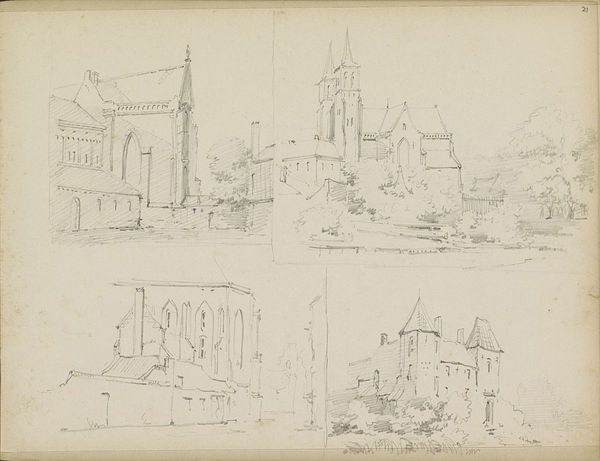
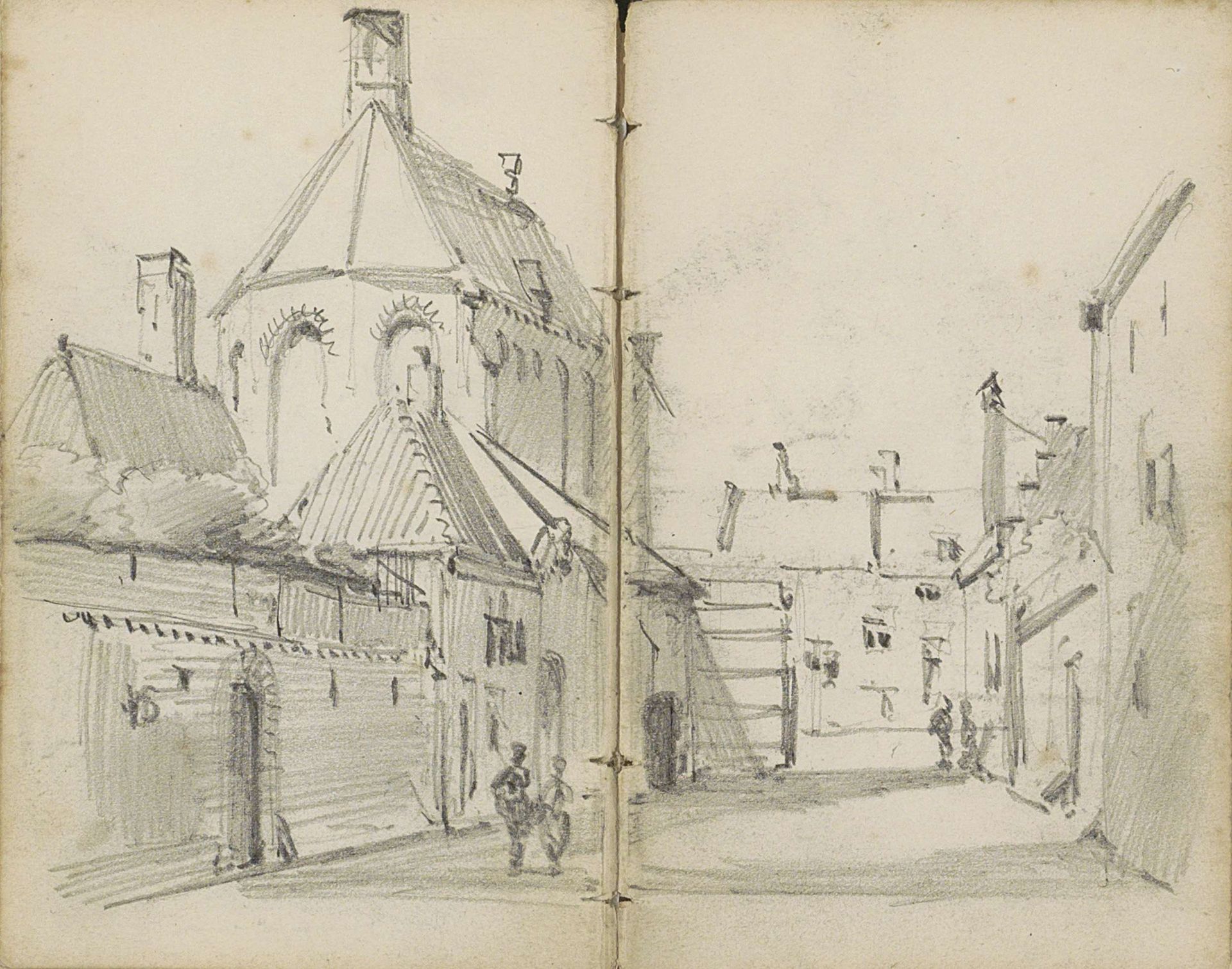
Willem Koekkoek's sketch, "Village Street with a Church and Figures," offers us a glimpse into 19th-century Dutch life through a structural lens. The composition, neatly divided across the sketchbook’s two pages, presents a street scene anchored by the imposing church on the left and balanced by the receding perspective of buildings to the right. Notice how Koekkoek uses line—quick, assertive strokes—to define the architectural forms and the figures. The texture achieved through hatching and cross-hatching adds depth, creating a play of light and shadow that animates the scene. The church, with its strong vertical lines and triangular roof, dominates the composition. The figures, though small, provide a sense of scale and human presence, enlivening the architectural geometry. This sketch functions as more than just a visual record; it’s a study in structure and form, inviting us to consider how Koekkoek uses these elements to convey a sense of place and the everyday. Through its precise execution and deliberate composition, the drawing prompts us to reflect on the interplay between architecture and human experience.
Dorpsstraat met een kerk en figuren 1849 - 1895

Willem Koekkoek
1839 - 1895Location
RijksmuseumArtwork details
- Medium
- drawing, pencil
- Location
- Rijksmuseum
- Copyright
- Rijks Museum: Open Domain
Tags
drawing
dutch-golden-age
landscape
pencil
cityscape
realism
Comments
No comments
About this artwork
Willem Koekkoek's sketch, "Village Street with a Church and Figures," offers us a glimpse into 19th-century Dutch life through a structural lens. The composition, neatly divided across the sketchbook’s two pages, presents a street scene anchored by the imposing church on the left and balanced by the receding perspective of buildings to the right. Notice how Koekkoek uses line—quick, assertive strokes—to define the architectural forms and the figures. The texture achieved through hatching and cross-hatching adds depth, creating a play of light and shadow that animates the scene. The church, with its strong vertical lines and triangular roof, dominates the composition. The figures, though small, provide a sense of scale and human presence, enlivening the architectural geometry. This sketch functions as more than just a visual record; it’s a study in structure and form, inviting us to consider how Koekkoek uses these elements to convey a sense of place and the everyday. Through its precise execution and deliberate composition, the drawing prompts us to reflect on the interplay between architecture and human experience.
Comments
No comments