18th-19th century
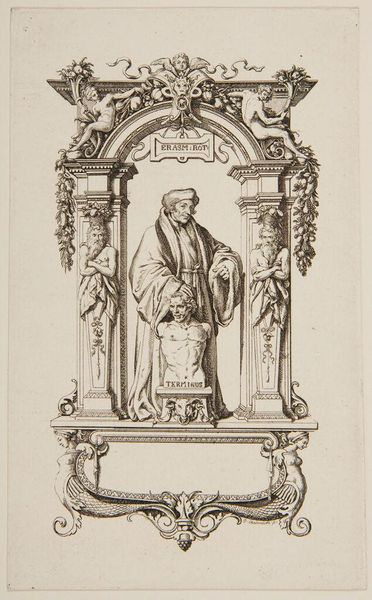
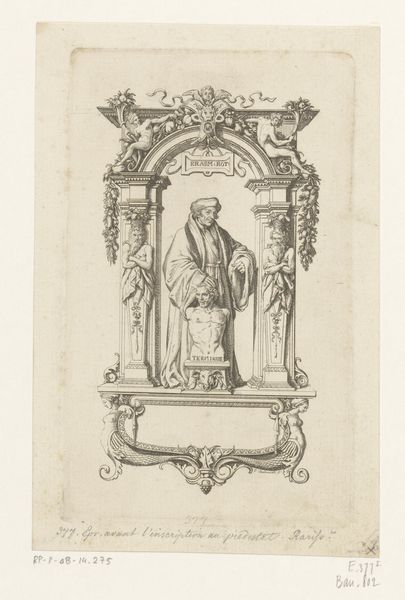
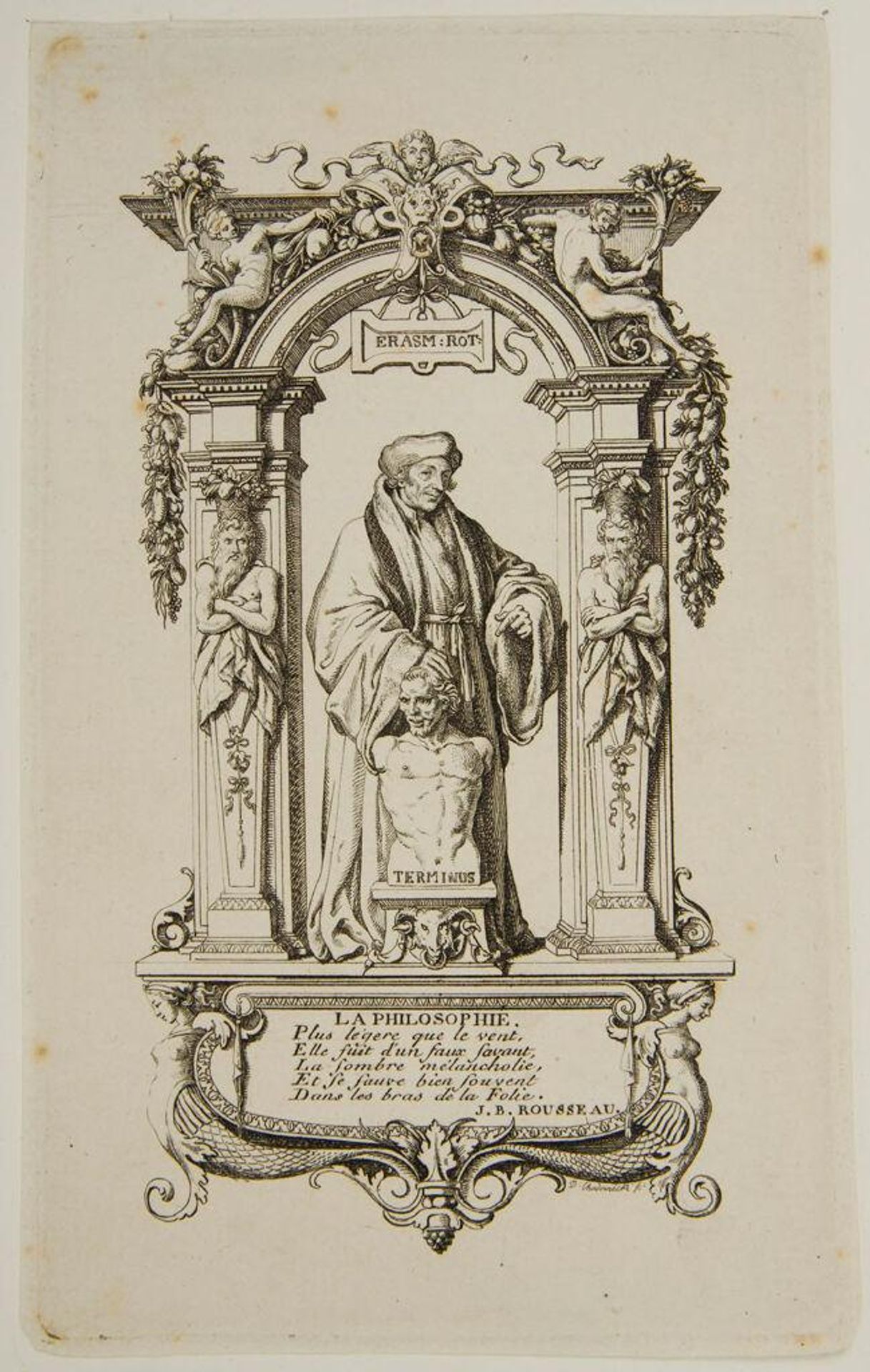
Erasmus with the Terminus


Listen to curator's interpretation
Curatorial notes
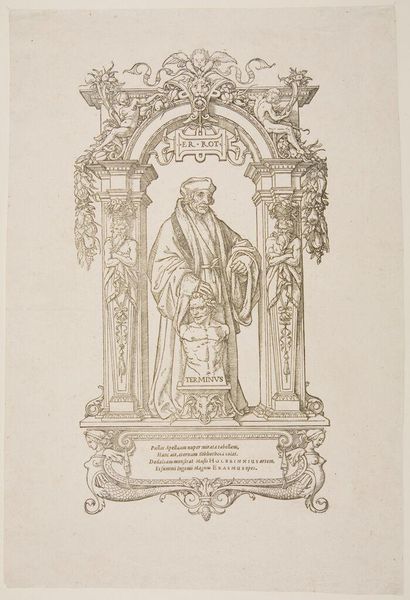
Curator: Immediately, I'm struck by how incredibly detailed and ornate this little print is. It's like a tiny stage. Editor: Indeed. What we're looking at is Daniel Nikolaus Chodowiecki's "Erasmus with the Terminus," a delicate engraving now housed at the Harvard Art Museums. It depicts the famous humanist scholar, Erasmus. Curator: Ah, Erasmus! It feels like a snapshot of intellectual weight, all those symbolic figures crammed in there. The bust labelled "Terminus", the stoic figures on the pillars, Erasmus' calm demeanor… a bit much? Editor: Chodowiecki was a master of allegory, using classical imagery to comment on Enlightenment ideals. Erasmus, a champion of reason, is presented here as a beacon against what the inscription below calls "melancholy." Curator: So, it's a sort of… philosophical pep talk? A tiny, busy, 18th-century affirmation? Editor: Perhaps. Or maybe a visual debate about the limits of reason. The abundance of detail hints at complex ideas, far beyond a simple message. Curator: That makes me appreciate its intricacies all the more. Editor: It gives us a rich insight into the intellectual landscape of the time.