About this artwork
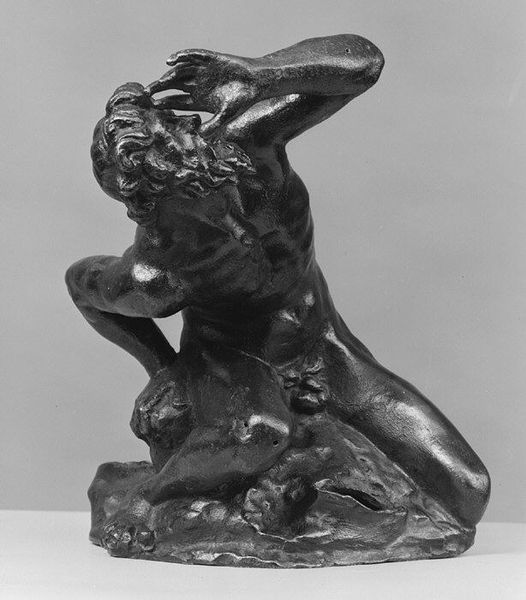
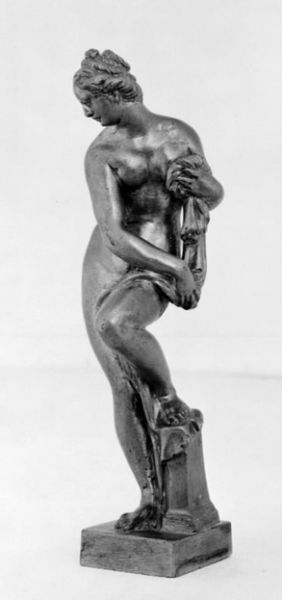
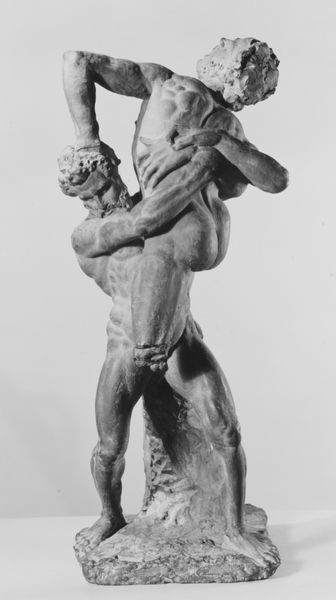
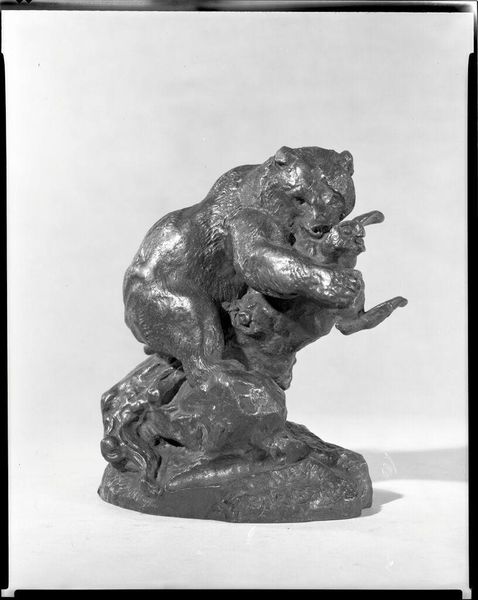
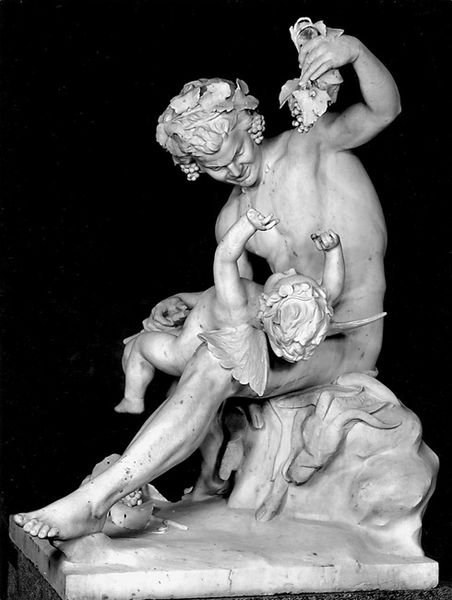
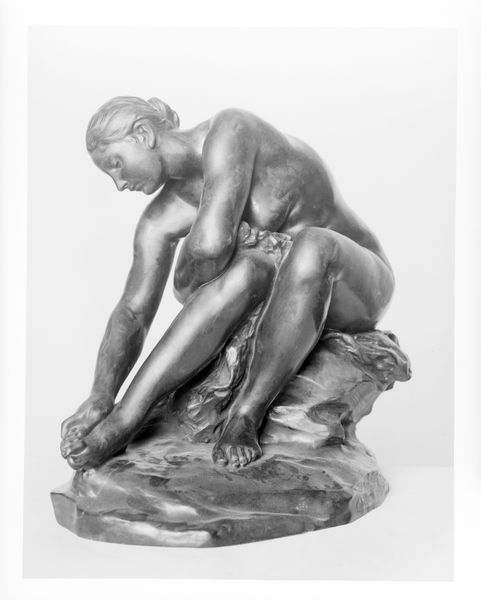
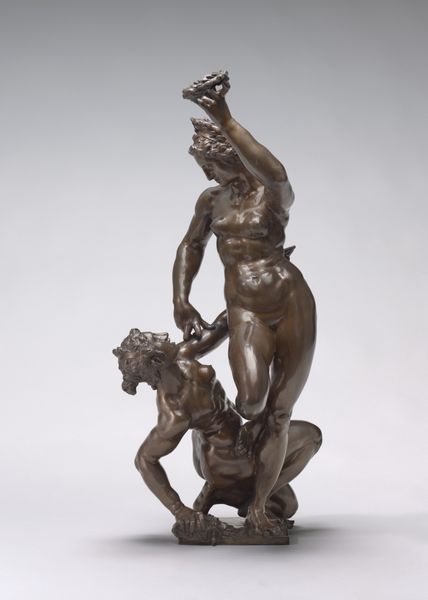
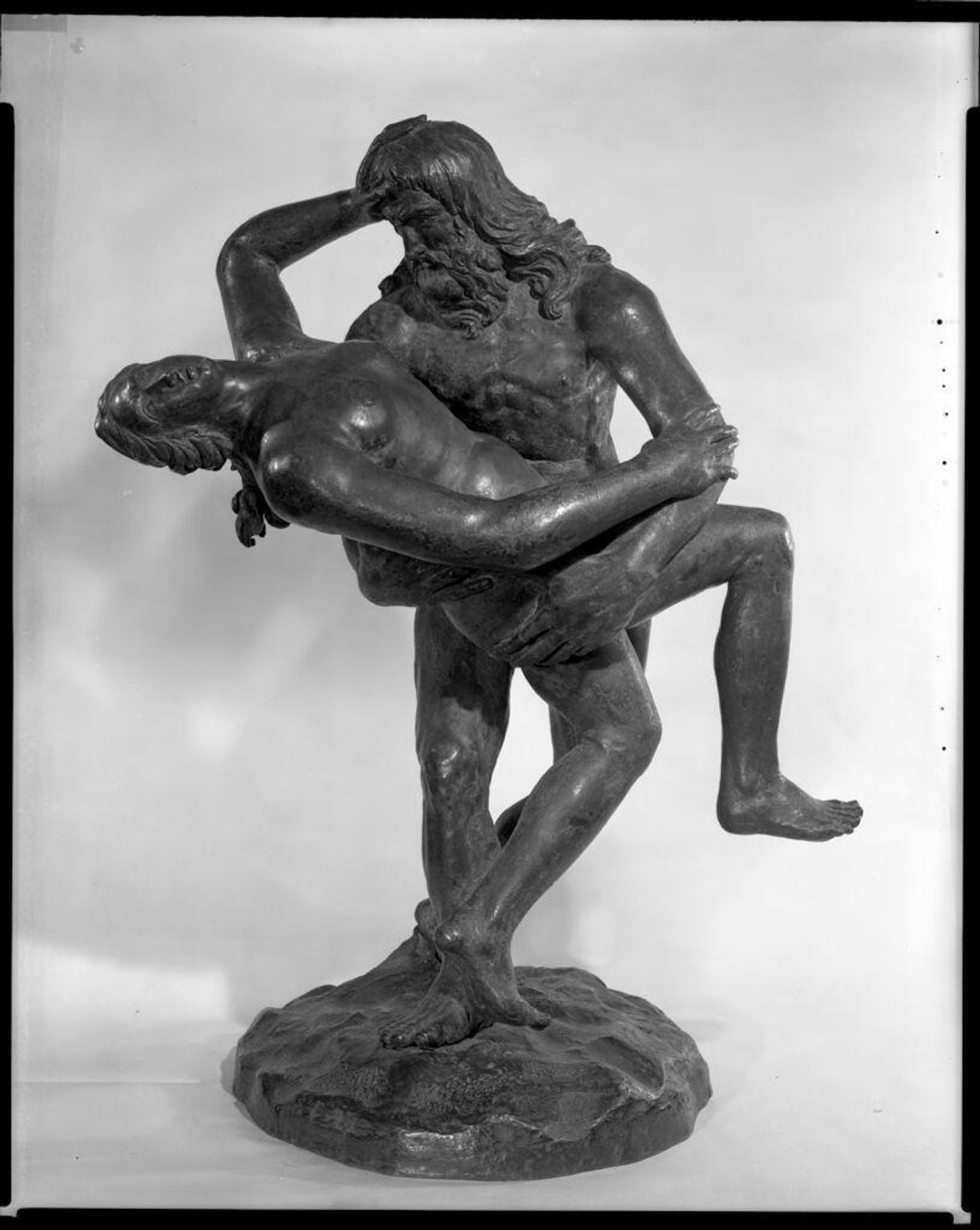
Curator: This bronze sculpture by Hubert Gerhard is titled "The Rape of Proserpine." Gerhard, born in 1540, captures a violent episode from classical mythology. Editor: It’s unsettling, isn’t it? The way he clutches her, that spiraling composition... it feels like a tempest made solid. Curator: The material itself contributes to that sense of drama; the casting process would have been physically demanding, requiring skilled labor and precise knowledge of metallurgy. Editor: All that sweat and toil to depict... this. I keep imagining the artist, trying to breathe life into cold metal, maybe even struggling with his own desires. Curator: Consider the social context too; such works often served as status symbols for wealthy patrons, reflecting their power and taste. Editor: So, a celebration of the elite through the subjugation of a goddess. Well, that certainly changes how I see the curl of her fingers. Curator: Ultimately, exploring this sculpture is a profound reminder of how art can reflect and shape societal values. Editor: Yes, and maybe how we, as viewers, can reshape our own understanding. Thanks to Gerhard for making us reflect on these issues.
The Rape of Proserpine
16th-17th century


Artwork details
- Dimensions
- 74.8 x 45.4 x 57.7 cm (29 7/16 x 17 7/8 x 22 11/16 in.)
- Location
- Harvard Art Museums
- Copyright
- CC0 1.0
Comments
Share your thoughts
About this artwork
Curator: This bronze sculpture by Hubert Gerhard is titled "The Rape of Proserpine." Gerhard, born in 1540, captures a violent episode from classical mythology. Editor: It’s unsettling, isn’t it? The way he clutches her, that spiraling composition... it feels like a tempest made solid. Curator: The material itself contributes to that sense of drama; the casting process would have been physically demanding, requiring skilled labor and precise knowledge of metallurgy. Editor: All that sweat and toil to depict... this. I keep imagining the artist, trying to breathe life into cold metal, maybe even struggling with his own desires. Curator: Consider the social context too; such works often served as status symbols for wealthy patrons, reflecting their power and taste. Editor: So, a celebration of the elite through the subjugation of a goddess. Well, that certainly changes how I see the curl of her fingers. Curator: Ultimately, exploring this sculpture is a profound reminder of how art can reflect and shape societal values. Editor: Yes, and maybe how we, as viewers, can reshape our own understanding. Thanks to Gerhard for making us reflect on these issues.
Comments
Share your thoughts