About this artwork
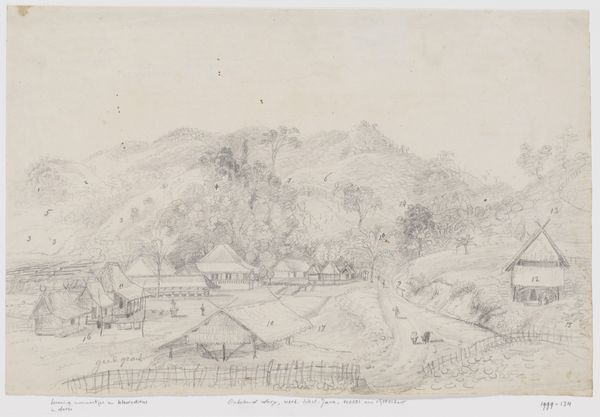
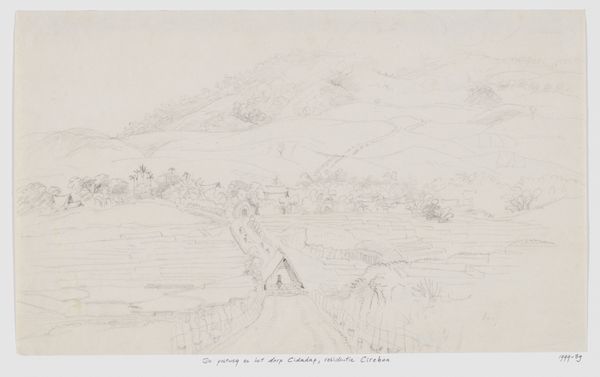
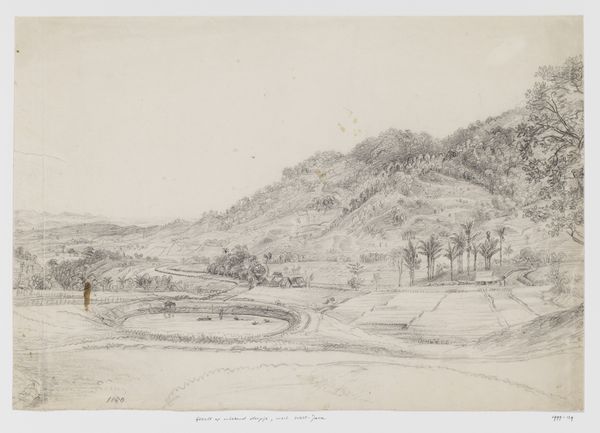
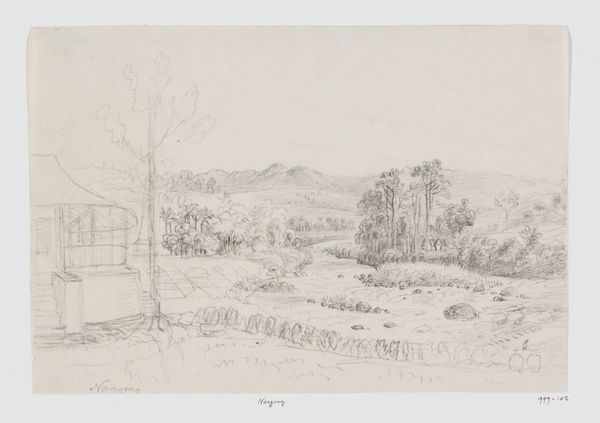
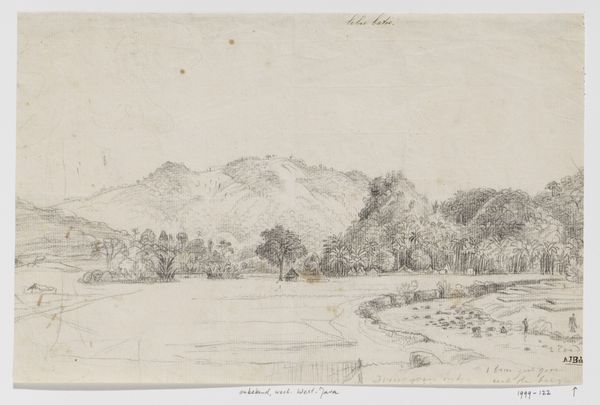
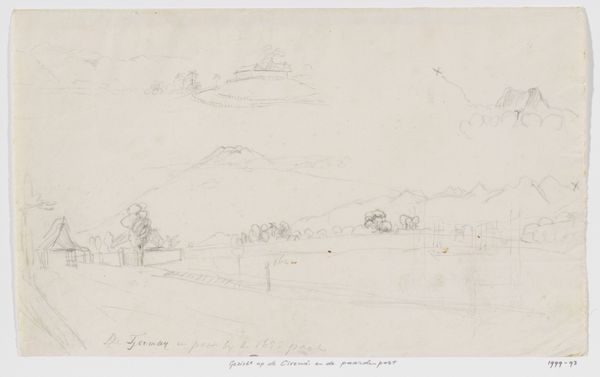
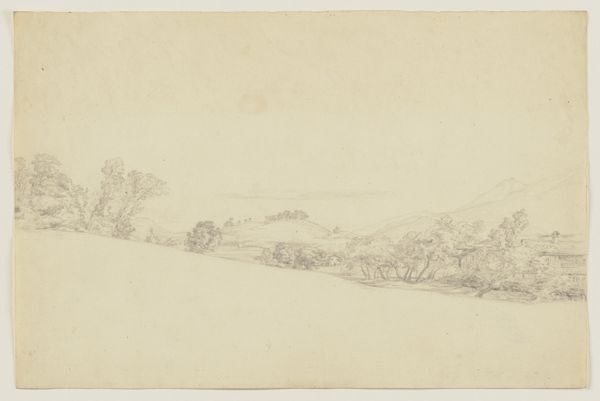
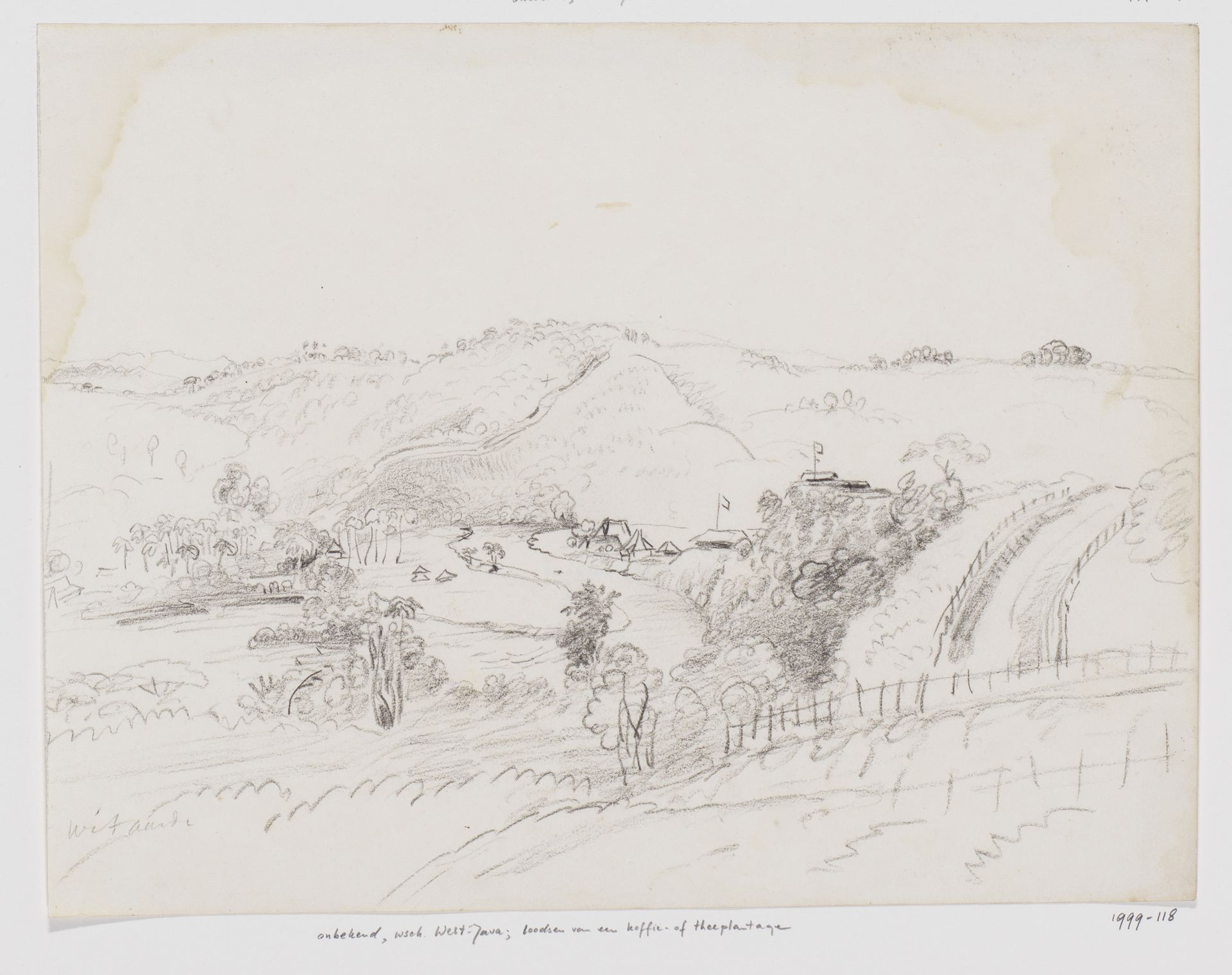
Editor: So, this is Adrianus Johannes Bik’s "Landschap met dorpje aan een rivier, West-Java," or "Landscape with a village on a river, West Java," created sometime between 1816 and 1846, using pencil on paper. The composition feels both sweeping and intimate. What stands out to you in this seemingly simple sketch? Curator: The enduring image of "landscape" here is potent. How much of this is truly ‘observed’ versus imagined, a projection of a colonialist’s desire onto the landscape? It feels like a carefully constructed fiction. The way the village is nestled within this ‘untouched’ nature – is that harmony, or something else? Editor: Something else… you mean the power dynamic between colonizer and colonized? Curator: Precisely. Note how the lines almost soften and idealize the native setting. There’s a selective rendering, emphasizing what's perceived as picturesque and serene, carefully omitting evidence of, say, labor or resistance. It's a narrative told through imagery. What does the presence of the fort or outpost on the hill overlooking the village signify to you? Editor: That image brings an awareness of surveillance and control… So the drawing is not just a landscape; it is imbued with symbolism about authority and domination. Curator: Exactly. It’s fascinating how a seemingly innocuous drawing can become a repository for cultural memory and ongoing dialogues about power. Editor: I will never look at landscapes the same way. I hadn’t considered how much context could be packed into what appears to be just a simple sketch. Curator: Indeed. And recognizing those embedded layers reveals the continuing story of this landscape long after the artist put down the pencil.
Landschap met dorpje aan een rivier, West-Java c. 1816 - 1846

Adrianus Johannes Bik
1790 - 1872Location
RijksmuseumArtwork details
- Medium
- drawing, pencil
- Dimensions
- height 259 mm, width 356 mm
- Location
- Rijksmuseum
- Copyright
- Rijks Museum: Open Domain
Tags
drawing
pencil sketch
landscape
indigenism
pencil
Comments
No comments
About this artwork
Editor: So, this is Adrianus Johannes Bik’s "Landschap met dorpje aan een rivier, West-Java," or "Landscape with a village on a river, West Java," created sometime between 1816 and 1846, using pencil on paper. The composition feels both sweeping and intimate. What stands out to you in this seemingly simple sketch? Curator: The enduring image of "landscape" here is potent. How much of this is truly ‘observed’ versus imagined, a projection of a colonialist’s desire onto the landscape? It feels like a carefully constructed fiction. The way the village is nestled within this ‘untouched’ nature – is that harmony, or something else? Editor: Something else… you mean the power dynamic between colonizer and colonized? Curator: Precisely. Note how the lines almost soften and idealize the native setting. There’s a selective rendering, emphasizing what's perceived as picturesque and serene, carefully omitting evidence of, say, labor or resistance. It's a narrative told through imagery. What does the presence of the fort or outpost on the hill overlooking the village signify to you? Editor: That image brings an awareness of surveillance and control… So the drawing is not just a landscape; it is imbued with symbolism about authority and domination. Curator: Exactly. It’s fascinating how a seemingly innocuous drawing can become a repository for cultural memory and ongoing dialogues about power. Editor: I will never look at landscapes the same way. I hadn’t considered how much context could be packed into what appears to be just a simple sketch. Curator: Indeed. And recognizing those embedded layers reveals the continuing story of this landscape long after the artist put down the pencil.
Comments
No comments