About this artwork
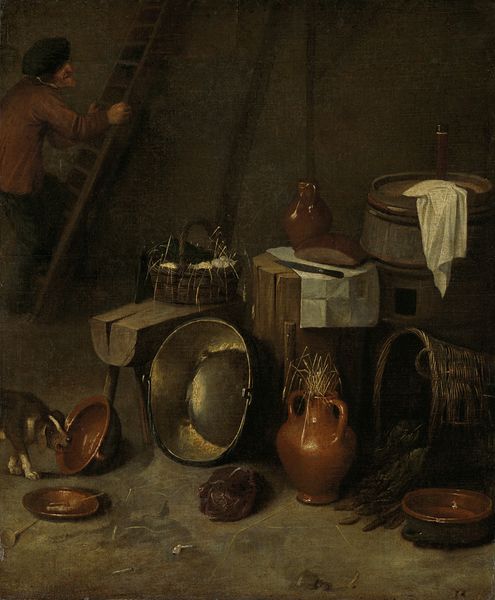
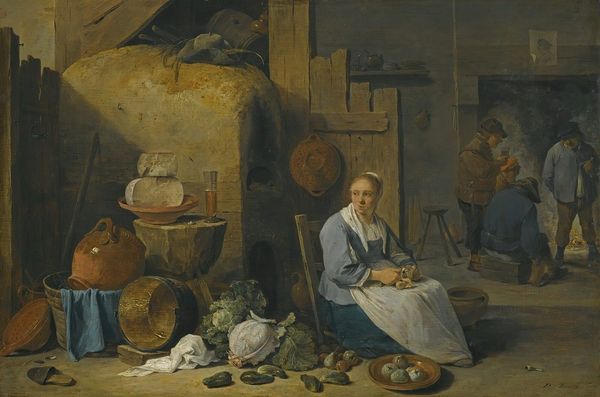
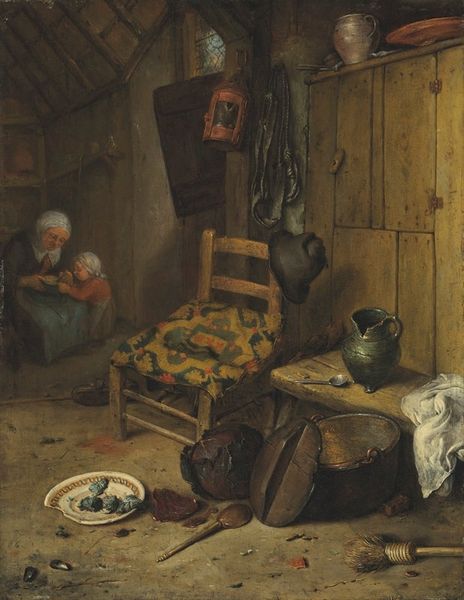
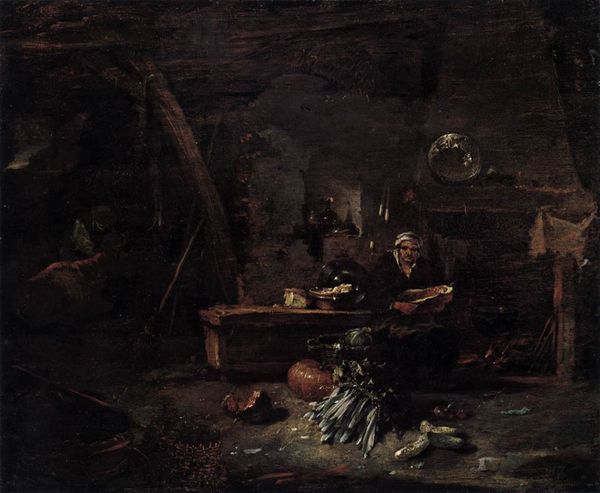
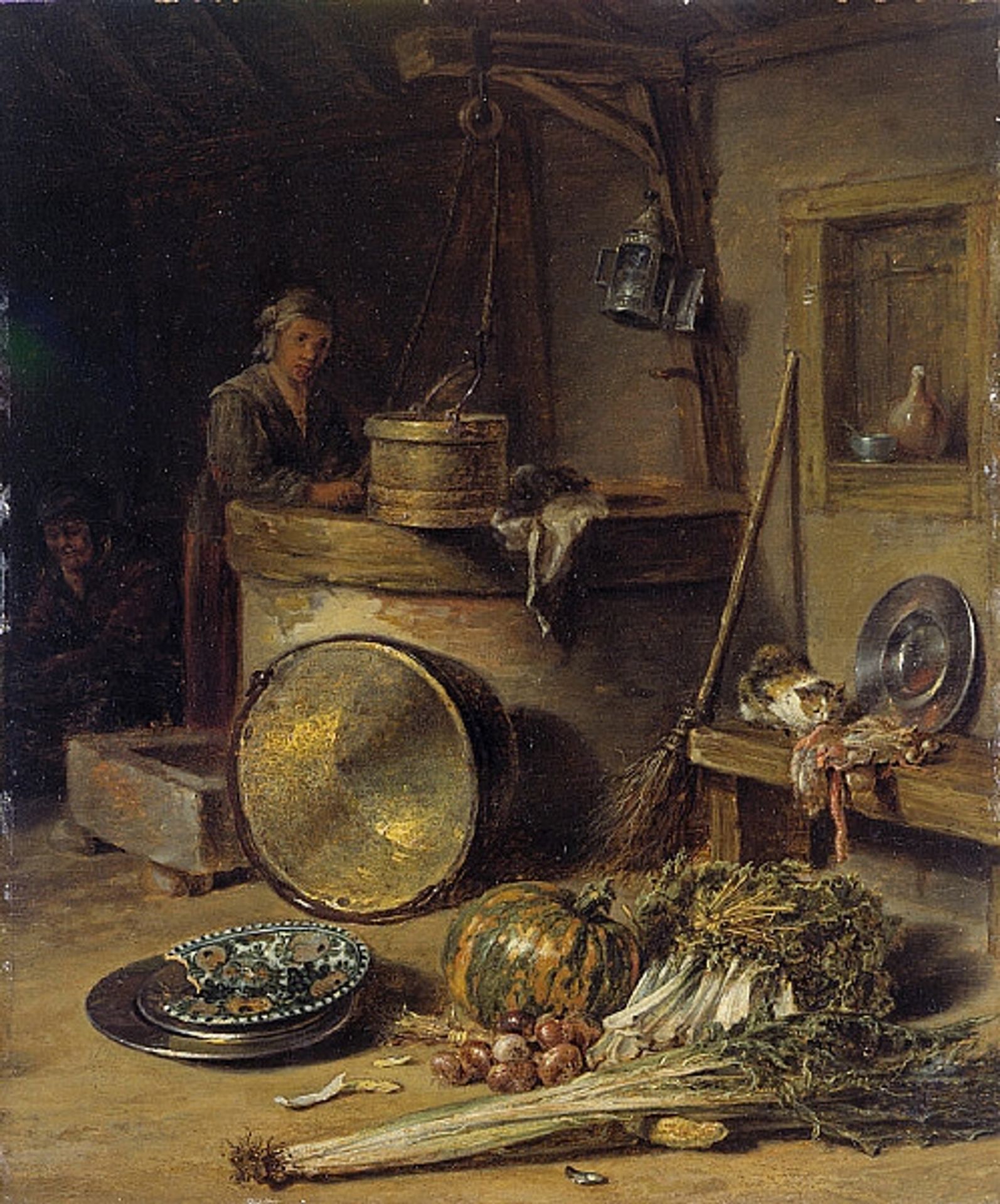
Willem Kalf created this painting of a peasant interior with a woman at a well in the Netherlands, likely in the mid-17th century. The painting presents an interesting contrast. Kalf, known for his opulent still lifes, here turns his attention to the simple, everyday life of peasants. What are we to make of this? Does it romanticize peasant life, or is it a commentary on the social structures of the time? The items in the foreground like the pumpkin, leeks, and Delftware hint at a world beyond this humble interior. The presence of the cat could symbolize domesticity, while other interpretations may argue it reflects the presence of vermin. To understand this painting better, we might delve into the economic conditions of the Dutch Golden Age, the role of peasant labor, and the changing social dynamics of the time. Such historical context allows us to see Kalf's painting not just as a snapshot of a peasant interior, but as a complex reflection of Dutch society.
Peasant Interior with Woman at a Well
1643

Willem Kalf
1619 - 1693Location
Saint Louis Art Museum, St. Louis, MO, USArtwork details
- Medium
- painting, oil-paint
- Location
- Saint Louis Art Museum, St. Louis, MO, US
- Copyright
- Public domain
Tags
Comments
Share your thoughts
About this artwork
Willem Kalf created this painting of a peasant interior with a woman at a well in the Netherlands, likely in the mid-17th century. The painting presents an interesting contrast. Kalf, known for his opulent still lifes, here turns his attention to the simple, everyday life of peasants. What are we to make of this? Does it romanticize peasant life, or is it a commentary on the social structures of the time? The items in the foreground like the pumpkin, leeks, and Delftware hint at a world beyond this humble interior. The presence of the cat could symbolize domesticity, while other interpretations may argue it reflects the presence of vermin. To understand this painting better, we might delve into the economic conditions of the Dutch Golden Age, the role of peasant labor, and the changing social dynamics of the time. Such historical context allows us to see Kalf's painting not just as a snapshot of a peasant interior, but as a complex reflection of Dutch society.
Comments
Share your thoughts